Stock-Bond Correlation: Oil Broke the Hedge, but History Shows Oil Will Fix It
By Lance Roberts | October 24, 2026

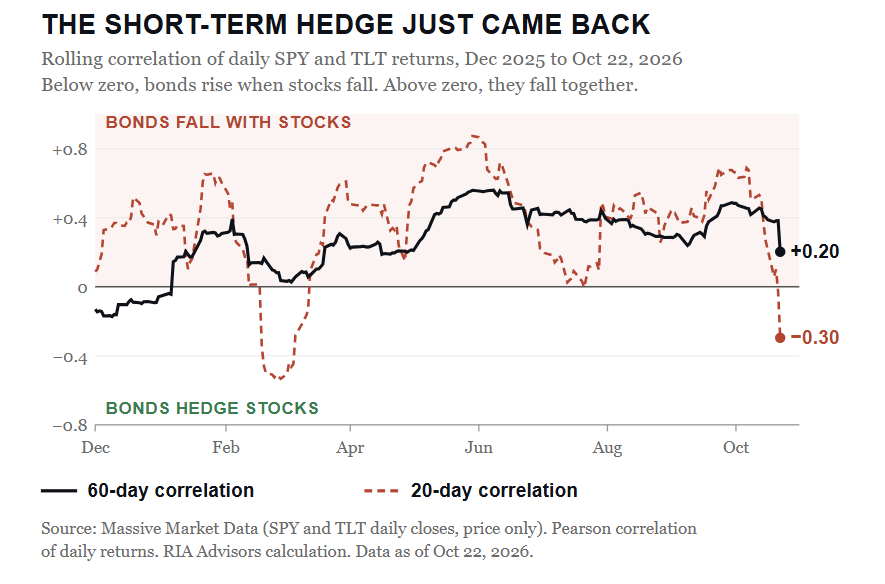
The stock-bond correlation has broken twice in four years, and on both occasions, the underlying culprit has been the exact same force: supply-side inflation. When that specific brand of inflationary pressure eventually fades, the traditional portfolio hedge reliably returns to form, offering investors a timely preview of this dynamic just last week.
Market Brief: Earnings Season Opens on a Raised Bar
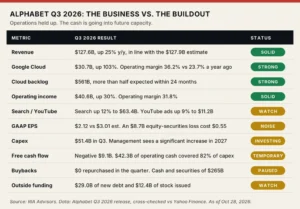
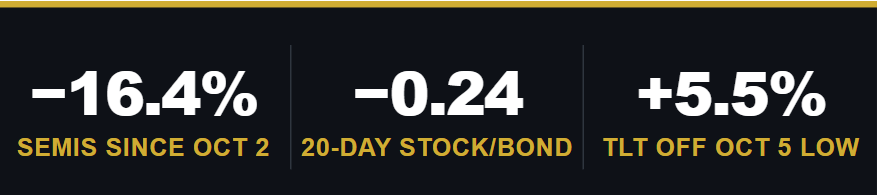
The primary catalyst behind this week’s technology sector rout was Meta. The tech giant posted better-than-expected earnings, but simultaneously reported its first cash outflow in more than a decade as aggressive spending on artificial intelligence outpaced cash inflows. Furthermore, the company announced a two-for-one stock split alongside the issuance of non-voting shares to help finance its massive infrastructure buildout. The market reaction was swift: Meta shares fell 7% on Thursday, dragging the Philadelphia semiconductor index down by 6.7% and pulling the Nasdaq Composite to its worst single-session performance since early June.
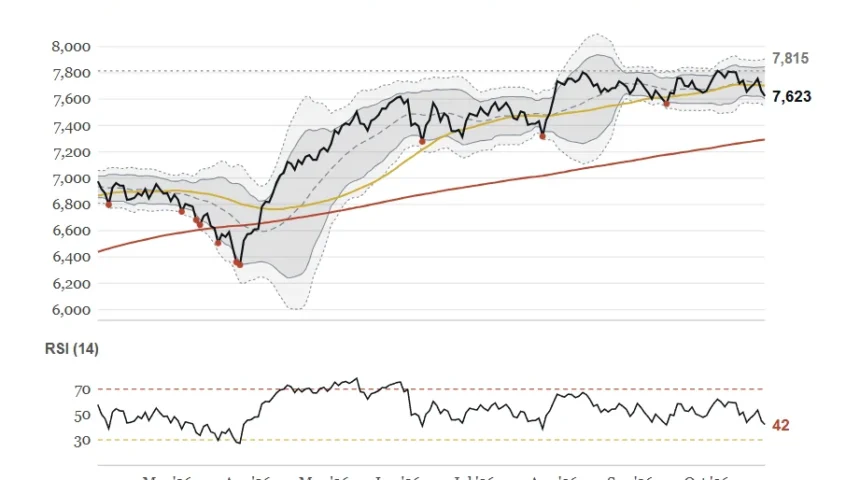
By Friday, rising commodity prices added to the broader market pressure, with Brent crude oil settling at $116.72 per barrel, marking a fresh six-month high. Despite the turbulence in growth sectors, the S&P 500 finished the week at 7,623.68, down a modest 0.4% for its second consecutive weekly loss. Interestingly, the Dow Jones Industrial Average managed to buck the trend, gaining approximately 1.4% over the same period.

If investors relied solely on superficial financial media headlines, they might conclude that Meta’s cash flow statement shattered the overarching narrative surrounding artificial intelligence overnight. In reality, it did nothing of the sort. This is a recurring flaw in mainstream financial commentary, where reporters scramble to pin a neat narrative on a market move after it has already occurred. The selloff did not strictly need Meta to happen; it merely required a catalyst, and Meta conveniently provided one.

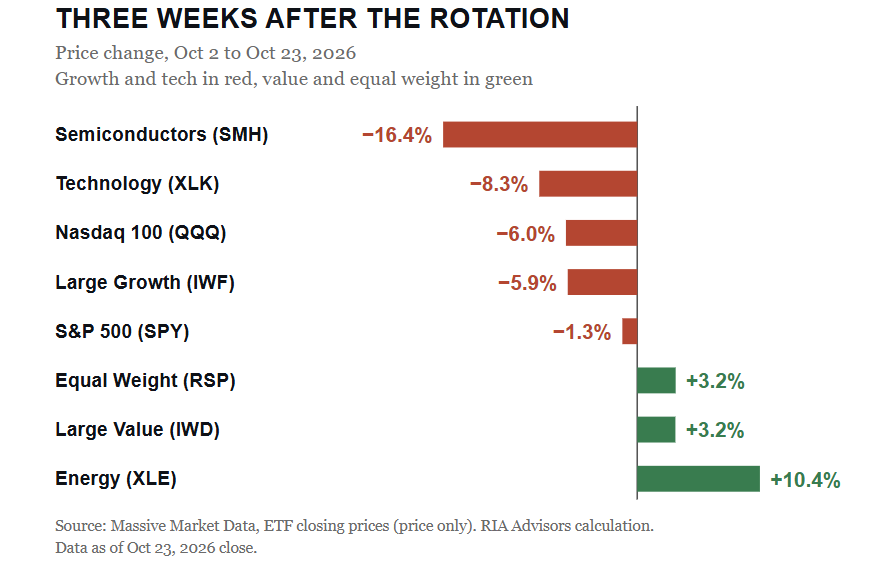
The technical setup for a pullback had actually been in place for weeks. Earlier in the month, technology allocations sat comfortably in the 96th percentile of the past five years, leaving the sector visibly overbought. As a result, portfolio models rebalanced toward value while locking in profits on growth factors. Technical indicators at the time showed major technology ETFs trading well above their 50-day moving averages with elevated relative strength index readings. True to Bob Farrell’s classic market rules, financial assets tend to revert to their mean over time, and they frequently execute that reversion much faster than market participants anticipate.

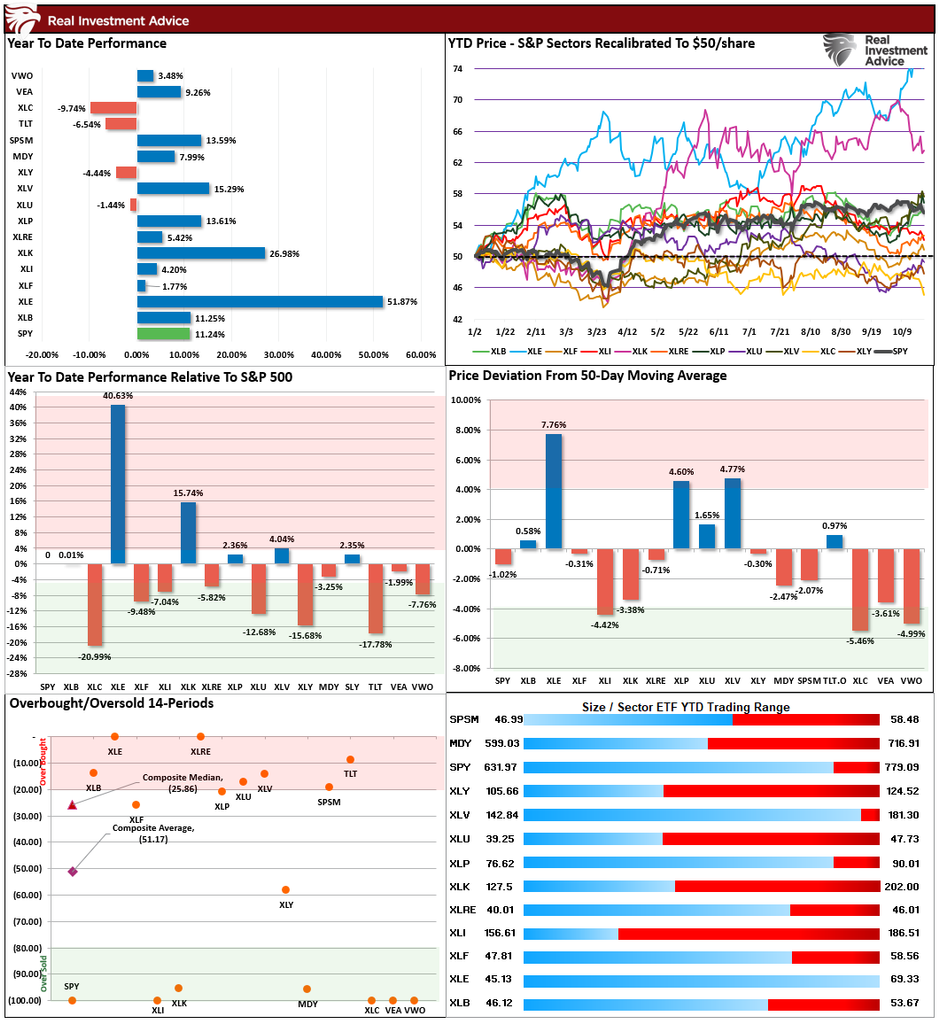
Following that initial sector rotation, semiconductor equities, technology funds, and the broader Nasdaq-100 index experienced notable pullbacks. Conversely, equal-weight S&P 500 indices, large-cap value equities, and energy stocks posted solid gains, underscoring that the recent market action represents a healthy internal rotation rather than a broad, indiscriminate liquidation.
As technology sectors cool down, their technical readings are approaching more reasonable oversold thresholds, though not yet reaching absolute washout extremes. Meanwhile, the defensive trades that served investors well during the recent shift are beginning to look crowded. This delicate balance highlights the cyclical nature of sector rotations, which often feel like an impending crisis for the sector being sold and a permanent victory for the sector being bought, right up until positioning inevitably flips.
Technical Backdrop: MACD Turns Up Just Below the Record
The S&P 500 closed the week at 7,623.68, leaving the benchmark index roughly 2.4% below its recent record close. The index is currently testing its 100-day moving average while remaining comfortably above its longer-term 200-day moving average, confirming that the primary structural uptrend remains intact. Furthermore, the index is hovering just above its lower Bollinger Band, a technical boundary that has successfully marked short-term market floors on multiple occasions earlier in the year.

Momentum indicators confirm that selling pressure remains active. The 14-day relative strength index sits in neutral territory while continuing to trend downward, and the moving average convergence divergence indicator has generated a short-term sell signal. However, unlike the sharp correction seen in individual technology names, the broader market index has not yet reached deeply oversold extremes, highlighting a divergence where cap-weighted mega-caps are dragging down indices while the average stock holds its ground reasonably well.
Sector breadth paints a complementary picture. A few weeks ago, only a tiny fraction of sectors outperformed the broader market index. By the end of the week, the majority of sectors were holding above their respective 50-day moving averages, with technology, industrials, and communications serving as the primary laggards. The previously dominant leaders have become crowded trades, while the lagging sectors present the most logical areas for a technical bounce.

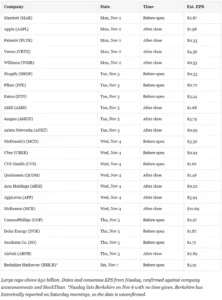
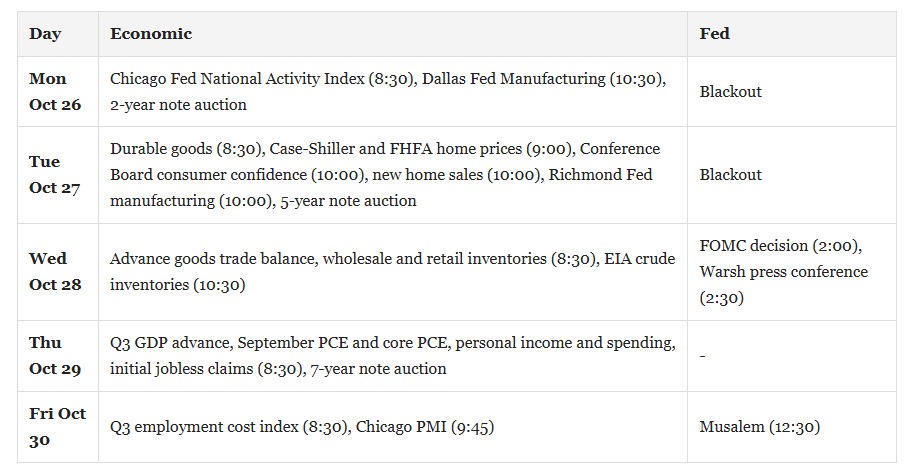
The upcoming week will serve as a major stress test for the market. Nearly half of the S&P 500 is scheduled to report quarterly earnings, including mega-cap stalwarts like Microsoft, Alphabet, and Amazon, colliding directly with a scheduled Federal Reserve policy decision and important inflation data. If key technical support levels hold and mega-cap earnings confirm that heavy capital expenditures on artificial intelligence are generating tangible financial returns, oversold technology shares possess ample room for a recovery rally. Conversely, a breakdown below key moving averages would likely accelerate downside pressure toward late-summer support levels.
Key Catalysts Next Week
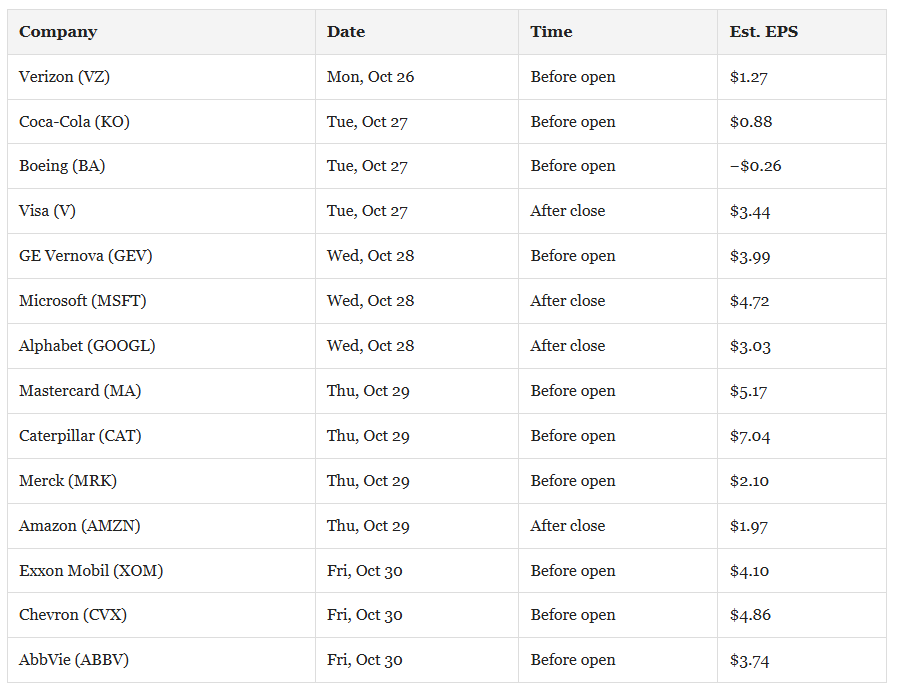
The upcoming economic calendar is exceptionally dense, combining the busiest stretch of corporate earnings season with crucial monetary policy and macroeconomic updates. A massive percentage of the S&P 500 is set to report financial results, anchored by a critical 24-hour window featuring Microsoft, Alphabet, and Amazon. Following Meta’s recent report, market participants are no longer willing to give companies the benefit of the doubt regarding AI spending; management teams must demonstrate clear paths toward cash generation and return on investment. Consumer-facing bellwethers like Visa and Mastercard will offer additional visibility into consumer health, while major energy producers will report against the backdrop of Brent crude hovering above $116 per barrel.
On the macroeconomic front, the Federal Reserve will announce its latest interest rate decision, accompanied by the traditional post-meeting press conference. Financial markets widely anticipate a period of policy stabilization following previous adjustments, though the primary risk lies in the tone and forward guidance provided by central bank officials. Persistently elevated energy prices and resilient economic growth indicators mean that any hawkish commentary could drive bond yields higher, creating a challenging environment for growth-oriented equities.
Additional high-impact data releases include third-quarter gross domestic product estimates and the core personal consumption expenditures price index, which serves as the central bank’s preferred inflation gauge. Labor cost data will also provide a clean read on whether broader price pressures are translating into sustained wage inflation. If wage pressures remain contained, the argument supporting temporary, supply-driven inflation gains credibility, reinforcing expectations for a measured monetary policy stance.
Stock-Bond Correlation: Oil Broke the Hedge, and Oil Will Fix It
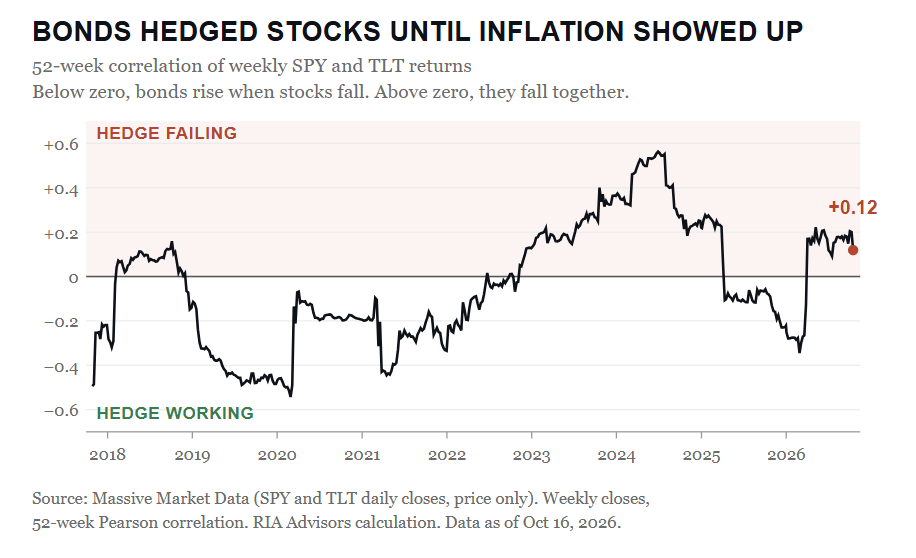
For decades, institutional and retail investors alike took the traditional stock-bond diversification model for granted. Economic research underscores that for roughly twenty years leading up to the post-pandemic era, the correlation between U.S. stock returns and changes in long-term bond yields was reliably positive, meaning bond prices consistently rallied when equities experienced selloffs. That dependable inverse relationship broke down significantly during periods of heightened inflationary shocks, leaving balanced portfolios exposed when both asset classes declined simultaneously.

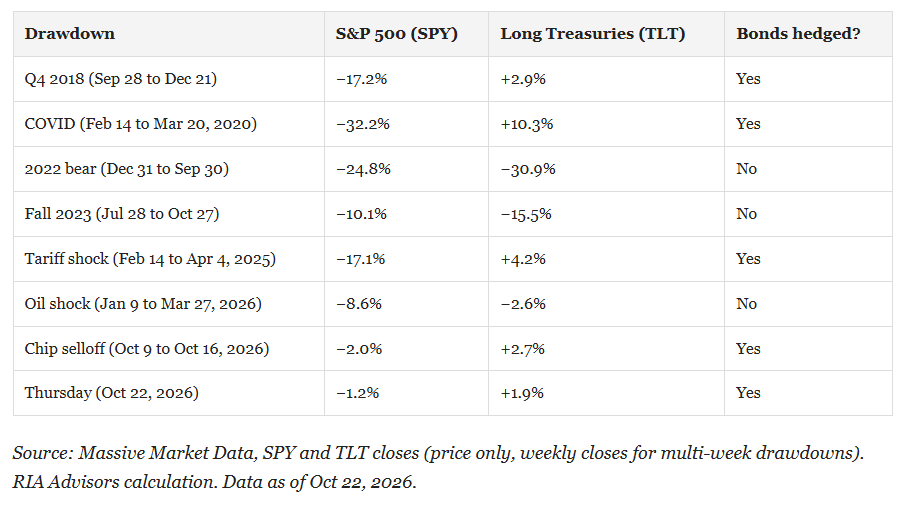
However, financial history reveals a consistent pattern: when inflationary pressures cool, the traditional diversification benefits of fixed income return. While a persistent energy shock and aggressive monetary tightening can temporarily decouple bonds from their traditional safe-haven role, historical drawdowns demonstrate that fixed income continues to perform its core function during genuine economic growth scares.

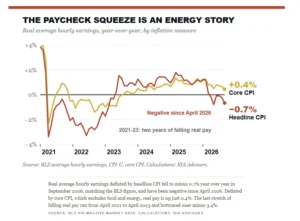
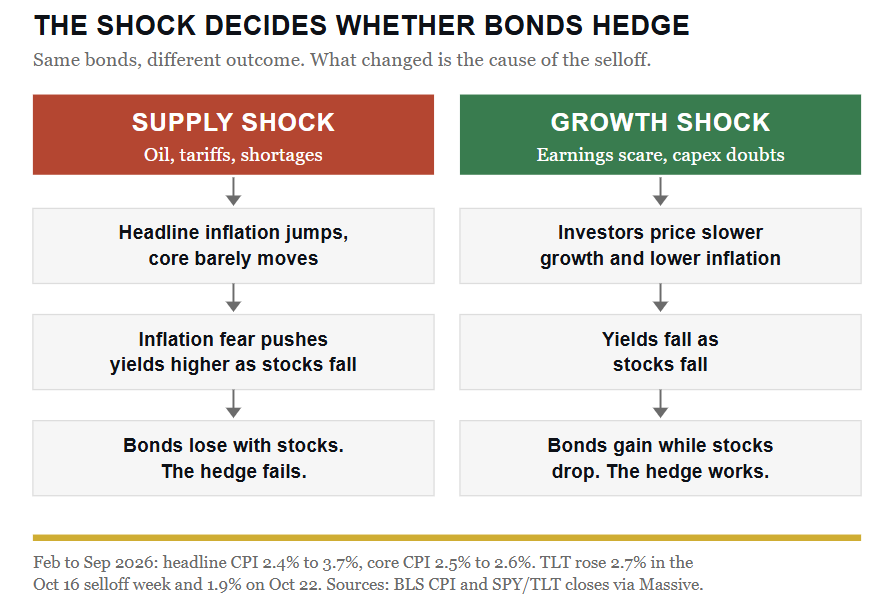
The underlying framework distinguishing between "good" and "bad" inflation explains this behavior. Inflation driven by supply-side shocks—such as spikes in global energy prices—tends to burn itself out organically because rising commodity costs are not accompanied by a corresponding rise in consumer incomes. As households and businesses absorb higher energy bills, discretionary spending slows, aggregate demand cools, and the resulting economic pressure chokes off the very growth that would have sustained the price spike.
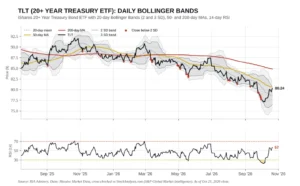
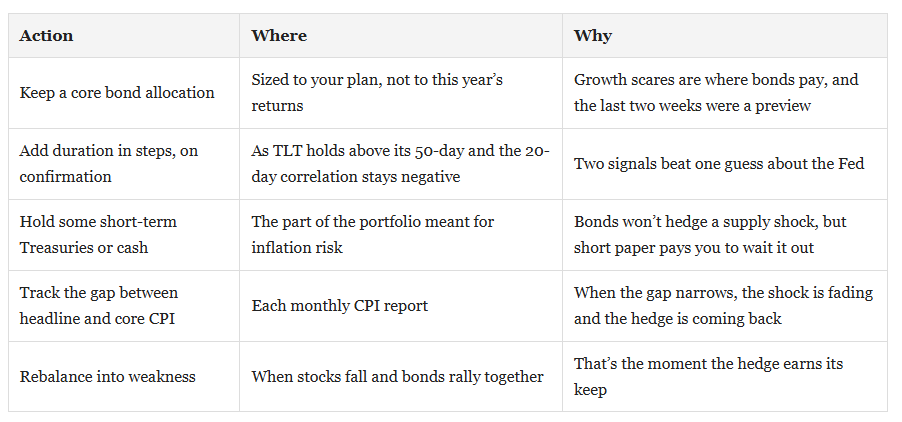
Bonds do not hedge against direct inflation; instead, they hedge against the economic slowdown and growth damage that severe inflation eventually triggers. As energy shocks fade and growth concerns re-emerge, fixed-income assets reclaim their historical role as a portfolio shock absorber. While short-term volatility and central bank policy decisions can create temporary headwinds, the structural stock-bond correlation is not permanently broken. It simply responds to the underlying drivers of economic change, and the bond market will ultimately signal the normalization of energy pressures well before headline inflation reports confirm it.

Related News