University Administrator Secures First-of-Its-Kind Humanist Workplace Exemption to Abstain From AI Use
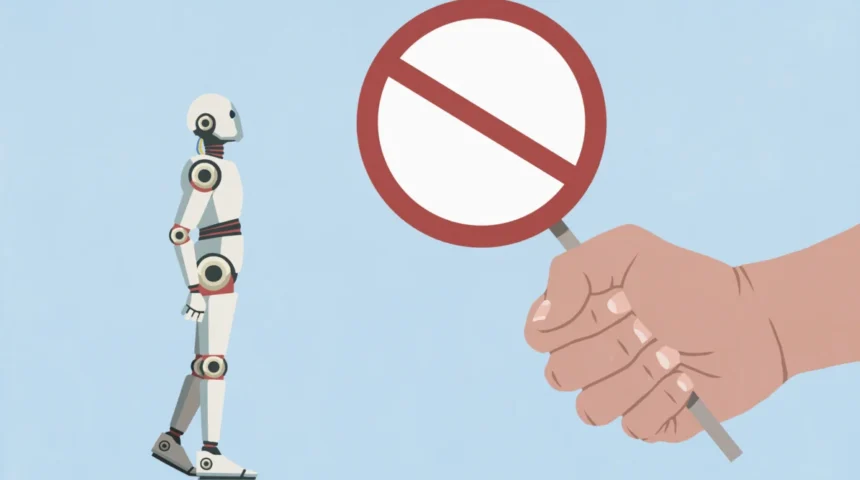
While religious leaders like Pope Leo XIV have increasingly decried artificial intelligence as a profound threat to human dignity, the friction between emerging automated systems and deeply held personal convictions is no longer confined to traditional theology. The debate has officially expanded into the secular realm of employment law and workplace rights, highlighted by a novel legal accommodation recently secured by a university administrator.
David Durman, a nontheistic humanist and administrator at the University of Kentucky, has successfully obtained a formal religious accommodation exempting him from using artificial intelligence in his workplace. Working in an administrative capacity where he supports researchers applying for grants, Durman is believed to be the first humanist to secure such workplace protections, and he stands among the very first individuals to publicly discuss their pursuit of these legal exemptions in the professional sphere.
Humanism, as defined by practitioners and secular organizations, is a comprehensive framework of beliefs centered on the human experience, individual and collective well-being, and flourishing. It encourages individuals to actively improve both their own lives and the welfare of those around them through critical thinking and personal agency. For Durman, the rapid proliferation of artificial intelligence in daily professional life directly contravenes these foundational philosophical tenets.
"Humanism is a collection of beliefs about the human experience and how humans interact with the world," Durman explained in an interview. He noted that the philosophy centers heavily on human well-being and flourishing, both individually and collectively, and implores a person to try to improve both their own well-being and flourishing, as well as the well-being of others around them.
As artificial intelligence technologies gained widespread popularity and began infiltrating standard office workflows, Durman began investigating his options. He reached out to the American Humanist Association (AHA), a prominent nonprofit organization that advances secular humanism, to determine how he might gain legal protections against mandatory or expected AI usage in his employment. He concluded that integrating generative AI and automated systems into his daily tasks fundamentally undermines the exercise of human intellect and moral responsibility.
"The way we become moral actors for ourselves and for others is through the active application of our minds, and the diminishing of that through AI use is going to necessarily have a negative impact on our ability to do so," Durman said, reflecting on his deep concerns regarding how overreliance on automated tools might erode critical thinking and human accountability.
In a formal statement published by the AHA, Durman elaborated on the broader societal and environmental impacts that informed his decision to seek an exemption. He wrote that artificial intelligence is interfering with people’s ability to earn a living, that its environmental costs spell disaster for humanity and the planet, and that its supplanting and theft of human creativity threaten essential cultural elements like art and literature that allow society to truly flourish.
Although humanism is fundamentally distinct from traditional religion and is not anti-religious, it often appeals to individuals who are skeptical of gods or other supernatural powers yet still seek a rigorous scientific and moral framework to ground their worldview. Legal protections for these beliefs fall under federal and state frameworks protecting religious beliefs and practices, which broadly encompass sincerely held moral or ethical beliefs that take the place of religion in an adherent’s life.
Alexandria Huiskens, a staff attorney at the American Humanist Association, emphasized that concerns regarding the encroachment of artificial intelligence on human dignity are not limited to any single demographic or theological tradition. She noted that such anxieties resonate across diverse faiths and philosophies, ranging from Catholic teachings to Unitarian Universalism and secular humanism.
"We want humanists or nontheists to know that they fall into these categories—that they are also protected by the law at work," Huiskens told reporters.
Durman’s decision to pursue formal workplace accommodations was directly inspired by a precedent-setting case involving Erin Maus, a Unitarian Universalist and software engineer who successfully secured similar protections allowing her to abstain from using artificial intelligence in her technical role. While Maus’s situation was particularly unusual given the near-ubiquity of AI coding assistants in software engineering, Durman’s administrative environment presented a different context.
While Durman has not been strictly required to use AI to perform his daily duties supporting grant applicants, many of his colleagues and institutional leaders have actively recommended that employees experiment with these emerging tools. Fearing that casual suggestions might eventually harden into mandatory workplace policies, Durman elected to secure his exemption proactively.
"For me, this was about me and my convictions," Durman stated. "I’m obviously not trying to tell people how to think or feel. But I do hope that it encourages people who have similar concerns to pursue not necessarily religious exemption, but pursue their concerns to the best of their ability where they feel is the most appropriate."
University of Kentucky spokesperson Jay Blanton addressed the institution’s handling of the matter, noting that the university evaluates requests for religious accommodations on a case-by-case basis. These evaluations take into account the specific job responsibilities of the employee and the unique circumstances surrounding each request.
"In this case, the university determined that an accommodation could be provided while allowing the employee to continue performing the essential functions of their position," Blanton said in a public statement. He added that as technology and job responsibilities continue to evolve, existing accommodations may be reviewed periodically to ensure they remain reasonable and workable for both the employee and the institution.
As organizations across all sectors grapple with the rapid integration of artificial intelligence, legal experts anticipate that requests for workplace accommodations based on philosophical, ethical, and religious objections will continue to rise. For now, Durman hopes his actions will serve as a source of encouragement for other professionals navigating similar moral conflicts in their own workplaces.
"I hope that if they have similar feelings, that they feel encouraged to pursue some kind of resolution," Durman said.

Related News