Full Steam Ahead: The Rise of Fiscal Dominance and Its Challenge to Central Banks
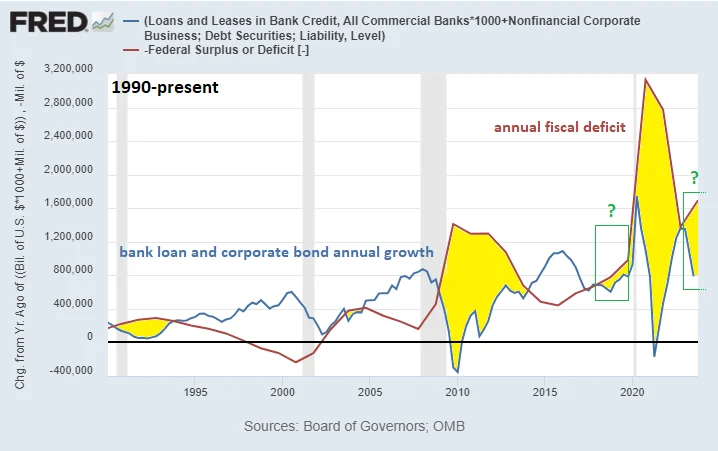
As global financial systems navigate a rapidly shifting economic landscape, structural fiscal deficits have officially overtaken private sector lending and traditional monetary policy as the primary drivers of economic activity and inflation. This fundamental transformation in liquidity dynamics marks the dawn of an era defined by fiscal dominance—a condition where national debt and deficit levels are so persistently elevated that central bank interest rate policies lose their efficacy in controlling inflation.

Compiled and written by market analyst Sam Callahan and commissioned and advised by macroeconomic researcher Lyn Alden, a comprehensive research piece published in January 2025 outlines how this paradigm shift is reshaping modern economies, challenging central bank independence, and altering the trajectory of public debt.

The Global Fiscal Backdrop and the U.S. Dilemma
The modern conversation surrounding fiscal dominance was sharply highlighted in September 2022, when the United Kingdom gilt market suffered a severe crash that nearly collapsed the nation’s pension system. Triggered by a controversial "mini-budget" from then-Prime Minister Liz Truss—which introduced unfunded tax cuts and increased government spending amid double-digit inflation—the crisis demonstrated how reckless fiscal policy can instantly destabilize markets. Investors responded with a massive sell-off of government bonds, triggering a wave of margin calls that threatened the solvency of leveraged pension funds.

The fallout forced the Bank of England to temporarily abandon its inflation-fighting mandate of raising interest rates and implementing Quantitative Tightening. Instead, the central bank was compelled to intervene by purchasing long-dated gilts to restore market stability. This episode provided a glaring textbook example of fiscal dominance, illustrating how overwhelming government borrowing needs can constrain a central bank’s independence and force it to prioritize financial stability over price stability.

This vulnerability is far from isolated. Governments worldwide continue to run massive fiscal deficits even as sovereign debt burdens reach historic highs, creating a challenging environment for monetary authorities attempting to cool price pressures. In the United States, debt-to-GDP ratios remain at levels not witnessed since World War II. However, a crucial divergence separates the current economic reality from the past four decades: interest rates are no longer structurally falling.

From the late 1980s until recently, steadily declining interest rates allowed governments and the Federal Reserve to easily manage and expand national debt burdens. That dynamic reversed dramatically over a four-year span in which the federal funds rate increased fivefold while public debt grew by more than 30%. Consequently, the Treasury’s interest expense on the national debt surged, making net interest spending the second-largest government expenditure last fiscal year, trailing only Social Security. Net interest—reflecting the true out-of-pocket expense paid to external creditors after accounting for internal trust fund transfers—has nearly tripled since 2020, locking the U.S. into a feedback loop of mounting borrowing costs and wide fiscal deficits.

Defining Fiscal Dominance and the Failure of Monetary Tools
Economic analysts define fiscal dominance as a condition wherein debt and deficit levels become so high that monetary policy ceases to be an effective tool for controlling inflation, and persistently high interest rates actually risk exacerbating price pressures. A complementary perspective views it as a state where fiscal deficits equal or eclipse private sector lending and monetary policy in fueling economic momentum.

Money is traditionally created through two primary mechanisms: private sector lending by commercial banks and non-bank institutions, and monetized government deficits. For decades, private sector credit creation served as the leading engine of economic growth. However, over the past fifteen years, government spending has consistently outpaced revenue collection, shifting the balance of power.

With over $36 trillion in outstanding debt and an increasing reliance on short-duration borrowing, higher interest rates rapidly amplify government interest expenses. These interest payments flow directly from the Treasury to bondholders across households, money market funds, banks, and institutional investors. Acting as a form of economic stimulus, this liquidity injects demand into the broader economy, counteracting the Federal Reserve’s monetary tightening efforts and keeping inflation elevated.

Because private sector debt is largely fixed and long-term, it remains less immediately sensitive to higher interest rates. Traditional monetary tightening via rate hikes thus loses its punch, failing to cool an economy driven primarily by structural government spending.

Structural Deficits and Broadened Inflationary Pressures
Historically, deficit spending operated as a countercyclical tool, deployed to stimulate a sluggish economy during downturns and reined in during periods of growth to accumulate surpluses and reduce debt. Today, however, deficits have become structural, driven by systemic obligations including an aging population requiring higher entitlement spending, soaring healthcare costs, and compounding interest payments on accumulated debt. Even with the unemployment rate hovering near multi-decade lows, the government continues to run massive deficits.

This structural shift alters how inflation manifests. When major supply constraints in commodities and energy are absent, excess liquidity injected via government spending often pours into financial assets rather than consumer goods. Consequently, stock markets, real estate, gold, and bitcoin experience surging valuations even when consumer price index metrics appear stable. This asset price inflation widens wealth gaps, disproportionately benefiting high-income earners and established asset holders while eroding purchasing power for ordinary households.

Navigating the Trajectory of Public Debt
To evaluate where public debt is heading, analysts distinguish between marketable debt, which trades on secondary markets and imposes direct taxpayer costs through prevailing interest rates, and non-marketable debt, which consists of internal trust fund holdings and savings bonds.

Focusing on the nearly $29 trillion in Debt Held by the Public, refinancing risks loom large due to the short-term maturity profile of current instruments. A significant volume of Treasury bills, notes, and bonds must be rolled over annually at prevailing market rates. To model debt trajectories over the next decade, researchers analyzed debt growth under fixed interest rate scenarios ranging from 2% to 5%.

Under a fixed 5% interest rate, the Debt Held by the Public grows by $6 trillion more than it would under a 2% rate, pushing the debt-to-GDP ratio above 108% and intensifying fiscal strain. Conversely, a 2% fixed rate lowers debt-to-GDP below 95%. However, debt-to-GDP ratios can be misleading. When large monetized deficits fuel nominal GDP growth through inflation, debt-to-GDP metrics can appear stable or even decline—as observed during Turkey’s economic instability—masking underlying currency debasement and massive nominal debt accumulation.

The Battle for Bond Buyers and the Role of the Federal Reserve
As U.S. debt issuance surges, the fundamental question remains: who will buy the debt? Domestic institutions, banks, and pension funds face regulatory constraints and interest rate risks that cap their long-term bond appetites. Meanwhile, foreign ownership of U.S. debt has declined significantly over the past fifteen years, dropping from 47% to 30% as international investors diversify into neutral reserve assets like gold amid geopolitical tensions.

While stablecoin issuers have emerged as major buyers of short-term Treasury bills—with leading issuers holding tens of billions in short-duration debt—they typically avoid long-duration bonds due to immediate liquidity requirements. This leaves a critical gap at the long end of the yield curve. If private and international demand continues to falter, the Federal Reserve risks being forced into the role of buyer of last resort, expanding its balance sheet through renewed quantitative easing to stabilize the bond market, much like the Bank of England did during the 2022 gilt crisis. Such intervention, however, inevitably expands the money supply and erodes the purchasing power of the dollar.

Can Efficiency Initiatives and Private Credit Alter the Course?
Solutions to fiscal dominance remain scarce. While private credit markets have expanded rapidly over the past two decades, they still comprise a mere 2% of the total non-financial debt market, rendering them too small to fundamentally shift macroeconomic liquidity dynamics.

Attention has consequently turned toward spending reductions, embodied by the advisory Department of Government Efficiency. While proponents have discussed aggressive spending cuts, the structural composition of the federal budget presents formidable hurdles. Mandatory spending—comprising entitlement programs like Social Security, Medicare, and Medicaid—accounts for 61% of the federal budget and cannot be cut without congressional legislative amendments, which both major political parties have pledged to protect.

Furthermore, defense spending represents nearly half of all discretionary expenditures and is slated to grow amid rising geopolitical tensions. This leaves non-defense discretionary spending—accounting for just 14% of the total budget—as the primary target for potential reductions. Even if every dollar of non-defense discretionary spending were eliminated, it would fall short of sweeping fiscal reduction targets, and mandatory spending growth across entitlements and interest expenses is projected to account for the vast majority of nominal spending growth over the coming decade.

Compounding the challenge, federal tax revenues are heavily correlated with equity market performance rather than labor markets alone. If spending cuts trigger a contraction in asset prices, tax receipts could drop precipitously, potentially widening the deficit rather than narrowing it.

Ultimately, structural fiscal deficits are poised to persist as the primary driver of economic activity and inflation throughout the decade. While global demand for U.S. dollars and debt denominated in its own currency provides stabilizing momentum that prevents an immediate crisis, the era of fiscal dominance will likely run hot and persistent. In this environment, market participants increasingly turn to scarce hard assets like real estate, equities, gold, and bitcoin to preserve purchasing power against steady currency debasement.

Related News