Trump Doubles Down on Islamophobic Attacks and Anti-Democratic Rhetoric in Final Midterm Rallies
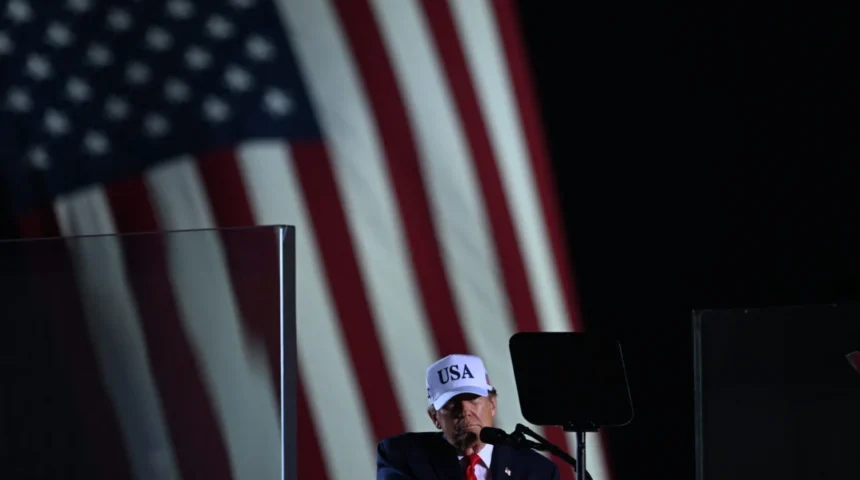
United States President Donald Trump has sharply escalated his use of Islamophobic rhetoric and conspiracy theories targeting prominent Democratic politicians during his final campaign swing ahead of crucial midterm elections. Speaking at high-profile rallies in Iowa and Kansas, Trump sought to energize his base by deploying inflammatory language against Muslim candidates and figures, framing the upcoming ballot as a referendum on his presidency while addressing a political landscape where control of Congress hangs in the balance.
The campaign events, which were abruptly rescheduled after being cancelled just weeks prior, served as the president’s final travelling events before voters head to the polls on November 3. With national polling suggesting a potentially challenging election cycle for the Republican Party—putting its congressional majority at risk during Trump’s final two years in office—the president urged his supporters to treat the contest as if he were personally on the ballot. Both speeches, however, were repeatedly disrupted by hecklers as the president balanced appeals for voter turnout with a series of aggressive personal attacks.
Center stage in Trump’s closing message were unfounded allegations directed at Abdul El-Sayed, a Democratic U.S. Senate hopeful from Michigan. At both rallies on Sunday, the president repeatedly branded El-Sayed a “jihadist” and joked to the crowds that the legislative body would need to install special metal detectors specifically to screen the candidate if he succeeds in winning election to the Senate.
“We’ll have a hundred senators, and most of them will go directly into the Senate,” Trump told cheering supporters, drawing laughter from the crowd. “We’re gonna have to get a special metal detector for Abdul.”
Beyond the security-themed jokes, Trump reiterated long-running, unsubstantiated claims connecting El-Sayed to the transnational Muslim Brotherhood, branches of which have been designated by the United States as foreign terrorist organizations. The remarks marked a continuation of the president’s aggressive posture toward El-Sayed, whose primary campaign had earlier seen him defeat Democratic Representative Haley Stevens. Notably, during his speech in Iowa, Trump stated that he would “love” for Stevens—who subsequently endorsed El-Sayed’s Republican opponent, Mike Rogers—to switch parties following her primary defeat.

In addition to targeting El-Sayed, Trump took direct aim at U.S. Representative Ilhan Omar of Minnesota. Repeating a debunked conspiracy theory that has circulated in partisan media spaces for years, the president alleged without evidence that Omar had previously been married to her brother and fathered children with him. The invocation of Omar, a frequent target of conservative criticism, served to further intensify the cultural and identity-driven framing of Trump’s closing campaign narrative.
Two Critical Races
The rallies in Iowa and Kansas underscored the shifting political dynamics in states historically viewed as safe territory for the Republican Party, but where polling now suggests Democrats could mount competitive challenges or even flip seats.
In Kansas, voters are preparing to decide five federal congressional seats during the midterms, encompassing one Senate seat and all four House seats. The state has long been a Republican stronghold, having last elected a Democratic senator nearly a century ago in 1932. However, the political atmosphere in the state has drawn heightened national attention, with Trump using his Kansas platform to also criticize Democratic Senate hopeful Adam Hamilton. A church pastor by profession, Hamilton faced scrutiny from the president over his support for transgender rights, with Trump dismissing him as a “stiff” who relies entirely on teleprompters to deliver his sermons.
Meanwhile, in Iowa, the race for the U.S. Senate remains exceptionally tight and officially too close to call, while polling indicates that two state representative seats up for grabs are currently leaning toward the Democratic Party. Despite the state’s historically conservative lean, the tightening margins have prompted the administration to shore up local support through high-profile presidential visits.
While Islamophobia and attacks on individual Democratic figures dominated the headlines generated by the rallies, Trump’s speeches also touched on a wide array of broader national and international policy issues. The ongoing U.S.-Israel war on Iran, the persistently high cost of living, immigration enforcement, perceived media bias against his administration, and criticisms of former President Joe Biden’s administration all featured prominently throughout his hours-long addresses.
As the countdown to November 3 enters its final hours, both campaigns are making their closing arguments to an electorate deeply divided over the direction of the country, leaving the balance of power in Congress to be decided in a political environment charged with grievance, high-stakes policy debates, and fierce partisan rhetoric.

Related News