El Salvador Leads Central America’s Economic Momentum with Robust Construction Growth in 2026
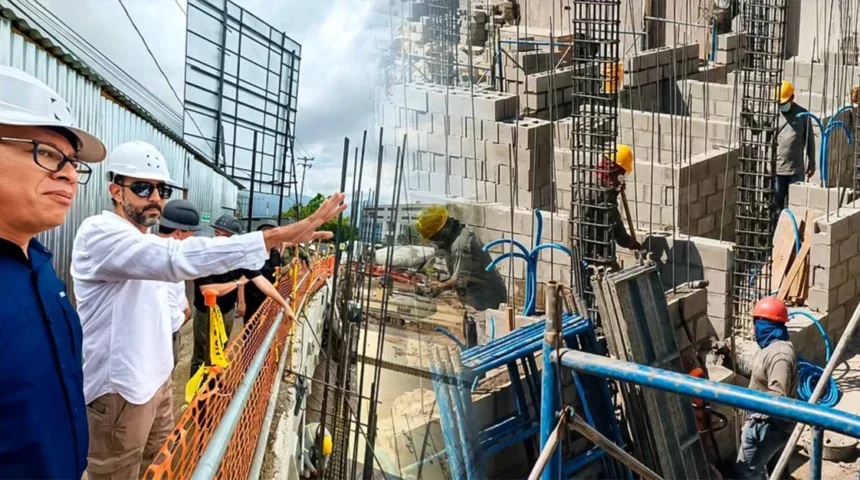
El Salvador is increasingly solidifying its position as Central America’s primary economic engine, propelled forward by an extraordinary and sustained surge in its domestic construction industry. According to the latest comprehensive monthly economic activity report released by the Executive Secretariat of the Central American Monetary Council, commonly known as SECMCA, the country’s construction sector recorded a remarkable 14.6% year-over-year growth rate as of July 2026. This stellar performance comfortably outpaces regional peers, setting a high benchmark for infrastructure development and real estate expansion across the entire isthmus.
When measured against neighboring nations within the Central American corridor, El Salvador’s construction boom stands out sharply. While other countries in the region are also experiencing varying degrees of development, their respective growth rates trail behind the Salvadoran pace. Costa Rica, for instance, posted a strong yet secondary construction sector expansion of 12.7% during the same comparative period. Meanwhile, Nicaragua and Honduras recorded more modest gains in their building industries, registering 4.4% and 3.2% year-over-year growth, respectively. This widening gap underscores how central large-scale building projects and infrastructural investments have become to El Salvador’s broader economic strategy and its rising status as a regional commercial hub.
This robust building boom has not occurred in a vacuum; rather, it has directly translated into broader, highly positive macroeconomic success for the Central American nation. Supported by healthy expansion across vital sectors such as public administration, healthcare, and national defense, El Salvador led all reporting regional economies with an impressive 5.24% Gross Domestic Product growth rate in the second quarter of 2026. This figure places the country at the very forefront of economic performance among its neighbors during that specific quarter, reflecting a resilient and dynamic domestic market capable of generating sustained wealth and operational activity.
To put this second-quarter performance into a wider geographic and economic perspective, neighboring and regional countries posted varying, albeit generally more modest, gains during the same three-month window. The Dominican Republic recorded a close and competitive Q2 GDP growth rate of 4.96%, followed by Guatemala at 4.27%. Further down the spectrum, Honduras and Costa Rica posted Q2 gains of 2.73% and 2.69%, respectively. El Salvador’s ability to outpace these traditional economic powerhouses during the second quarter highlights the compounding benefits of its ongoing internal investments, particularly those anchored by the thriving construction and public services sectors.

Looking at the broader regional landscape, overall economic activity across Central America and the Dominican Republic expanded by a healthy 4.67% interannually, reflecting an underlying resilience and stability within the broader regional market. Within this collective framework, individual countries displayed diverse pathways of recovery and expansion. Panama secured the highest overall general economic activity growth rate in the broader reporting group, surging by an impressive 8.49%. Nevertheless, El Salvador comfortably ranked among the top overall performers across the board, registering a stellar 5.48% increase in general economic activity, trailing closely behind Honduras, which recorded a general activity increase of 6.57% for the period.
A deeper examination of El Salvador’s construction sector reveals a fascinating trajectory of maturation and stabilization. While the current 14.6% year-over-year growth rate recorded as of July 2026 represents a slight normalization when compared to the extraordinary 28.5% rate witnessed during the exact same period in 2025, industry observers and market analysts emphasize that this cooling is entirely natural and healthy for a long-term economic cycle. Rather than signaling a slowdown or a loss of momentum, this stabilization indicates that the construction market is settling into a robust, highly productive, and sustainable pace of development that continues to drive the nation forward.
Market analysts and economic commentators tracking the region closely observe that this sustained building trajectory continues to set the ultimate benchmark for infrastructure and real estate performance across the entire Central American region. The ongoing projects, ranging from public infrastructure upgrades to commercial and residential developments, are creating a ripple effect throughout the broader economy. By generating employment, stimulating demand for local materials, and improving logistical networks, the construction industry acts as a foundational multiplier that supports everything from retail trade to financial services.
As El Salvador moves past the midpoint of 2026, the data provided by SECMCA paints a clear picture of an economy that is not only finding its footing but actively leading the charge in regional prosperity. The combination of targeted public sector expansion, strategic investments in health and defense, and a construction sector that consistently outperforms its neighbors has transformed the country’s economic narrative. With its latest indicators pointing toward continued stability and growth, El Salvador remains firmly anchored at the heart of Central America’s modern economic evolution, proving that its current developmental model is delivering tangible, measurable results on both a national and regional scale.

Related News