Intense Cross-Border Strikes Leave Cities in Power Darkness as Diplomatic and Geopolitical Shifts Loom
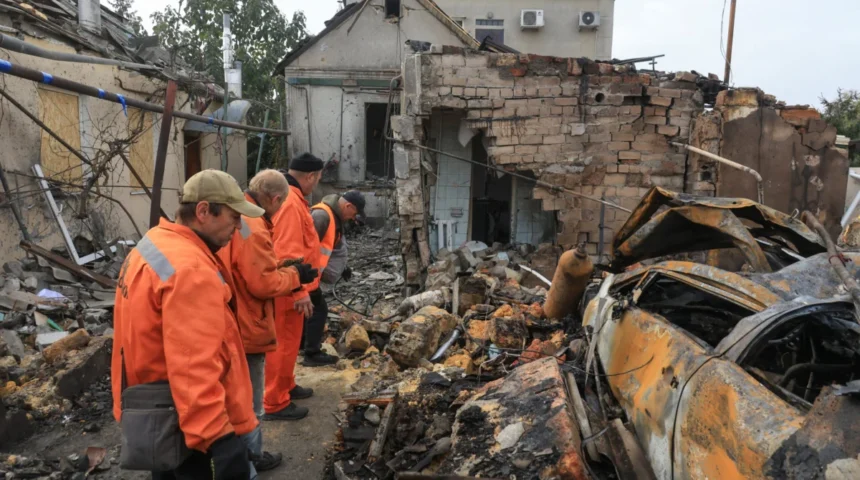
A fresh wave of devastating cross-border strikes has left communities on both sides of the Russia-Ukraine border grappling with widespread destruction, prolonged blackouts, and escalating humanitarian concerns. Ukrainian drone attacks resulted in three fatalities in Russia’s border region of Belgorod, while retaliatory Russian aerial assaults battered critical energy infrastructure across multiple regions of Ukraine, plunging major urban centers into darkness and disrupting essential services as freezing winter temperatures approach.
The latest escalation highlights a relentless cycle of aerial warfare targeting power generation networks, logistics hubs, and civilian areas. According to local authorities in the Belgorod region, which shares a long and volatile border with Ukraine, the three deaths were confirmed on Wednesday following a series of inbound projectile strikes. Meanwhile, Ukrainian President Volodymyr Zelenskyy reported that massive overnight Russian attacks severely damaged critical power generation facilities and electrical substations across nine distinct Ukrainian regions, triggering immediate and severe emergency power outages in numerous cities.
Russia’s Defence Ministry subsequently confirmed via its official Telegram channel that its forces successfully targeted two major power stations located in the Kyiv and Zhytomyr regions. Ukrainian officials have repeatedly condemned Moscow’s systematic campaign against the national power grid, characterizing the targeted destruction of civilian heating and electricity infrastructure ahead of winter as a severe violation of international law and a war crime.
The overnight onslaught of Russian missile and drone attacks on critical infrastructure sparked hours-long electricity and water disruptions across the capital city of Kyiv and its surrounding suburban districts. In response to the crippling utility failures, municipal authorities urged residents to make use of public drinking water fountains. Emergency warming and charging centers—equipped with hot tea and independent power points for mobile devices—were rapidly established in the worst-hit neighborhoods to assist stranded and freezing citizens.
The energy crisis extended far beyond mainland Ukraine, touching areas under Russian control. In Russian-occupied Crimea, the strategic peninsula seized from Ukraine in 2014 and home to an estimated 2.5 million residents, extensive power outages were also reported. Russia’s Ministry of Energy confirmed that Ukrainian strikes hit local energy infrastructure overnight, necessitating the implementation of temporary outage schedules across the territory, though official figures regarding the exact number of affected households were not immediately disclosed. Additional reports indicated that Russia-held Crimea was forced to order emergency power cuts following an external accident outside the region, a detail corroborated by a Moscow-installed official, according to the Reuters news agency.
In addition to the national capital of Kyiv, the relentless Russian air campaign severely impacted several other key Ukrainian administrative divisions. Reuters, citing updates from Ukraine’s emergency services and local regional officials, reported that heavy strikes battered the Poltava, Dnipro, Kirovohrad, and Rivne regions, compounding the strain on already stretched emergency responders and repair crews.
Simultaneously, the war continued to cast a long shadow deep inside Russian territory. In southern Russia, a heavy Ukrainian drone strike triggered a massive fire at a prominent logistics and distribution warehouse operated by Ozon, widely recognized as Russia’s primary domestic equivalent to Amazon. The targeted facility, situated in the town of Adygeysk within the Republic of Adygea, sustained significant structural damage, according to regional head Murat Kumpilov. Ozon representatives later released statements confirming that all warehouse personnel were successfully evacuated without injury. The company added that it had swiftly removed damaged merchandise from its digital listings and successfully rerouted ongoing supply chain deliveries to alternative hubs to minimize operational disruption.
On the military front, Russia’s Defence Ministry claimed a massive defensive interception rate, asserting that air defense systems successfully downed a staggering 709 Ukrainian drones across 14 separate Russian administrative regions, the Crimean peninsula, and the airspace over both the Black Sea and the Azov Sea.
Kremlin response to US midterms
Against the backdrop of fierce daily combat and shifting regional dynamics, the political ramifications of international developments continue to draw intense focus from Moscow. Addressing reporters regarding the recent political shifts in the United States, Kremlin spokesman Dmitry Peskov stated that Moscow sincerely hopes United States President Donald Trump will persist with his stated peacemaking efforts. This diplomatic sentiment comes in the wake of a sweeping Democratic victory in the United States congressional midterms, a legislative blow that has significantly constrained the sitting president’s domestic political maneuvering room.
"President Trump continues to exercise his powers. We sincerely hope that he will also continue his peacemaking efforts," Peskov said in an official statement. When questioned by state-run Interfax news outlets as to whether a newly configured United States Congress could actively hinder or derail Trump’s diplomatic initiatives, Peskov dismissed the query by asserting that the internal balance of power in Washington remains "an internal matter for America."
Political analysts anticipate that Democratic control of the United States legislature, which takes effect in January, will likely empower a more vocal, pro-Kyiv majority within Congress. This legislative shift is expected to exert substantial pressure on President Trump to alter his foreign policy approach toward the conflict. However, foreign policy experts note that despite the potential for renewed congressional advocacy, there remains very little realistic expectation that Washington will return to its previous role as a primary, multi-billion-dollar financial backer of the Ukrainian war effort.
In a parallel diplomatic development underscoring complex international ties, Ukrainian President Volodymyr Zelenskyy officially awarded United States First Lady Melania Trump the prestigious Order of Princess Olga. According to a presidential decree issued on Wednesday, the high-ranking state honor is bestowed upon women who have made exceptional personal contributions to the nation of Ukraine.
The presidential decree specifically highlighted Melania Trump’s "significant personal contribution" in directing and securing vital support for humanitarian aid initiatives and vulnerable children affected by the ongoing conflict. Ukrainian officials elaborated that the United States first lady played a pivotal and instrumental behind-the-scenes role in organizing and securing a critical six-day local ceasefire, which successfully facilitated the humanitarian evacuation of trapped civilians from the Russian-occupied town of Oleshky before concluding on Sunday.

Related News