Iran War Live: Qatar Urges US and Iran to Abandon Search for a "Perfect Moment" to Secure Peace
DOHA — Amid escalating regional tensions and the lingering devastation of ongoing hostilities, Qatar’s Prime Minister has issued a direct and urgent appeal to the United States and Iran, cautioning both nations against waiting for a hypothetical "perfect moment" to negotiate an end to the conflict. The Qatari leadership’s intervention highlights growing international anxiety over the protracted nature of the war and the urgent need for diplomatic engagement to prevent further destabilization across the Middle East.
As a key mediator in regional disputes, Doha has consistently positioned itself as a diplomatic bridge between Western powers and Tehran. The latest remarks from the Qatari premier underscore a deep-seated frustration within diplomatic circles that opportunities for de-escalation are frequently squandered in pursuit of ideal political conditions that may never materialize. Instead, the Gulf state is pushing for immediate, pragmatic compromises to halt the bloodshed and establish a viable framework for lasting peace.
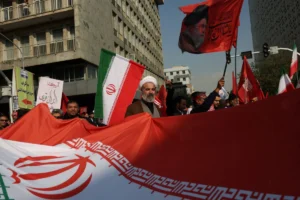
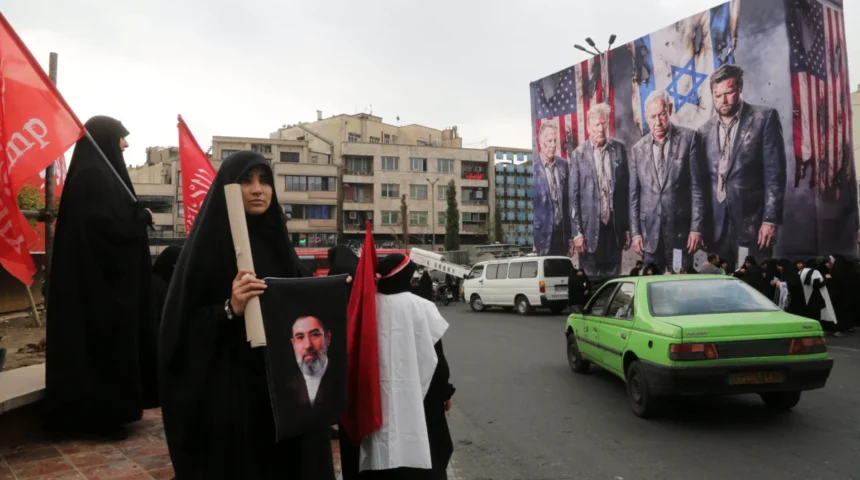
The diplomatic push comes against a backdrop of deeply entrenched hostilities and psychological warfare waged on both sides. In the Iranian capital of Tehran, the visual landscape reflects the fierce nationalist rhetoric and defiance characterizing the Islamic Republic’s stance against its adversaries. Recently, striking scenes unfolded at the iconic Enghelab (Revolution) Square, where a massive propaganda poster was hoisted high above the public space. The display depicted senior Western and Israeli leadership—including US President Donald Trump, US Vice President JD Vance, Israeli Prime Minister Benjamin Netanyahu, and US Special Envoy to the Middle East Steve Witkoff—portrayed with distressed expressions. Below the giant banner, citizens, including women carrying portraits of Iran’s leadership, gathered to demonstrate solidarity with the state’s defiant posture.
These contrasting realities—high-level backchannel diplomacy spearheaded by mediators like Qatar, juxtaposed with fiery domestic posturing and anti-Western imagery in Tehran—illustrate the complex and volatile environment surrounding any potential peace talks. While leaders in Doha stress that peace negotiations are inherently messy and require difficult concessions from all parties, hardliners on both sides often resist engagement, viewing compromise as a sign of weakness.
International observers note that Qatar’s warning is particularly timed to address the paralysis that often grips prolonged conflicts. When warring parties wait for ideal battlefield advantages or complete political alignment at home, conflicts tend to drag on indefinitely, resulting in compounding humanitarian crises and economic fallout across the region. By calling out the illusion of the "perfect moment," Qatari officials are signaling to Washington and Tehran that the cost of inaction far outweighs the political risks of sitting down at the negotiating table.
The mediation efforts led by Qatar reflect a broader anxiety among Gulf Arab states, which have borne the economic and security reverberations of the ongoing confrontation between Iran, the United States, and Israel. These regional neighbors have repeatedly voiced concerns that miscalculations could spark a wider regional conflagration, threatening vital trade routes, energy infrastructure, and regional stability. Consequently, nations like Qatar have taken on an active, albeit challenging, role in keeping channels of communication open even when formal talks appear stalled.
As the conflict persists, the international community watches closely to see whether the urgent appeals from Doha will resonate within the halls of power in Washington and Tehran. For now, the diplomatic pressure remains high, with mediators emphasizing that the window for meaningful dialogue requires political courage rather than perfect conditions.

Related News