Is Jensen Huang’s job on the line? Yale’s Jeffrey Sonnenfeld estimates it’s “about a 50-50”
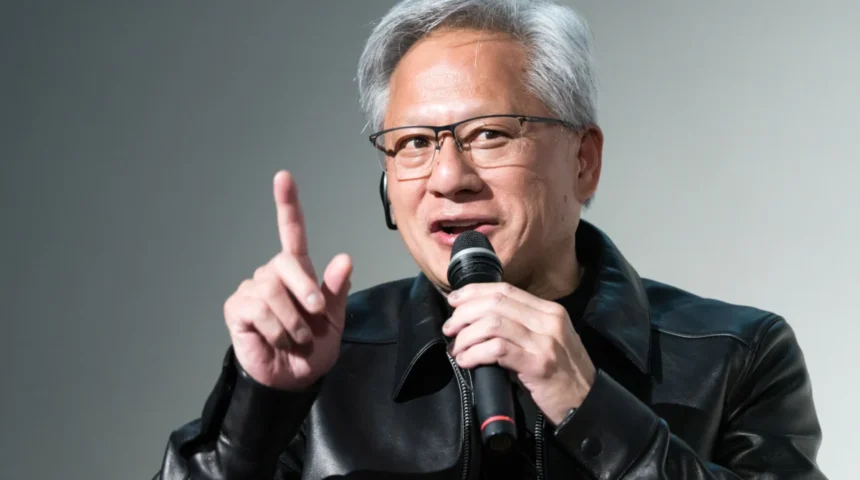
Given Nvidia’s indispensable position at the absolute epicenter of the global artificial intelligence economy—acting as both the primary hardware supplier and a central financial architect for tech startups and cloud providers alike—the stakes of this crisis extend far beyond corporate governance. "I’m responsible for an entire industry," Jensen Huang remarked during a recent sit-down interview with Bloomberg, a statement that underscores just how heavily the modern tech landscape relies on the chipmaker’s stability and leadership.
A spokesperson for the Chinese Embassy in Washington dismissed the espionage allegations in late October as groundless smears and slanders, and no formal charges have been brought against any of the involved parties. Nevertheless, U.S. intelligence officials reportedly briefed President Donald Trump about their security concerns a full year ago. Unnamed senior officials inside the administration told the New York Times that they harbor serious doubts as to whether Huang could have remained entirely unaware of Alice Huang’s alleged intelligence-gathering activities throughout that time. When President Trump was initially briefed, intelligence assessments indicated that officials did not believe Huang was cognizant of the connections, though it remains unclear whether government evaluations have shifted in light of recent revelations. Meanwhile, Nvidia’s board has stated that it currently sees no evidence indicating that company secrets or national security assets were compromised.
The immediate question facing Silicon Valley and Wall Street is whether Huang can successfully navigate this unprecedented crisis. To evaluate the potential trajectories, industry experts have weighed in on the fragility of executive longevity under such extreme geopolitical and personal pressures. Jeffrey Sonnenfeld, senior associate dean for leadership studies at the Yale School of Management and founder of the Chief Executive Leadership Institute—an organization that has frequently hosted Huang at its premier CEO summits—shared his perspective. Sonnenfeld, who expressed personal admiration for Huang, views the executive’s career as technically salvageable but estimates the survival odds at roughly fifty-fifty.
Until now, Sonnenfeld noted, Huang has been universally revered and trusted across the entire technology sector. However, he characterized the current episode as an instance of remarkably poor judgment. Even if Huang was operating out of mere naivete, Sonnenfeld argued, any other employee within Nvidia would face immediate termination for a similar breach, making the underlying recklessness a threat that could lead to an irretrievable loss of confidence among stakeholders.
Sonnenfeld suggested that Huang’s primary buffer against ouster might be found in what social psychologists refer to as idiosyncrasy credits, provided he can conclusively demonstrate that he was duped. The term originates from a 1958 research paper by social psychologist Edwin Hollander, which posited that individuals earn latitude and influence within a group by demonstrating consistent competence and adhering to its foundational rules. Huang has been accumulating goodwill and latitude since he co-founded Nvidia in 1993, driving its evolution into a multi-trillion-dollar juggernaut. However, accumulated goodwill can evaporate rapidly when a high-profile misstep appears self-serving or strikes at the core behavioral norms of the group. In this case, that extended group includes Nvidia’s board of directors, its approximately 42,000 employees who are bound by strict corporate security protocols, and, in a broader sense, the U.S. government, which tightly regulates high-end technology exports.
When examining historical precedents, analysts find very few direct parallels to the unfolding situation at Nvidia. Executives who weather personal scandals sometimes manage to restart their careers at competing firms, as was the case with former Hewlett-Packard CEO Mark Hurd. Between 2005 and 2010, Hurd spearheaded HP’s rise to the top of the tech industry by revenue, but was pressured to resign after inaccuracies were discovered in expense reports that concealed a personal relationship with a contractor. Oracle hired Hurd roughly a month later. Huang, however, has no direct corporate equivalent because Nvidia is inextricably linked to his identity, leadership style, and founding vision.
Nvidia’s internal corporate hierarchy offers little cushion for an unexpected departure. While traditional corporations of Nvidia’s massive scale and global importance typically maintain deep executive benches, Huang has intentionally maintained a remarkably flat organizational structure, managing roughly 60 direct reports by his own account. This decentralized framework makes it challenging to immediately identify a clear internal successor, although his children, both of whom are employed at Nvidia, are occasionally the subject of external succession speculation. This vacuum is expected to fuel a global guessing game regarding his replacement. Corporate boards facing acute crises frequently reach for outside messianic solutions, according to Sonnenfeld, who floated former Google CEO Eric Schmidt as an illustrative example of the kind of external talent boards typically contemplate in existential moments.
The complexity of Nvidia’s predicament is compounded by its critical role at the center of a massive, intricate circular financing web that underpins the current AI infrastructure boom. Nvidia is not merely the dominant supplier of the advanced graphics processing units driving artificial intelligence development; it also functions as a financial backstop for the buildout. Beyond holding equity stakes in hundreds of smaller technology startups, Nvidia has made direct strategic investments in industry leaders such as OpenAI, Anthropic, xAI, CoreWeave, and Nebius.
In August, Nvidia also signed preliminary partnership agreements with major financial institutions including Apollo, BlackRock, Blackstone, Brookfield, Goldman Sachs, and KKR, with the objective of mobilizing more than $500 billion in infrastructure funding over time. Huang previously stated that Nvidia could potentially backstop up to a quarter of that capital mobilization, a maneuver widely interpreted as an effort to distribute systemic financial risk. Nevertheless, a leadership crisis at the absolute center of this financial ecosystem transforms a manageable corporate stumble into a potential systemic collapse.
This financial and strategic vulnerability intersects with existing anxieties surrounding Huang’s public advocacy. Well before the current disclosures, Huang’s persistent lobbying for permission to sell advanced chips to Chinese markets had sparked considerable unease among industry peers and policymakers. Anthropic CEO Dario Amodei, whose company has received financial backing from Nvidia, delivered a blunt critique at the World Economic Forum in Davos this past January, likening the unrestricted export of advanced AI chips to China to "selling nuclear weapons to North Korea."
With the crisis now unfolding, the independent members of Nvidia’s board of directors—comprising everyone except Huang—face the immense task of determining what technology, if any, reached China, and through what distribution channels. This investigation will likely require a deep dive into Nvidia’s commercial relationship with Megaspeed. The Singapore-based cloud computing company, which originated from a Chinese gaming enterprise and evolved into Nvidia’s largest regional buyer in Southeast Asia, purchased roughly $2 billion worth of advanced chips, according to a report published by the New York Times in October 2025. That transaction sparked widespread regulatory questions regarding whether Megaspeed was inadvertently or intentionally helping entities in China circumvent U.S. export restrictions by re-exporting the hardware or granting remote access to Chinese customers. In response to the earlier Times report, an Nvidia spokesperson informed The Hill that the allegations had been thoroughly investigated and debunked.
In the interim, Nvidia announced that Huang will remain at the helm while the investigation proceeds. Fulfilling executive duties will prove a formidable challenge, even for a chief executive accustomed to maintaining a relentless global travel schedule to promote the company’s hardware ecosystem. Immediate operational hurdles include an upcoming appearance before three House committee chairmen for a closed-door briefing scheduled for November 18, closely following the release of Nvidia’s latest quarterly earnings report on November 17. Industry analysts anticipate that even if Huang retains his formal title, operational realities will force him to delegate a substantial portion of day-to-day decision-making authority.
A defining vulnerability for Huang is his lack of super-voting stock, a protective mechanism utilized by many technology founders to cement absolute voting control over their enterprises. Sonnenfeld has frequently advocated for dual-class stock structures that empower visionary founders, noting that Huang’s historical success without such protection has long served as the premier counterargument against that position. However, had Huang possessed super-voting shares, executing a board-level removal or mounting an independent investigation against his will would be significantly more difficult.
Observers suggest this episode may ultimately be remembered as a watershed moment for how the technology sector manages corporate security and guards sensitive intellectual property. Sonnenfeld argues that the tech industry has historically maintained lax security protocols compared with traditional defense contractors, which are subjected to rigorous federal security clearance regimes. The arrest of an OpenAI employee accused of hiding a recording device behind a television screen in an executive conference room underscores a broader vulnerability across the sector. While OpenAI stated that it found no indication that core model weights, source code, or customer data were compromised, the incident highlights the degree to which major AI firms remain exposed to individuals operating within their physical perimeters.
While Huang may ultimately survive the independent board investigation—with industry observers expressing hope that he is cleared of knowingly assisting foreign intelligence operations—the broader test is only beginning. The ultimate judgment will rest with Nvidia’s employees, enterprise customers, commercial partners, and the millions of retail investors whose retirement accounts hold Nvidia stock, all of whom must decide whether an artificial intelligence economy constructed largely around the personal judgment and leadership of Jensen Huang remains viable.

Related News