Midterm Elections and Anti-Data Center Sentiment Spell Major Hurdles for Big Tech and AI Expansion
Democrats’ historic victories in this week’s midterm elections could herald a dramatic shift for the technology industry, particularly as local communities and newly elected officials push back fiercely against the rapid, resource-intensive expansion of digital infrastructure. Across dozens of local ballot measures, voters decisively rejected proposed data center developments. Even in races where the issue wasn’t directly on the ballot, voters elevated candidates who campaigned explicitly on promises to restrict data center growth, such as Texas’s newly elected governor, Gina Hinojosa.
The fallout from these political shifts and their broader implications for the tech sector took center stage on a recent episode of TechCrunch’s Equity podcast. Hosts Kirsten Korosec, Sean O’Kane, and Anthony Ha broke down how the midterm results intersect with surging grassroots activism, corporate strategy, and shifting Wall Street sentiment regarding artificial intelligence and hyperscale computing.
A High-Stakes Political Disconnect for Tech Leaders
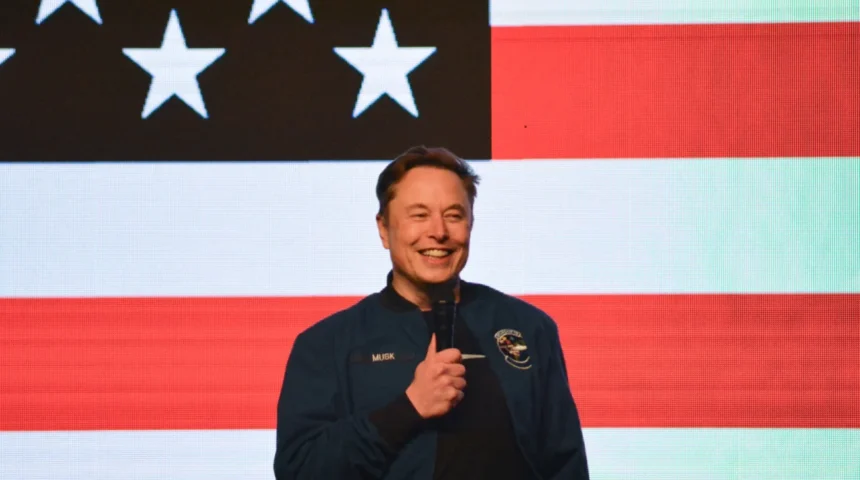
Kicking off the discussion, Sean O’Kane pointed out a striking political and financial irony: one of the nation’s most prominent data center builders and tech moguls, Elon Musk, was also among the largest donors to the Republican Party during the cycle. Musk poured half a billion dollars—potentially more when final tallies are released—into backing Republican candidates. Yet, he now finds himself and his core business enterprises headquartered in a state that has turned remarkably and decisively blue.
That disconnect, O’Kane noted, hangs heavily over the entire tech landscape. Accompanying the broader political wave were numerous local ballot measures across the country designed to curb, stall, or outright prohibit the rapid deployment of data centers. While many of these initiatives initially aimed to fast-track digital infrastructure, voters systematically turned them down, instead approving strict limitations and moratoriums on data center construction.
With Democrats gaining significant ground and political power, a broad consensus has formed within the tech world that severe roadblocks lie ahead. This is especially true in fast-growing technology hubs like Texas. There, incoming Governor Gina Hinojosa has spoken openly about reining in data center expansion as a core campaign promise, following her victory over Greg Abbott.
While O’Kane suggested that the tech industry might be hyper-focusing on this localized political pushback, the panel agreed that the underlying anti-data center sentiment is far from a minor flashpoint.
A Potent, Bipartisan Grassroots Movement
Anthony Ha noted that while data center measures were not present on every single ballot nationwide, the underlying political undercurrent proved to be a powerful and broadly resonant force. The sentiment transcends traditional partisan boundaries, appealing to voters across the political spectrum. However, Democrats proved considerably more adept at harnessing that grassroots energy during the midterm cycle.
Beyond general political dynamics, Ha warned that the next two years—and potentially the political landscape leading up to the 2028 presidential election and beyond—will likely grow increasingly challenging for major technology firms and cloud hyperscalers. The anti-AI and anti-data center backlash has transformed into a potent political weapon that officeholders can leverage effectively.
Kirsten Korosec echoed these sentiments, emphasizing that while data center disputes may not have been the singular catalyst that drove voters to the polls en masse, they have rapidly evolved into a formidable grassroots issue. Much of this public resistance stems from the opaque tactics historically employed by hyperscalers and tech corporations when seeking project approvals. Companies frequently relied on secretive negotiations, forcing local elected or appointed officials to sign strict nondisclosure agreements. Furthermore, these firms often failed to transparently communicate the true scale of their power- and water-gushing facilities, particularly in environmentally sensitive regions like the American Southwest, where water scarcity is an acute, daily concern.
Consequently, voters spanning Republican, independent, and Democratic affiliations recognized these developments as deeply problematic. The resulting motivation was genuine, widespread, and deeply rooted in community protection.
Corporate Pivots and the Rebranding of Infrastructure
Faced with mounting political friction and the looming threat of regulatory intervention, tech companies are already beginning to blink. Korosec pointed out that industry leaders who previously insisted that massive, secretive operations were the only way to function are suddenly altering their stances.
As a prime example, OpenAI recently published a comprehensive policy blueprint addressing responsible AI infrastructure. Notably, the revised policy states that the company will step away from requiring strict nondisclosure agreements for its future projects, signaling a commitment to sharing architectural plans and operating with greater transparency.
This swift corporate pivot underscores a fundamental economic and political reality: when governments establish regulatory certainty or even signal a firm direction toward tighter oversight, private corporations respond accordingly. Without those external pressures, companies rarely adopt sustainable practices voluntarily.
Capitalizing on this moment, OpenAI and other firms have begun referring to these facilities not as "data centers"—a phrase that has grown increasingly toxic in the public lexicon—but rather as "compute campuses."
The rebranding effort drew skepticism and humor from the podcast panel. O’Kane dismissed the terminology shift as an empty exercise that would ultimately fail to alter public perception or ease local opposition, questioning why a leading AI enterprise would dedicate valuable corporate resources to semantic gymnastics that fail to move the needle. Korosec joked that if the industry truly wanted to soften the blow of power-hungry and water-draining infrastructure, they should invent a cutesy avatar to represent the facilities instead. Ha added that if these sites are genuinely benign "compute campuses," the tech executives designing them should build their corporate headquarters directly on-site and work next door to see how local communities truly experience them.
A Growing Squeeze from Wall Street and Regulators
The political headwinds from the midterms arrive alongside another major challenge for the tech sector: a shifting tide on Wall Street. Ha observed that investors are increasingly pushing back against the boundless capital expenditures funneled into building out new data centers and massive AI compute clusters. Financial markets are signaling a growing reluctance to reward companies simply for burning through cash reserves to scale infrastructure.
This creates a complicated, multi-front squeeze for big tech. From a regulatory and political standpoint, building new data centers is slated to become significantly harder over the coming years. Simultaneously, financial markets are cooling on the endless funding of these capital-intensive projects. Yet, paradoxically, to achieve the long-term computational scale that these companies envision for artificial intelligence, they will still need to construct massive physical facilities somewhere.
As the dust settles from the midterm elections, the tech industry finds itself navigating an increasingly complex landscape defined by empowered local communities, skeptical investors, and a political climate that demands far greater accountability from the architects of the digital age.

Related News