Renewable Energy is the Ultimate Shield Against European ‘Fossilflation,’ Financial Analysis Shows
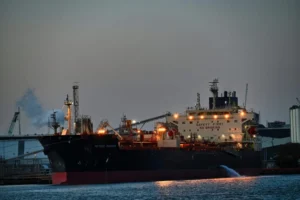
As the intense summer heatwave gradually recedes across the European continent, households and businesses are facing a stark reality: the financial pressure on energy bills shows no sign of cooling down. Recent geopolitical tensions, including the ongoing military conflict involving the United States and Iran alongside the critical closure of the Strait of Hormuz, have once again laid bare an uncomfortable vulnerability at the heart of the European Union. The bloc’s persistent dependence on imported fossil fuels remains a severe threat not only to its long-term climate objectives, but to the immediate stability of its broader economy.
This phenomenon, increasingly described by economists and policy analysts as "fossilflation," is unfolding in real time. Surging global oil and natural gas prices have driven inflation rates across the European Union toward the 3 percent threshold as of July 2026. However, experts emphasize that Europe’s chronic energy affordability crisis cannot be dismissed as a mere string of temporary geopolitical anomalies. Instead, it is the direct consequence of a structural, long-term reliance on highly volatile fossil energy markets.
Yet, as a comprehensive new financial analysis by Veronica Calienno for Positive Money Europe demonstrates, the solution has been readily available. For too long, the transition to renewable energy has been framed narrowly as an environmental crusade or a secondary climate policy. In reality, an energy system underpinned by wind and solar power is fundamentally designed to deliver lower, more predictable prices. By accelerating this shift, Europe could dramatically enhance the affordability of daily life, restore the global competitiveness of its industrial base, secure energy sovereignty, and protect public health and the environment simultaneously.
What Makes Renewables Prices More Stable Than Fossil Fuels?
To understand why renewable energy serves as an economic stabilizer, one must examine the fundamental differences in how fossil fuels and green technologies are sourced and priced. Traditional energy sources like oil and natural gas are geographically concentrated in a handful of regions across the globe, controlled by a small cartel of producers and nations. This concentration leaves supply chains perpetually vulnerable to both accidental disruptions and deliberate geopolitical maneuvering.
Furthermore, the economic architecture of fossil fuel power generation locks operators into continuous exposure to global commodity markets. Fossil fuel power plants must purchase fuel constantly for every hour they remain in operation. Consequently, their production costs fluctuate minute by minute, driven by wars, global health crises, maritime shipping bottlenecks, and the unpredictable rhetoric of world leaders. As long as Europe remains tethered to these fuels, its economy will dance to the tune of international volatility.
Solar and wind energy operate on an entirely different economic model. Once the initial infrastructure is constructed, the marginal operating costs are remarkably low and stable because the fuel source itself is free and omnipresent across the EU. Moreover, output can be accurately forecasted using advanced weather modeling and locked into long-term production contracts. Rather than remaining exposed to wild price swings on international fuel exchanges, renewable energy shifts the financial commitment entirely toward upfront capital investment.
While it is true that the renewable sector carries its own supply chain dependencies—particularly regarding imported technologies and raw materials from nations like China—the nature of the economic risk is fundamentally different. A disruption in the supply of foreign solar panels or critical minerals may increase the capital expenditure required to construct new installations, but it does not raise the cost of generating electricity from wind and solar farms that are already built and operational.
This structural advantage explains why solar and wind have decisively become the cheapest sources of new electricity generation available today. The levelised cost of electricity (LCOE)—which measures the average net present cost of electricity generation for a plant over its operational lifetime—has fallen precipitously for renewables. Driven by rapid technological innovation, manufacturing scaling, and aggressive investment, the LCOE plummeted by 90 percent for solar photovoltaic systems and 70 percent for onshore wind between 2010 and 2024, according to data from the International Renewable Energy Agency.
Across the European Union today, the LCOE for solar ranges widely between 24 and 62 euros per megawatt-hour, depending heavily on the specific member state. Onshore wind ranges from 36 to 51 euros per megawatt-hour, while offshore wind spans 61 to 95 euros. By stark contrast, electricity generated from natural gas sits at a much higher range of approximately 109 to 181 euros per megawatt-hour. The financial equation is unmistakable: producing power from sunshine and wind is vastly more economical than burning gas.
This economic reality is rapidly reshaping the European electricity landscape. Following the dramatic market shocks experienced since 2022, renewables accounted for 47.2 percent of the EU’s total electricity generation in 2025. Solar and wind combined made up 30 percent of the mix, while fossil fuels shrank to just under 29.6 percent. This shift reflects not only ambitious political decarbonization targets, but a straightforward market truth: investing in renewable generation has increasingly become the most profitable path forward.
How Wind and Solar Lower Electricity Prices
The accelerating deployment of green energy is already exerting downward pressure on European electricity markets. Positive Money Europe’s recent research indicates that between 2023 and 2025—a period following the severe price spikes triggered by Russia’s invasion of Ukraine—solar and wind generation successfully reduced wholesale electricity prices across the EU by an average of 24.2 percent.
The mechanism behind this price reduction lies in the design of the EU electricity market, which operates on a merit-order system. Under these regulatory rules, the cheapest available sources of electricity are dispatched to meet demand first. More expensive power plants are only brought online when demand exceeds the output of cheaper options, and the marginal cost of the final, most expensive plant required to balance the grid sets the uniform market price for all generators during that hour.
Because solar and wind facilities boast near-zero operating costs, they consistently enter the dispatch queue first, followed by nuclear, gas, and coal facilities. This dynamic lowers wholesale prices through two distinct channels. First, as greater volumes of renewable electricity flood the grid, they displace expensive coal and gas infrastructure. Even during hours when natural gas is still required to set the final market price, a high volume of renewable generation can push the most expensive, least efficient gas turbines out of the market, allowing a more efficient gas plant to set a lower clearing price.
Second, when weather conditions allow solar and wind output to fully cover total consumer demand, these zero-marginal-cost technologies effectively set the market price themselves, driving wholesale electricity costs down significantly.
Despite these gains, Europe’s power grid remains vulnerable. Natural gas is no longer the bloc’s primary source of electricity generation, yet it frequently dictates the marginal price during peak hours when renewable output falls short. Because natural gas prices remain exceptionally volatile, that volatility is transmitted directly into the broader electricity market, preventing wholesale power prices from fully decoupling from gas.
The decisive factor, therefore, is scale. Renewables do not merely inject cheaper electricity into the grid; at sufficient deployment levels, they systematically reduce the number of hours during which natural gas sets the marginal price. The more frequently this occurs, the more thoroughly Europe can sever the link between fossil fuel market shocks and domestic electricity bills.
The magnitude of this price-lowering effect depends heavily on a country’s specific renewable penetration rate. A stark divergence is visible across EU member states. In Spain, where the capacity of wind and solar power nearly doubled between 2016 and 2025, these technologies reduced wholesale electricity prices by an impressive 35.6 percent.
Furthermore, the economic impact is non-linear, meaning prices fall at an accelerating rate as renewable capacity expands. In France, lifting renewable penetration from 10 percent to 20 percent yields a wholesale price reduction of roughly 16 percentage points, whereas scaling penetration from 25 percent to 35 percent triggers a much larger reduction of approximately 45 percentage points. Conversely, in Italy, where natural gas continues to account for roughly 50 percent of electricity generation, wholesale prices have declined by a modest 11.2 percent.
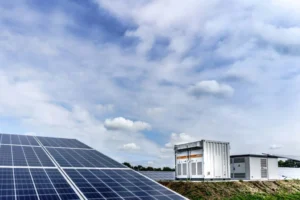
Experts stress that expanding raw generation capacity alone is insufficient. Storage and grid flexibility—technologies that allow electricity to be stored and consumed long after it is generated—are vital complementary assets. Because solar and wind are intermittent, generation drops off during nighttime hours or overcast days, creating potential price spikes where gas plants rush back in to set the market price. Widespread deployment of grid-scale battery storage smooths out these fluctuations, anchoring long-term system stability.
The Investment Gap Europe Still Needs to Close
The broader economic lesson for European policymakers is unmistakable. The deeper the EU integrates solar and wind into its energy infrastructure, the more structurally insulated its economy will become against external price shocks. Renewable energy functions as a powerful multi-purpose public asset: it subdues inflation, curtails emergency fiscal expenditures on public bailouts, reinforces energy sovereignty, bolsters industrial competitiveness, and eases the cost of living for ordinary citizens.
However, this transition will not accelerate at the necessary pace without deliberate intervention. To realize the full economic benefits of lower bills and reduced dependency, Europe must scale up clean energy deployment aggressively. This requires a coordinated alignment of public investment, targeted regulatory policy, and a financial sector willing to back long-term infrastructure.
Currently, the European Union remains some distance from meeting these financial targets. The European Commission’s Clean Energy Investment Strategy, unveiled in March 2026, projects that total annual energy-system expenditures must surge to approximately 660 billion euros annually by 2030, and climb further to 695 billion euros per year between 2031 and 2040.
Securing this capital remains a formidable hurdle. Data from a recent European Investment Bank survey highlights that access to finance is cited as the single greatest barrier by clean technology firms, with 30 percent identifying it as a major obstacle—more than double the proportion reported by companies in other economic sectors.
This capital constraint is rooted in the unique financial profile of renewable energy projects. While clean energy is exceptionally inexpensive to operate, it requires massive upfront capital for planning, permitting, equipment procurement, civil installation, grid interconnection, and storage systems. Once constructed, the fuel is free, but clearing the initial financing barrier is critical.
Consequently, macroeconomic monetary policy and the prevailing cost of capital play a decisive role in the speed of the transition. Higher interest rates penalize capital-intensive clean energy projects far more severely than fossil fuel alternatives. Economic modeling demonstrates that raising central bank interest rates from 2 percent to 6 percent increases the levelised cost of electricity for a solar-plus-storage installation by roughly 33 percent, and for onshore wind by about 24 percent. By contrast, the same interest rate hike increases the cost of gas-fired generation by a mere 3.7 percent.
Expensive borrowing costs actively impede the deployment of structurally cheaper energy, risking delays to the very infrastructure investments designed to shield European consumers from future fossil fuel crises.
If Europe is genuinely committed to achieving lower utility bills, industrial resilience, and immunity from global commodity shocks, it can no longer afford to treat renewable energy investment as an optional environmental luxury. It must be recognized and financed as critical price-stability infrastructure, utilizing every available monetary and fiscal tool to accelerate the structural exit from fossil fuels.

Related News