Nvidia’s Board of Directors Launches Independent Investigation After CEO Jensen Huang Admits to Affair and Targeted Chinese Espionage Operation
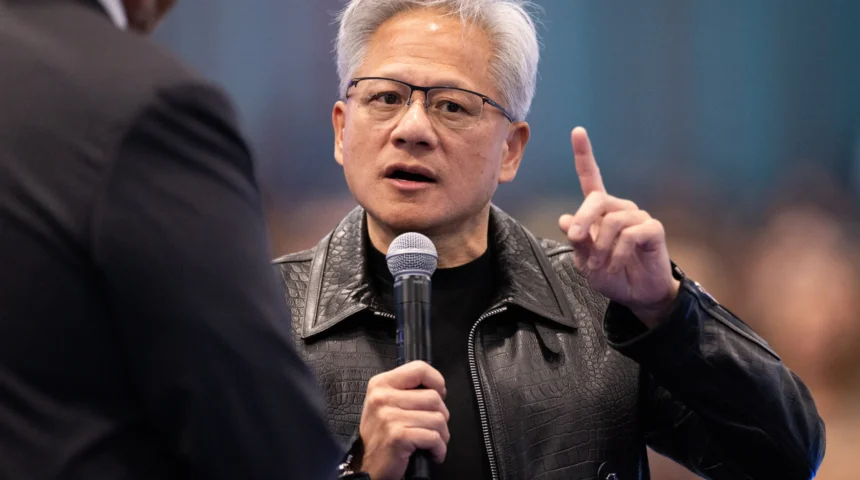
Nvidia’s board of directors announced Sunday that it is launching an independent investigation following explosive reports that CEO Jensen Huang had been targeted by a sophisticated Chinese spy operation. The development places one of the most prominent leaders in the global technology sector at the center of an international security storm, merging high-stakes corporate governance with geopolitical espionage.
According to reports from Bloomberg and other major news outlets, the controversy came to light after Huang sent a direct message to company employees admitting that he had engaged in an affair with Alice Huang, a former executive at Megaspeed, a Singapore-based chip company. The personal admission follows a confidential U.S. intelligence memo that circulated among policymakers earlier this year. That memo claimed Alice Huang had been actively recruited by China’s Ministry of State Security for the specific purpose of gathering intelligence and spying on Nvidia’s chief executive officer.
In his message to the company, Jensen Huang did not shy away from the personal and professional gravity of the situation.
"I owe my family and all of you an apology," Jensen Huang wrote in his message. "I was unfaithful to my wife. My actions hurt her and our children. There is no excuse for what I did. I am deeply sorry."
Huang added candidly that he had "fallen short" of the immense responsibility that comes with his leadership role at the semiconductor giant, which has become the crown jewel of the artificial intelligence boom.
"To my colleagues at NVIDIA, including those I have worked alongside for decades, and to our board, partners, and shareholders around the world: you deserve better from me," he stated.
The timing of the revelation places Nvidia in a particularly delicate geopolitical spotlight. AI hardware, specifically the advanced graphics processing units and specialized chips designed and manufactured by Nvidia, has served as a central battleground in the ongoing trade and technological war between the United States and China. U.S. regulators have tightly restricted the export of high-end AI chips to Chinese markets in an effort to curb Beijing’s technological and military modernization. Meanwhile, Huang has maintained a visible and active presence on the political stage, including what appears to be a close working relationship with President Donald Trump, who has styled himself as an ardent cheerleader for the American AI industry, famously pushing back against conventional nomenclature regarding the technology.
In its official announcement on Sunday, Nvidia’s board of directors sought to reassure stakeholders, stating that it has "no reason to believe" that either national security or proprietary company secrets were compromised as a result of the relationship or the alleged espionage attempt. The board added that Jensen Huang "fully supports the review and has committed to cooperating with it" and expressed its ongoing "confidence in Jensen and his leadership team."
The high-level review will be conducted by independent members of Nvidia’s board of directors, who will work closely alongside outside legal counsel to ensure a thorough and objective evaluation of the facts.
Prior to Sunday’s board announcement and the subsequent admission by the CEO, Nvidia had responded to earlier inquiries regarding Huang’s relationship with Alice Huang by maintaining that the pair’s interactions were "not unusual." Company representatives had previously emphasized that Nvidia maintains strict operational boundaries and does not share classified information with commercial customers or external partners.
The incident also highlights a broader, growing concern within Silicon Valley and the wider technology sector. As artificial intelligence continues to reshape the global economy and national security landscapes, intelligence agencies and corporate security teams have increasingly warned companies about the threat of foreign industrial espionage. Other major players in the AI boom have recently issued blunt warnings to their own employees, urging them to remain vigilant against potential foreign spies who might employ sophisticated tactics, including honey-traps involving romance or sexual entanglements, to extract sensitive information or compromise key leadership figures.
As the independent investigation moves forward, the tech industry and federal regulators will be watching closely to see what additional details emerge regarding the alleged foreign intelligence operation and its implications for one of the world’s most valuable technology companies.

Related News