Autonomous Vehicle Startups Surge in 2026 as AI Breakthroughs Lower Barriers to Entry
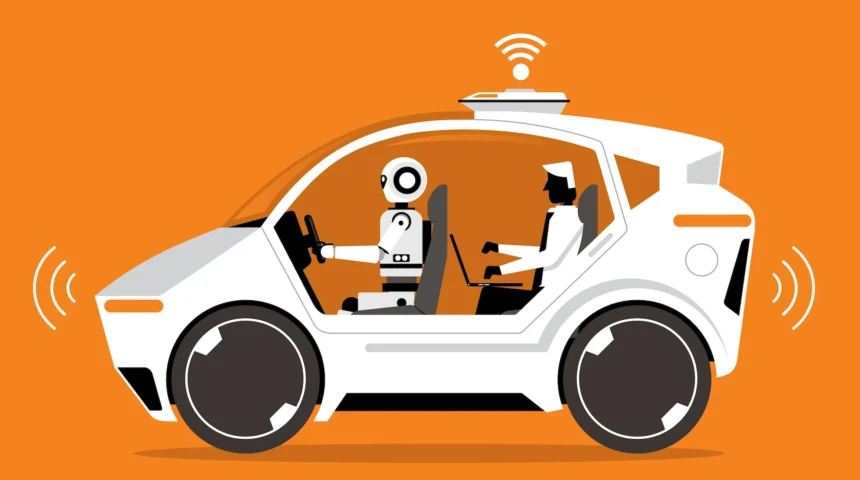
Welcome back to TechCrunch Mobility, your premier hub for exploring the future of transportation and the rapidly expanding role that artificial intelligence plays in shaping it. To get this comprehensive industry reporting delivered straight to your inbox, you can sign up for free on the TechCrunch newsletters page.
For quite some time, I have joked both here and on the Equity and Autonocast podcasts that the autonomous vehicle industry feels a lot like 2016, at least when measuring the sheer volume of hype and excitement surrounding the sector. However, a recent conversation with Puneeth Meruva, a partner at early-stage venture capital firm Trucks VC, has completely forced a reevaluation of that comparison. There is mounting evidence to suggest that 2026 is turning out to be even hotter—at least by specific dealmaking metrics—than those wildly frothy days of a decade ago.
Trucks VC, which specializes deeply in early-stage investments across the transportation ecosystem, has fielded pitches from 81 new autonomous vehicle startups so far in 2026. That figure represents a striking two-thirds increase compared to last year’s pace, and it is more than enough to surpass the peak boom years of the mid-2010s. In a newly published blog post, the venture firm argues compellingly that the industry is currently in the midst of a second, significantly larger AV wave fueled by fundamental technological breakthroughs. Naturally, that technological catalyst is advanced artificial intelligence.
"For a long time AV companies were trying to go from what was AV 1.0 to AV 2.0, which is kind of this holy grail end-to-end architecture for AVs," Meruva explained during our discussion. "And I think the foundation models now provide a technical architecture that makes those end-to-end systems possible."
These foundational models are proving to be exceptionally adept at generalizing across wildly divergent environments and unpredictable real-world scenarios. By leveraging this capability, developers can potentially make autonomous vehicles significantly cheaper and faster to deploy at scale. Furthermore, the arrival of powerful open-source models—such as Nvidia’s Alpamayo and Qwen’s general-purpose vision-language-action models—has drastically lowered the barrier to entry, making it far easier for lean, newly minted startups to get off the ground.

Today, the barrier to entry is lower than it has ever been in the history of the sector. Meruva noted that Trucks VC is consistently observing early-stage startups deploy operations within just a few months of inception and on budgets of less than $1 million. While Meruva opted not to disclose specific company names, the venture firm has already deployed capital into several of these newly formed entities.
When reviewing the roster of 81 startups that pitched Trucks VC over the course of the year, the initial assumption was that the vast majority would be applying their autonomous driving technology to industrial niches like construction, warehousing, agriculture, and mining. While those sectors were certainly well represented, the real surprise was the rapidly expanding volume of startups pitching pure-play robotaxi businesses. Even more ambitious, many of these young companies are explicitly positioning themselves as direct competitors to industry heavyweight Waymo.
While such ambitions might sound audacious or even detached from current market realities to casual observers, Meruva believes there is genuine breathing room for smaller, more agile market participants.
"In this world, smaller, more niche autonomy companies can compete—maybe they’re not competing with Waymo on a global scale, but maybe they’re competing in specific regions or specific types of routes," Meruva pointed out. Looking ahead, he does not foresee any immediate slowdown in this momentum and anticipates an even larger cohort of AV startups pitching the firm next year.
Deals and Capital Movements
Regular readers of this newsletter know that our team has closely tracked Slate Auto ever since we broke the original story regarding Jeff Bezos’ secret backing of the electric vehicle startup back in April 2025. However, the manufacturing accelerator that Slate Auto spun out from is what captured our attention this week.

Re:Build, a Massachusetts-based manufacturing accelerator, successfully raised $2.1 billion in new capital. The financing aims to expand Re:Build’s capacity to manufacture hard tech products and launch new industrial startups. The investment round was co-led by General Catalyst and JPMorganChase’s Strategic Investment Group, with other participating investors remaining undisclosed. Co-founded by former Amazon commercial CEO Jeff Wilke, the company has frequently billed itself as "America’s answer to Shenzhen."
The broader mobility and hard tech investment landscape saw several other major transactions this week. Bedrock Robotics announced that it has raised $600 million in a Series C funding round that values the autonomous vehicle technology startup at $4.1 billion. CapitalG and Emergence Capital co-led the round, with participation from new investors including the US Innovative Technology Fund, Bessemer Venture Partners, and Temasek. They were joined by existing backers 8VC, Georgian, Valor Equity Partners, Xora, Eclipse, Perry Creek Capital, and Nvidia.
In food delivery and software, DoorDash has entered into an agreement to acquire Instacart for $17 billion. Meanwhile, DoorDash disclosed in its third-quarter earnings report that it has so far only received a modest several hundred orders originating from AI agents, highlighting the nascent stage of autonomous commerce integration. Additionally, PreScalar, a San Francisco-based startup building software and testing infrastructure for modern factories, raised $7 million in a seed round co-led by Dynamo Ventures and BMW i Ventures. Additional participation came from Blue Wire Capital, Uplift Ventures, and Antler. The startup was founded last year by industry veterans with professional backgrounds at Cruise, Google, Rivian, and Waymo.
Notable Reads and Industry Tidbits
In other notable industry developments, Elroy Air—a company developing autonomous heavy-cargo drones designed for defense, rapid response, and commercial logistics—has appointed Jeremy Hux as its chief financial officer as it actively prepares for an eventual initial public offering.
Meanwhile, Ford announced the introduction of two new electric vehicle chargers that will allow its forthcoming Fathom pickup truck to function as an integrated battery capable of powering an entire residential home or feeding electricity back into the electrical grid.

General Motors is officially embracing hybrids, marking a notable strategic shift for the American automaker. GM is also working to put its past driver data-selling controversy behind it, having agreed to a $220 million settlement with 36 states following previous settlements with California and the Federal Trade Commission regarding allegations that it improperly sold private driving behavior and location data to third-party brokers.
Commercial autonomous trucking achieved another milestone as Kodiak AI secured its first commercial agreement to supply driverless trucks for public highways. The company will deliver 75 self-driving commercial trucks to freight operator DTL Transport starting in 2028.
Rivian reported its third-quarter earnings, highlighting several key developments. Strong demand for the newly introduced R2 SUV has prompted the company to raise its 2026 delivery guidance by a couple thousand vehicles. Rivian had previously projected deliveries between 65,000 and 70,000 EVs this year, but it has now bumped the floor up to 67,000 units. Furthermore, the $5.8 billion joint venture between Rivian and the Volkswagen Group is expanding to include collaborative work on advanced AI assistants, though executives have not yet clarified whether this expansion will involve additional financial investments from Volkswagen.
Tesla is leaning on Turo to help accelerate consumer adoption of its Full Self-Driving (Supervised) software suite, while Waymo and Toyota have officially formalized their manufacturing partnership, moving past exploratory discussions. Toyota will manufacture AV-ready bZ4X vehicles—integrated with Waymo’s proprietary self-driving system—at its manufacturing facility in Japan. These vehicles are slated for deployment in robotaxi fleets across Japan, the United Kingdom, and other international markets, with both companies hinting that the arrangement could eventually pave the way for licensing agreements enabling Waymo’s autonomy stack in personally owned consumer vehicles.
For founders, investors, and builders based in and around the Boston area, the TechCrunch Founder Summit is scheduled for November 4. The one-day event is tailored specifically for startup founders, aspiring entrepreneurs, and venture capitalists, offering advice-driven presentations from serial founders and VCs alongside extensive networking opportunities. TechCrunch Mobility readers can secure a 30% discount on registration by using the promo code mobility30 at checkout.

Related News