Apple CEO Defends the Company’s AI Strategy in First Major Interview
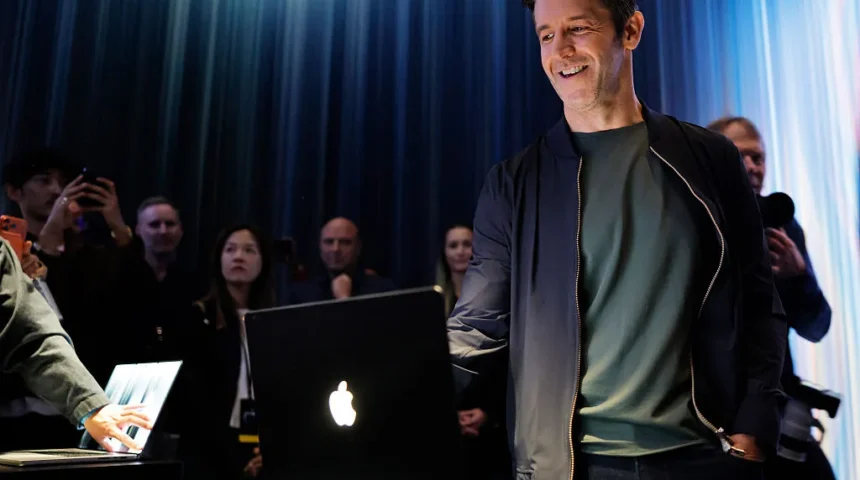
Apple Chief Executive Officer John Ternus has broken his silence on the tech giant’s position within the rapidly evolving artificial intelligence landscape, pushing back against critics who have long argued that the company has lagged behind its Silicon Valley competitors.
In a wide-ranging interview with veteran technology journalist Steven Levy for Wired, Ternus addressed the narrative surrounding Apple’s cautious approach to artificial intelligence. Over the past couple of years, industry analysts and consumers alike have frequently characterized Apple as falling behind rivals such as OpenAI, Google, and Microsoft. These perceptions were amplified by delays in rolling out a significantly more powerful and conversational version of Siri, a feature upgrade that consumers and developers had anticipated for quite some time before it finally materialized this past summer.
Despite the outside noise, Ternus—a long-standing Apple executive who officially stepped into the role of chief executive officer at the beginning of September following a high-profile leadership transition—remains entirely unruffled by the criticism. Acknowledging the intense public scrutiny and endless commentary that consistently follows the world’s most valuable technology companies, Ternus remarked that "everyone has an opinion" regarding Apple’s product roadmap and deployment timelines. However, he offered a resolute vote of confidence in the company’s current trajectory, stating clearly, "I really like where we’re at."
Ternus’s comments provide a clear window into the philosophy guiding Apple as it integrates advanced machine learning and generative artificial intelligence capabilities across its sprawling ecosystem of hardware and software products. Rather than rushing to flood the market with superficial features simply to match competitors feature-for-feature, Apple is maintaining its historical preference for measured, deeply integrated deployment.

Elaborating on this deliberate philosophy, Ternus emphasized that Apple is "absolutely going to leverage AI" in its new lineup of products, signaling that the technology remains a foundational pillar for future innovation. Yet, he drew a sharp distinction between adopting technology for the sake of marketing hype and implementing it to genuinely elevate the user experience. "We don’t want to ship AI for AI’s sake," Ternus told Wired. "When we’re doing it right, people won’t have to think about whether it was AI that made this happen or more traditional software. What matters is, did we build something that they really love?"
This philosophy of seamless integration has long defined Apple’s approach to consumer technology, from the introduction of capacitive touch interfaces to mobile computing and custom silicon architecture. By embedding machine learning models deeply into the operating system architecture—ensuring privacy, speed, and low power consumption through on-device processing where possible—Apple aims to make advanced computational tools feel entirely natural rather than like an intrusive bolt-on feature.
The interview also touched upon broader, more philosophical questions concerning the future of computing, particularly as autonomous AI agents grow more sophisticated. When pressed by Levy on whether the rise of powerful AI agents could fundamentally disrupt Apple’s business model by potentially rendering traditional apps entirely unnecessary, Ternus offered a perspective rooted in the company’s core identity as a creator of physical and digital consumer products.
"That could make life really easy, I suppose," Ternus acknowledged, addressing the theoretical future where software applications might be superseded by autonomous personal agents managing tasks behind the scenes. However, he quickly pivoted to the fundamental human element that drives Apple’s corporate culture and product development philosophy. "The creation of products is a deeply human and personal thing, something that we love to do."
As Ternus settles into his new tenure as CEO following a massive product launch event in Los Angeles, his recent remarks signal continuity in Apple’s strategic vision. The company is betting that consumer loyalty will ultimately rest not on who manages to release experimental AI models the fastest, but on who can deliver the most cohesive, reliable, and deeply integrated user experience. With the revamped Siri finally operational and new hardware hitting the market, Apple under Ternus is signaling that it intends to play the long game in artificial intelligence, prioritizing refinement, utility, and human-centric design above all else.

Related News