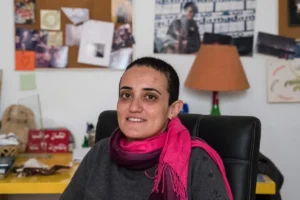
CPJ Condemns Conviction and Detention of Mada Masr Editor Lina Attalah, Demands Immediate Release and Reversal of Outlet Closure
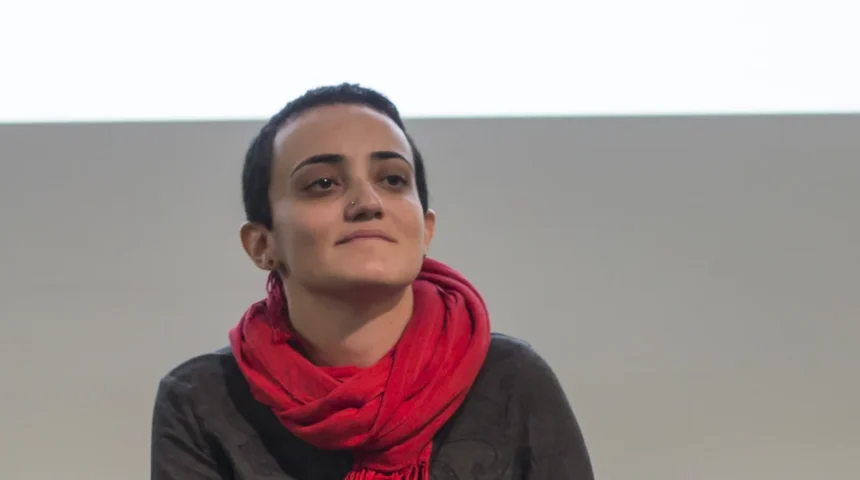
The Committee to Protect Journalists has strongly condemned the conviction of Lina Attalah, the editor-in-chief of the prominent independent Egyptian news outlet Mada Masr. Attalah was found guilty on charges of operating an unlicensed website, a ruling that has triggered widespread alarm among international press freedom advocates and human rights organizations. In response to the verdict, press freedom organizations and legal defenders are urgently calling on Egyptian authorities to completely reverse the ruling, secure the immediate release of the respected journalist, and bring an immediate halt to what they describe as an escalating, systematic campaign against independent journalism inside the country.
Mada Masr stands as one of the very first and remarkably few remaining independent media outlets operating within Egypt’s tightly controlled information landscape. For years, the platform has served as a vital, fearless source of critical reporting, deeply probing topics of significant public interest that mainstream state-aligned media frequently ignore. Because of this unwavering commitment to independent journalism, the outlet has long faced intense pressure, regulatory obstacles, and harassment from Egyptian authorities.
According to reports published by the newsroom on Tuesday, the New Cairo Misdemeanor Court handed down a severe judgment against the editor-in-chief. The court ordered Attalah to pay a staggering fine of 3 million Egyptian pounds, which equates to approximately US$54,000. Alongside the heavy financial penalty, the judicial body ordered the complete closure of the media outlet and the immediate confiscation of all its physical equipment, hardware, and operational assets. Following the pronouncement of the verdict, Attalah was taken directly into state custody. Two independent Egyptian defense lawyers subsequently confirmed to the Committee to Protect Journalists that she will remain indefinitely detained until the multi-million-pound fine is fully paid off, effectively tying her liberty to an insurmountable financial barrier.
The ramifications of this judicial decision have sent shockwaves through the regional and international media communities. Sara Qudah, the Regional Director for the Committee to Protect Journalists, issued a sharp and unequivocal condemnation of the proceedings. She emphasized that the conviction of Lina Attalah and the formal order to shut down Mada Masr represent a devastating and historic blow to the fragile state of press freedom in Egypt. Furthermore, Qudah described the ruling as a direct, chilling message specifically engineered to dismantle whatever independent media infrastructure remains in the country.
Elaborating on the broader implications of the case, Qudah noted that Attalah and Mada Masr represent some of the most prominent, respected, and courageous voices in Egypt’s independent media landscape. They have consistently provided essential, rigorous reporting on complex issues that might otherwise go completely unreported under the current political climate. The CPJ regional director warned that if the Egyptian state is permitted to place one of its most respected editors behind bars and unilaterally shut down her entire newsroom with impunity, no independent journalist working inside the country can consider themselves safe. She reiterated that Attalah must be released without delay and that Mada Masr must be granted the unfettered right to continue its journalistic work.
Serious procedural questions have also been raised regarding the fairness and transparency of the trial itself. According to detailed accounts and reports emerging from the courtroom proceedings, journalists and independent observers were explicitly barred from remaining inside the courtroom during the most critical stages of the hearing. Furthermore, the defense team was reportedly blocked from presenting key procedural requests to the bench. These blocked motions included formal requests to submit vital evidentiary documents and to call crucial witnesses who could have shed light on the case.
Adding to the legal controversies of the day, Attalah’s formal objections regarding the unexpected appointment of a lawyer whom she had not chosen or retained were reportedly completely disregarded by the court. The judicial panel ultimately pushed forward and announced its verdict amid loud protests and objections from her legal team. Legal experts and human rights defenders argue that these reported restrictions and actions cast a dark shadow over the entire judicial process, raising profound concerns regarding transparency, adherence to due process, and the fundamental right to a fair and impartial hearing.
These procedural concerns were echoed forcefully by local human rights defenders closely monitoring the case. Lobna Darwish, the advocacy director at the Egyptian Initiative for Personal Rights—whose specialized lawyers form a vital part of Attalah’s defense team—did not mince words when speaking to the Committee to Protect Journalists. Darwish characterized the legal proceedings as a farcical and highly exceptional trial that fundamentally lacked the most basic, universally recognized rules of a fair trial. She asserted that the court session completely squandered Lina Attalah’s legal rights as a defendant, as well as the fundamental professional rights of her entire defense team to mount a vigorous and unhindered defense.
The underlying catalyst for the prosecution centers around administrative hurdles regarding media licensing. Mada Masr had repeatedly and formally sought to obtain a legal operating license from the relevant Egyptian authorities over the years. However, these administrative applications were either systematically rejected or simply left unanswered by the state bureaucracy. Legal analysts point out that prosecuting a prominent editor and shutting down her entire media organization over an unresolved, bureaucratic licensing process creates a dangerous precedent. It effectively turns administrative regulation into a blunt, efficient mechanism for suppressing independent media and punishing critical editorial lines under the guise of legal compliance.
This aggressive ruling does not occur in a vacuum; rather, it arrives squarely in the middle of a much wider and increasingly aggressive crackdown on Egyptian journalism as a whole. In recent weeks and months, the press corps has witnessed numerous alarming developments, including the high-profile arrests of six journalists associated with Matsadaash, an independent investigative media platform. The cumulative psychological and institutional effect of these coordinated actions is clear: to systematically intimidate reporters, severely restrict public-interest investigations, and further erode the ever-shrinking physical and digital space designated for independent reporting in the nation.
The statistical reality of press freedom in Egypt reflects this deteriorating climate. In the Committee to Protect Journalists’ 2005 Annual Prison Census, Egypt was already documented and listed among the top global jailers of journalists, holding 18 media workers strictly behind bars. This grim baseline was accompanied by a continuous pattern of retaliatory arrests targeting both journalists themselves and, in some chilling cases, their family members. By late October, the total number of journalists behind bars in the country had climbed to 25, marking the highest recorded figure since 2021 and demonstrating a worsening trend of repression against the press.
In an effort to ensure comprehensive and accurate reporting, the Committee to Protect Journalists reached out directly to the Egyptian Public Prosecutor’s Office. An official email was dispatched seeking clarification on several critical aspects of the case: the specific legal basis justifying Lina Attalah’s ongoing detention, the rationale behind the court’s rejection of defense requests to submit key documents and call witnesses, and the reasons for the exclusion of a representative from the Journalists Syndicate from attending the courtroom hearing. As of the time of publication, the Public Prosecutor’s Office has not responded to these inquiries.

Related News