Hyperscaler Evolution and Market Correction: Key Risks and Technical Realities
The investment landscape is bracing for a profound transformation, driven by an insightful observation recently highlighted by the Goldman Sachs Delta One desk. According to market commentary, the critical pivot point to watch occurs when hyperscalers shift their strategic focus away from acquiring raw capacity at virtually any cost toward optimizing the returns on the digital infrastructure they have already established.
As the tech sector matures, questions arise regarding what happens when this massive wave of spending on data centers inevitably slows down. To understand how this forthcoming hyperscaler evolution will reshape capital expenditure, analysts often draw an analogy to the lifecycle of a newly launched airline.

During its foundational phase, an airline’s primary objective is acquiring aircraft. Capital expenditures during this initial period are astronomical, with virtually the entirety of outbound spending funneling into a very narrow cohort of suppliers, including airframe and engine manufacturers, alongside the financial institutions backing them. Every single quarter results in a larger fleet, and every quarter those specific suppliers log substantial revenue growth.
This phase mirrors the exact position hyperscalers occupy in the current market cycle. In this structural comparison, the airplanes represent data centers, while the primary suppliers correspond to the producers of advanced semiconductors, memory units, foundry capacity, heavy transformers, and the extensive power infrastructure required to keep them running.

However, this dynamic is not permanent. Eventually, an airline’s fleet reaches an optimal size, and the pace of new aircraft acquisitions inevitably decelerates. At that juncture, corporate attention pivots decisively away from purchasing equipment and toward operational efficiency—maximizing seat occupancy, fine-tuning yield management, reducing fuel burn, accelerating turn times, optimizing baggage fee structures, and scheduling routine maintenance intervals.
Consequently, during this second phase, the aircraft manufacturer’s revenue typically softens. Simultaneously, alternative vendors specializing in revenue management software, fuel hedging programs, and customer loyalty frameworks begin capturing a larger share of the capital flow. While the airline continues to compound its earnings, the original suppliers experience a distinct contraction in their revenue share.
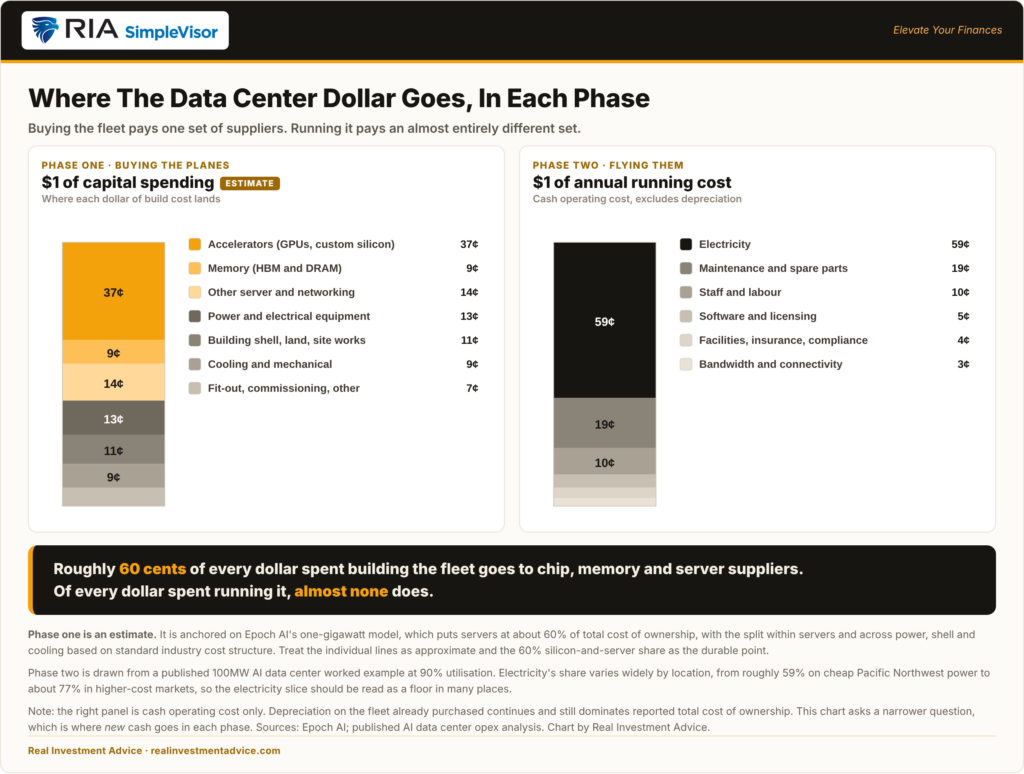
A parallel evolution awaits the technology sector. At present, vendors supplying data center buildout materials and services enjoy robust pricing power. Yet, a time will come when hyperscalers possess sufficient data center capacity, making efficiency and optimization their overarching operational goals. When that transition arrives, capital allocation will pivot heavily toward inference efficiency, advanced scheduling software, specialized cooling systems, long-term power purchase agreements, and custom silicon designs—some of which hyperscalers are already developing in-house. While overall technological spending may not contract materially, the ultimate beneficiaries of those capital flows will experience a dramatic shift.
Market Trading Update and Technical Realities
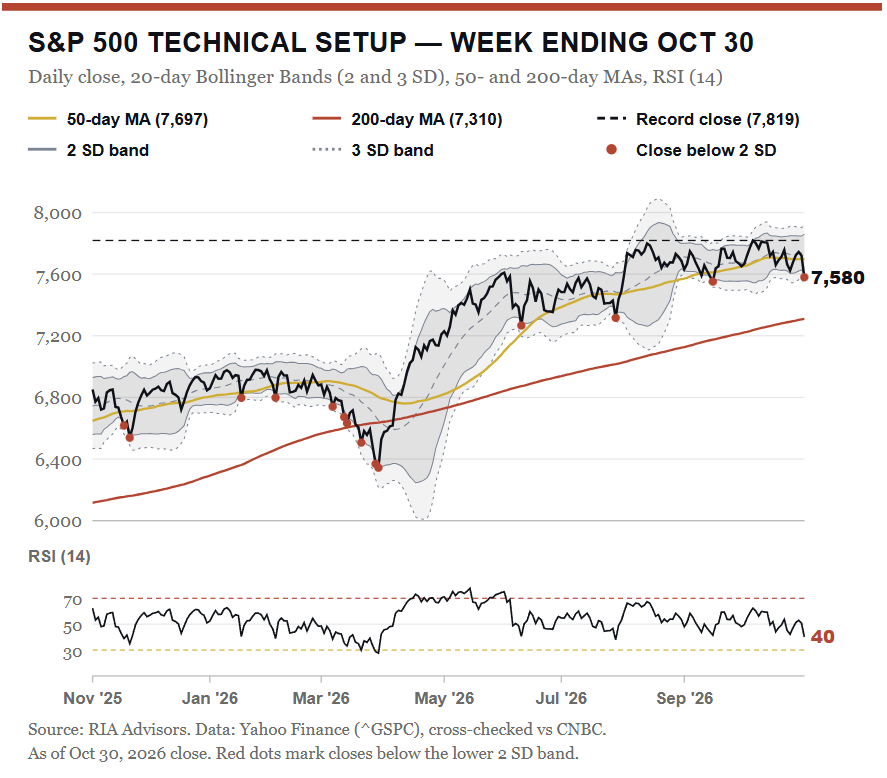
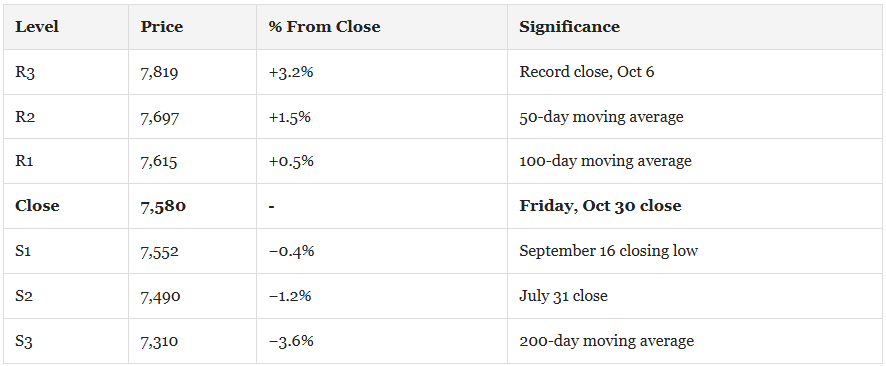
Recent trading sessions have delivered tangible technical damage to the broader equity market. The S&P 500 recently closed at 7,580.07, marking its first close beneath its 100-day moving average since early April. The index now hovers slightly below that average at 7,615 and sits roughly 1.5% beneath its 50-day moving average at 7,697. Measured against its October record close of 7,819, the market is down approximately 3.1%.
Despite this pullback, technical analysts emphasize that the broader bull trend remains intact. The index continues to trade comfortably above its rising 200-day moving average, positioned near 7,310. This long-term indicator has reliably defined the primary market trend; while the index briefly slipped beneath that benchmark for a period in the spring, it has successfully defended the level ever since. The short-term trend, however, presents a distinct set of challenges.
Momentum indicators confirm the recent technical breakdown. The Relative Strength Index (RSI) experienced a sharp drop, moving from 50.8 down to 40.1 within a single trading session. Meanwhile, the Moving Average Convergence Divergence (MACD) indicator, which had been tracking toward a bullish crossover, abruptly reversed course below the zero line, widening its negative histogram.
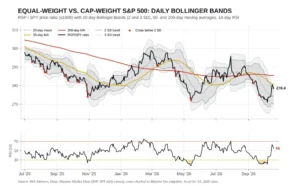
Furthermore, recent closes below the lower Bollinger Band—which sits around 7,600 and represents a move more than two standard deviations below the 20-day mean—indicate heightened short-term volatility. While past closes below this band occasionally marked localized lows, history shows that prolonged periods of trading outside these technical bands can precede extended consolidation phases.
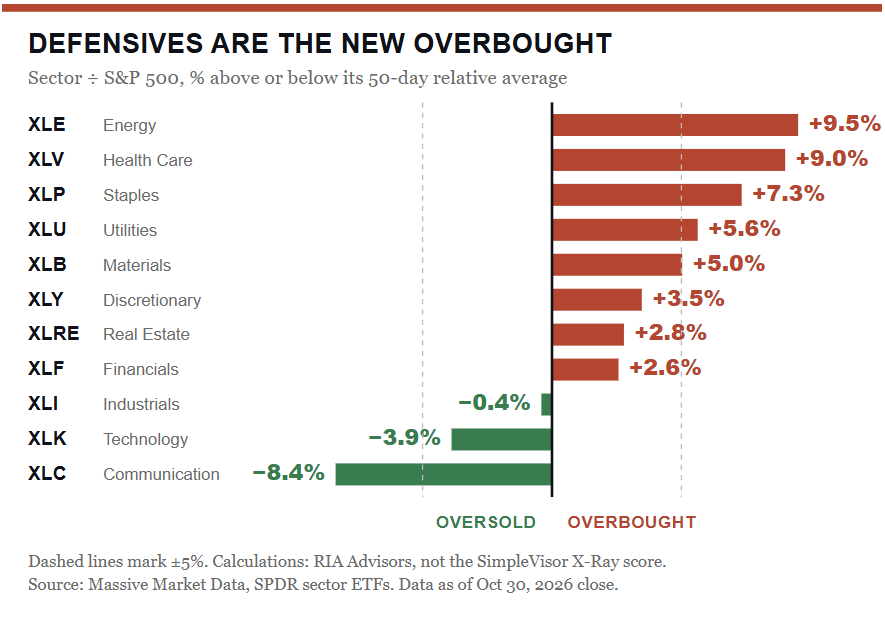
Sector breadth provides a deeper explanation for why the headline index fell even as a majority of underlying stocks held their ground. When measured against the S&P 500, a significant majority of market sectors continue to trade comfortably above their respective 50-day relative averages. Defensive groups have led the charge, while growth-heavy sectors like technology and communication services sit meaningfully below their historical averages. In essence, the traditional "safe" trade has evolved into a crowded trade, meaning any near-term market recovery will likely depend on participation from these currently oversold groups.
Because the heavily weighted technology and communication services sectors are dragging on the index, market rallies face immediate overhead resistance. Trading below both the 50-day and 100-day moving averages typically encourages investors to sell into market bounces rather than chase them. Consequently, cautious portfolio positioning remains prudent, maintaining balanced exposure rather than attempting to time aggressive entries into a volatile environment.
Core equity exposures are generally being maintained at target weights, avoiding the temptation to chase reflexive market bounces. The 100-day and 50-day moving averages now serve as immediate technical resistance ceilings. Rallies pushing back toward those thresholds are viewed by risk-managed strategies as opportunities to rebalance rather than expand risk. On the downside, initial support levels sit near previous autumn closes, with any decisive break below those thresholds potentially opening the path toward the foundational 200-day moving average, prompting stricter stop-loss measures and defensive cash raising.
The Week Ahead
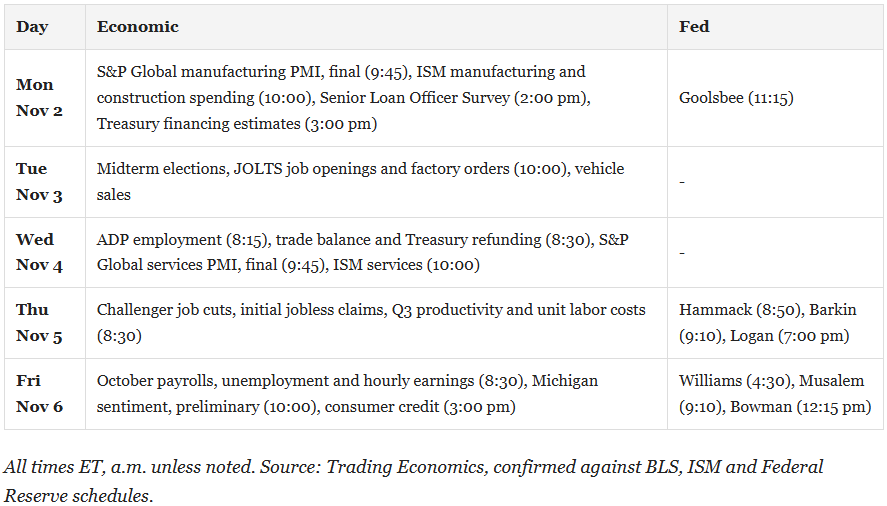
As the financial markets navigate ongoing volatility, upcoming political and economic catalysts take center stage. Midweek election developments carry the potential to introduce localized market turbulence, particularly if outcomes deviate from established consensus expectations regarding control of the House and Senate. A baseline outcome that aligns with polling projections typically elicits a more muted reaction, whereas unexpected shifts frequently drive heightened directional volatility.
Beyond political outcomes, market participants are closely scrutinizing incoming macroeconomic data to gauge the trajectory of future monetary policy ahead of the Federal Reserve’s upcoming meeting. Employment metrics carry substantial weight in this assessment. Key labor reports, including job openings data, private-sector payroll estimates, and the comprehensive Bureau of Labor Statistics employment report, will provide vital clues regarding the cooling or stabilization of the national labor market. Wall Street consensus points toward subdued job creation figures, consistent with a labor market characterized by a distinct lack of both aggressive hiring and widespread layoffs.
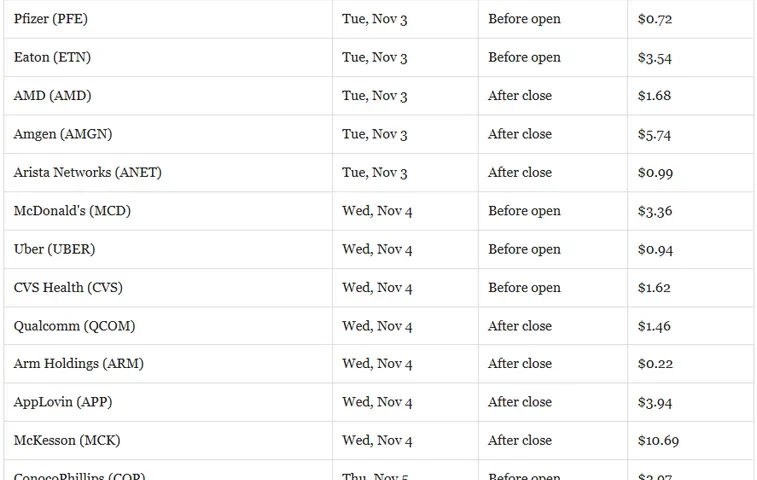
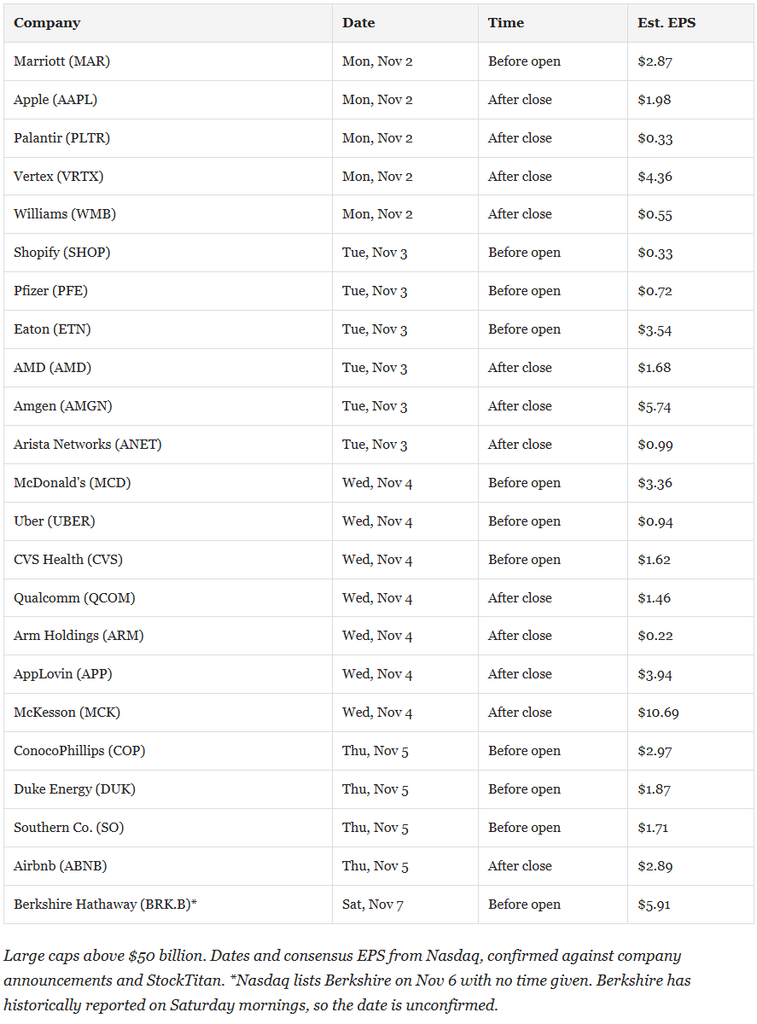
Simultaneously, corporate earnings announcements continue to roll out, with major bellwethers reporting quarterly results. Investors are paying close attention to management commentary for tangible clues regarding forward-looking artificial intelligence capital expenditure budgets and enterprise technology demand.
Real Wages and Consumer Spending Pressures
While broader employment reports frequently dominate financial news cycles, inflation-adjusted compensation figures tell a critical story for consumer-facing industries. Real wages have faced renewed downward pressure, slipping further into negative territory over recent quarters. When average hourly earnings are adjusted to account for headline inflation rather than core metrics, the real purchasing power of the average household has experienced consecutive months of contraction.

While nominal wages have continued to post respectable year-over-year gains, the cost of living—particularly at the fuel pump and across broader energy indexes—has outpaced wage growth. Although core consumer price measures that exclude volatile food and energy components present a more moderate picture, headline inflation captures the daily financial realities that consumers face at retail registers.
This divergence in inflation metrics explains why consumer-facing companies and retail stocks are feeling the pinch first. When everyday expenses for necessities consume an escalating share of household income, discretionary spending on non-essential goods and services faces immediate deferral. As market participants weigh these shifting economic fundamentals alongside evolving technological capital spending cycles, disciplined portfolio management and rigorous risk controls remain essential for navigating the weeks ahead.

Related News