Inside the Braiins BMM 100 Mini Miner: A Comprehensive Hardware Review by the D-A-CH Community
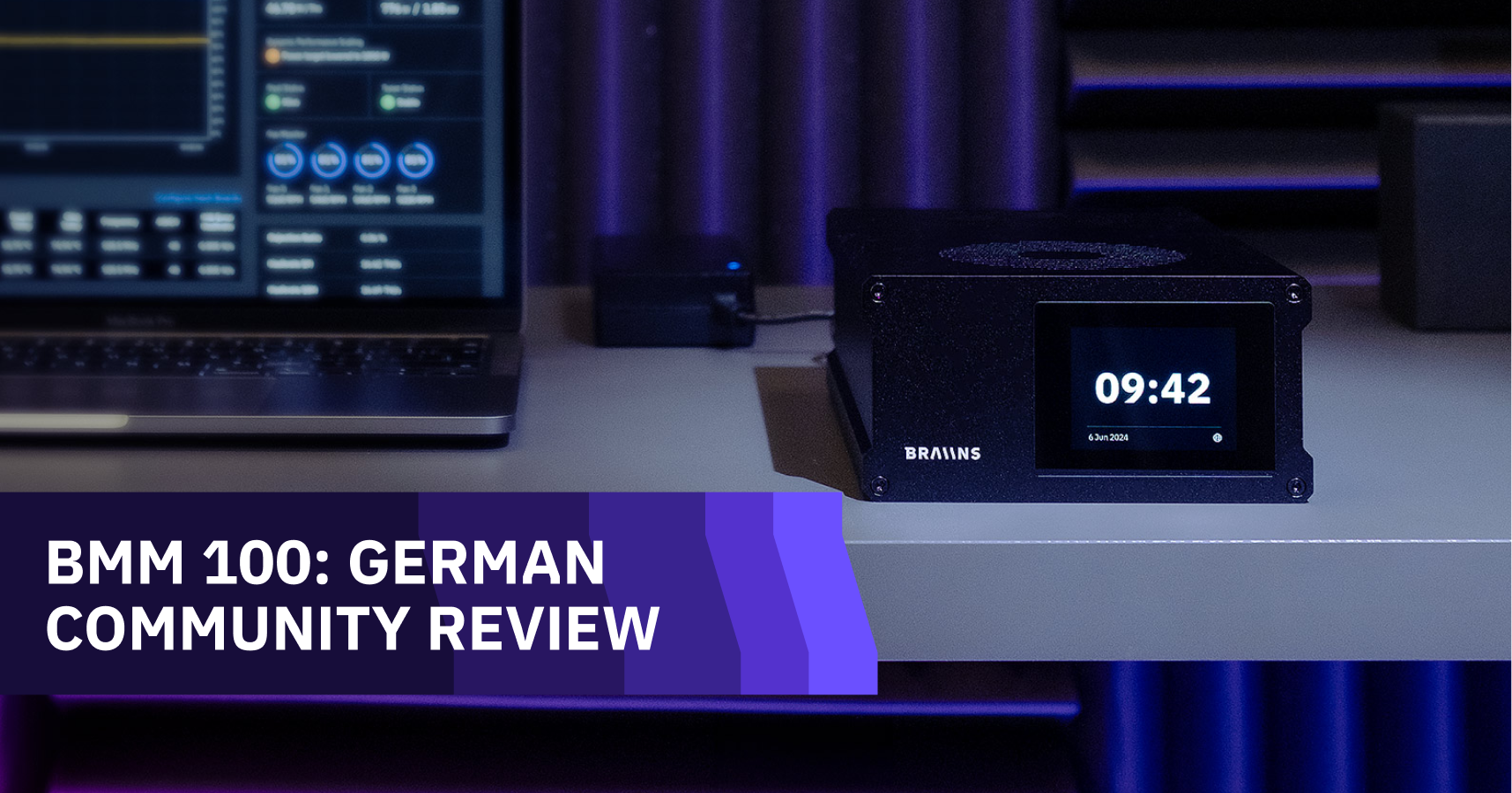
The evolving landscape of home-based cryptocurrency mining has recently received a detailed examination thanks to an honest hardware review conducted by TechEngineer Konrad_ST, a prominent member of the D-A-CH BTC-Solomining-Community. Focusing on the Braiins BMM 100 Mini Miner, the assessment provides crypto enthusiasts and prospective hardware buyers with a transparent, ground-level look at what it takes to run a compact Bitcoin miner in a residential setting. Complete with hardware performance metrics, unboxing impressions, and deep dives into the underlying software ecosystem, the evaluation serves as a definitive snapshot of modern desktop-grade mining technology.
Unpackaging and Initial Hardware Impressions
Upon opening the shipping container, the BMM 100 package reveals a straightforward inventory designed to get users operational with minimal friction. Inside, the box contains the BMM 100 mini miner itself, a dedicated power supply unit equipped with a standard cold-device connection plug, and a set of rubber feet intended to be attached to the underside of the device for vibration dampening and stability.

The accompanying power supply unit carries an impressive array of international safety certifications, including PSE, ETL EU, FCC, CE, UKCA, GS, and TÜV Rheinland markings. Technical specifications for the power adapter list an AC input of 100 to 240 volts at 50 or 60 Hz drawing up to 2.5 amps, and a DC output of 12 volts at 10 amps, providing a total capacity of 120 watts. Manufactured in China, the power brick presents a robust exterior. Observers note that while the included hardware appears to be of high build quality—comparable to industrial power supplies originating from Germany—purists seeking an entirely European-manufactured setup might consider aftermarket replacements, such as power units from Leicke, though such substitutions incur additional out-of-pocket expenses.

Design, Build Quality, and Connectivity
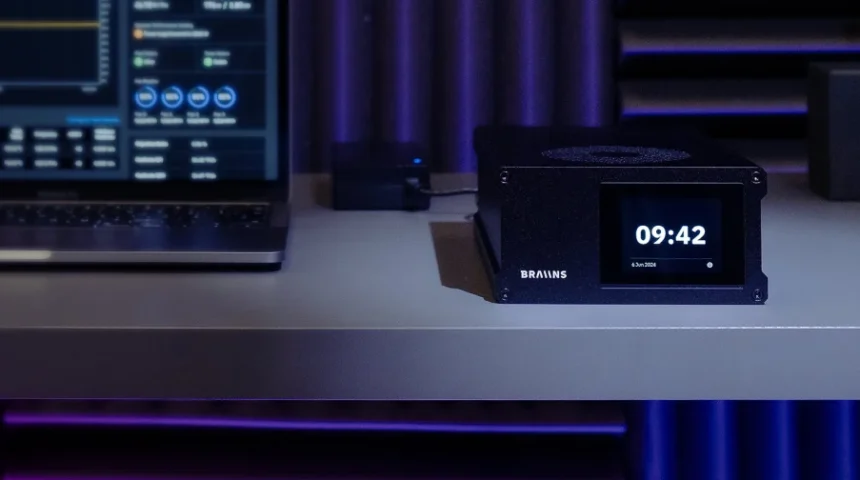
Encased in a sleek and durable black aluminum chassis, the BMM 100 Mini Miner adopts an aesthetic and layout that will immediately look familiar to veterans of classic mining hardware, such as the legendary Bitmain Antminer S9. Looking at the rear panel, users are greeted with all the essential connection ports and interface controls required for deployment. The unit features a 12-volt DC power input supporting up to 6 amps, a slot for an SD card running the proprietary Braiins software, an Ethernet RJ45 local area network port, a hardware reset button, a dedicated status LED for the Braiins control board, and a physical IP report button.

This IP report button stands out as a particularly practical addition for network administration, allowing operators to instantly display the device’s assigned local IP address directly on the built-in screen. While the BMM 100 relies exclusively on a wired LAN connection, the upcoming BMM 101 model introduces integrated wireless connectivity via a Wi-Fi interface, expanding deployment flexibility for home environments where running Ethernet cables is impractical.

Commissioning and Software Configuration
Setting up the Braiins BMM 100 is engineered to be an accessible process, even for individuals taking their first steps into the world of cryptocurrency hardware. Once the miner is plugged into the electrical grid and connected to the local network via an Ethernet cable, the user simply navigates to the IP address displayed on the device’s screen. This action directs the browser to the Braiins OS configuration portal. Factory default credentials utilize a username of "root" with the password left blank, allowing immediate administrative access. Anyone already acquainted with the Braiins OS ecosystem will find themselves instantly at home within the interface.

Within the management dashboard, users can configure mining pool preferences through a dedicated submenu. The software accommodates multiple mining pools simultaneously, enabling operators to distribute their total hash power across different destinations on a percentage basis. Furthermore, advanced users looking to optimize their hardware can access specific submenus dedicated to performance and cooling. These panels allow operators to adjust overclocking parameters and modify target temperature thresholds to balance maximum output against thermal and acoustic constraints.

Operating under standard factory settings, the BMM 100 delivers approximately 1.1 terahashes per second (TH/s) while consuming roughly 40 watts of electrical power. True to the standard Braiins OS experience, the web interface provides comprehensively charted historical data, tracking hashrate fluctuations, operating temperatures, and electrical power draw in real time through a polished graphical dashboard.

Under the Hood: ASICs, Efficiency, and Licensing
While manufacturer specifications often obscure the exact internal components, technical analysis indicates that the BMM 100 houses four BM1366 Application-Specific Integrated Circuits (ASICs). Evaluating these chips in the context of historical generation performance reveals that the efficiency profile of the BMM 100 closely mirrors that of larger-scale generation hardware, such as the S19 series featuring BM1398BB or BM1366 architectures. Ultimately, the hardware’s overall performance envelope is intentionally governed by the installed software, leaving the door open for potential performance-enhancing firmware updates in the future.

Discussions surrounding software licenses often generate confusion within the Braiins ecosystem. Generally, miners running Braiins OS communicate with the developer servers to verify a valid license before initiating the hashing process. The company typically assesses a developer fee, known as a DevFee, ranging around 2.5 percent give or take one percent depending on the specific hardware generation. Legacy devices like the S9 typically operate under a 2 percent DevFee, whereas newer units like the S19 and subsequent models incur a 2.5 percent fee. Crucially, the Braiins BMM 100 Mini Miner operates without requiring any DevFee under standard conditions. While the manufacturer retains the structural right to alter license terms in accordance with their operational rules, the device remained fee-free at the time of testing.

Integration with the Stratum V2 Protocol
The Braiins BMM 100 includes native support for the Stratum V2 protocol, representing a significant architectural update to the traditional mining communication framework. Designed primarily to enhance data transmission rates and eliminate inefficiencies inherent in older protocols, Stratum V2 also introduces robust security measures, such as the prevention of man-in-the-middle attacks.

While native support makes Stratum V2 fully compatible with pooled mining via the Braiins Pool, individual miners engaging in solo mining through traditional solo pools—such as CKPool—currently experience few direct benefits from the upgraded protocol without third-party adjustments. Enthusiasts seeking to leverage the full suite of Stratum V2 advantages independently can alternatively configure the miner to communicate directly with a personal Bitcoin Core node running the necessary protocol extensions.

Community Reception and Final Perspectives
Reviewing the device as a whole, the Braiins Mini Miner BMM 100 establishes itself as a robust and straightforward desktop device housed within a durable aluminum shell. The integrated display offers clear operational feedback, and the hardware’s baseline performance makes it a viable option for home-based deployments. During standard operation, the cooling fan produces a noticeable acoustic footprint, though many users find the ambient noise level acceptable for living spaces. For those requiring a quieter environment, the software allows operators to easily throttle back the hashrate to reduce fan speeds and thermal output.

Priced somewhat higher than certain competing hardware options on the market, the BMM 100 justifies its cost in part through rigorous compliance testing, bearing official marks like the CE certification that demand significant regulatory investment from the developer. For hobbyists comfortable with the software ecosystem and licensing framework, the device delivers reliable performance tailored to its design goals.

With the BMM 100 entirely sold out across retail channels, attention has shifted decisively toward its successor, the BMM 101. Available for pre-order ahead of its scheduled shipping window, the next-generation model promises upgraded features, including an expanded touchscreen display capable of rendering broader network statistics directly from the Bitcoin network alongside native Wi-Fi connectivity. Meanwhile, active hardware evaluation groups like the D-A-CH BTC-Solomining-Community continue to drive grassroots technical discourse, fostering technical collaboration and insights across the broader European cryptocurrency landscape.

Related News