Major U.S. Corporations Push Back Against Planned OKX and ICE Tokenized Stock Venue as Objection List Expands to 22
The roster of prominent global corporations expressing a formal desire to keep their shares off a planned tokenized stock venue continues to expand at a rapid pace. According to an updated public notice issued on Friday by the OKX and ICE Tokenized Securities Venue (OKXICE TSV), six new major corporate issuers have officially registered their objections, bringing the total number of dissenting companies to 22.
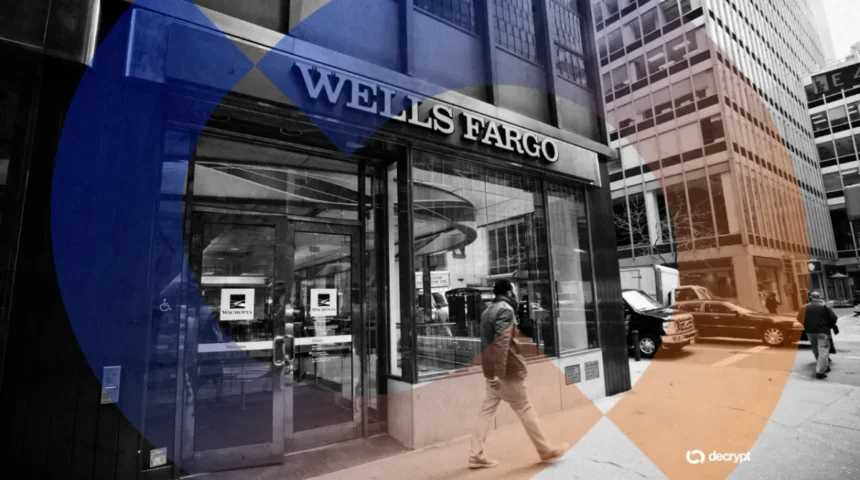
The latest update marks a significant escalation in corporate resistance to the initiative. The newly added companies span major financial, semiconductor, healthcare, and enterprise technology sectors. They include banking giant Wells Fargo, networking hardware pioneer Cisco Systems, semiconductor firm Marvell Technology, chip design leader Arm Holdings, biotechnology innovator Moderna, and financial software developer Intuit.
This latest influx of objectors adds to a growing wave of corporate pushback that has steadily mounted over the past two weeks. Just days earlier, the registry held 16 objecting companies as of October 19, up from a baseline of nine companies when the tracking figures were first tallied on October 15.
The expanding list reflects a cautious or outright resistant stance among many of corporate America’s most valuable entities toward decentralized, blockchain-based trading models for their traditional equity shares. Among the earlier high-profile objectors to join the register are tech behemoths Microsoft and Alphabet, Wall Street titans Goldman Sachs and JPMorgan-adjacent institutions, alongside telecommunications provider Verizon, semiconductor giant Broadcom, and healthcare conglomerate UnitedHealth Group.
Despite the growing visibility of the opt-out list, the official notices provided by the venue do not explain the specific underlying reasons why these companies object to having their shares tokenized and traded on the platform. Furthermore, the operational and legal implications of these objections remain ambiguous, as the current notices leave open questions regarding what definitive effect an objection has on whether an issuer’s stock can ultimately be listed or traded on the platform.
The inclusion of Wells Fargo alongside Goldman Sachs places two of the most influential banking institutions in the United States firmly on the dissenting roster. Meanwhile, the addition of Arm Holdings, Cisco Systems, and Marvell Technology injects further weight into a technology sector contingent that was already heavily represented by firms like Microsoft, Broadcom, and Qualcomm.

The platform at the center of the controversy, OKXICE TSV, is structured as a 50-50 joint venture between Intercontinental Exchange—the parent company of the New York Stock Exchange—and the U.S. holding company of global cryptocurrency exchange OKX. The joint venture was established with the ambitious objective of allowing approved, verified users to trade tokenized versions of U.S. equities on a continuous, round-the-clock basis, operating seven days a week.
Under the proposed technical framework, trades executed on the venue would run through decentralized Uniswap v4 liquidity pools hosted on OKX’s proprietary layer-2 blockchain, XLayer. To facilitate seamless settlement and trading activity, these tokenized equities would be paired directly with prominent stablecoins, such as USDC.
The operational foundation of the venue relies heavily on the U.S. Securities and Exchange Commission’s innovation exemption framework. This regulatory pathway was officially unveiled by the agency in September following the legislative stall of the Clarity Act in the United States Senate. Since publishing its initial operational notices on October 19, the venue has clarified that its infrastructure is capable of supporting shares tokenized directly by the corporate issuers themselves, as well as those tokenized by authorized third-party entities. However, to date, none of the 22 objecting issuers appear to have pursued or endorsed either pathway.
Beyond corporate pushback, the latest public notice from OKXICE TSV outlines several structural and technical risks associated with the platform’s trading environment in notable detail. While trading operations are slated to automatically pause if the underlying traditional stock is halted on primary exchanges, the venue notably does not incorporate traditional circuit breakers. Furthermore, the platform lacks formal internal policies or mechanisms designed to address maximal extractable value—commonly known as MEV—which represents the profit that specialized validators or sophisticated traders can capture by strategically reordering, including, or excluding transactions within a blockchain block.
The regulatory and operational disclosures also caution that registered broker-dealers participating in the marketplace face unresolved questions regarding standard trade reporting mandates and best execution duties. These lingering uncertainties could potentially constrain institutional participation and result in thinner market liquidity. Additional administrative disclosures reveal that platform administrators retain the technical capability to upgrade the underlying smart contracts without providing advance notification to everyday users. Furthermore, the specific smart contract responsible for governing access control and determining who is authorized to trade has currently undergone only internal security audits.
The partnership between OKX and ICE to explore tokenized securities was initially formed earlier this year before the formal unveiling of the joint venue earlier this month. The competitive landscape for tokenized equities is also shifting across traditional financial infrastructure providers. Rival institution Nasdaq, which successfully secured SEC approval to establish its own tokenized securities pilot program, has previously announced its intention to proactively opt its own corporate shares out of the regulatory exemption framework.
Meanwhile, broader macroeconomic and structural interest in the sector remains high. A recent report published by the International Monetary Fund found tangible, genuine market demand for tokenized stocks, particularly during off-hours periods when traditional stock exchanges are closed for the weekend or overnight. However, the IMF report also issued cautionary notes, emphasizing that the burgeoning market for tokenized equities remains characterized by notable price volatility and limited underlying liquidity.

Related News