Meta Takes Unprecedented Steps to Keep Mark Zuckerberg in California Amid Wealth Tax Battle
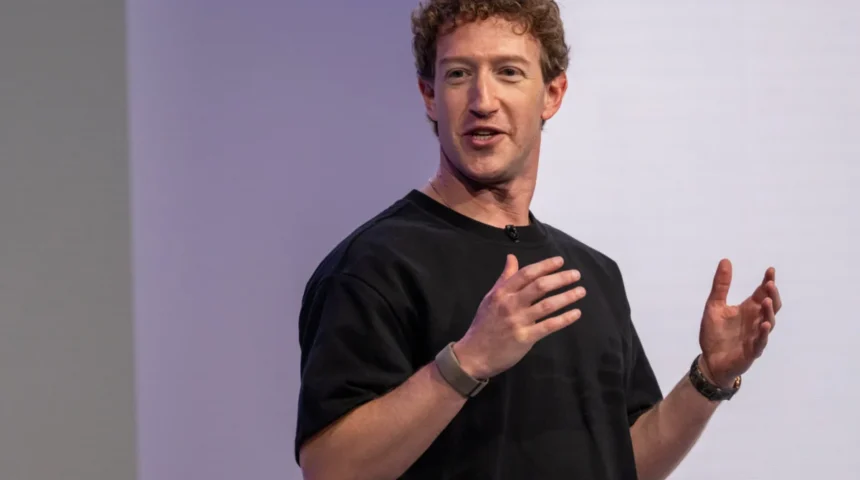
Mark Zuckerberg is staying in California, and Meta Platforms is taking unprecedented financial steps to ensure it stays that way. In an unusual move that sets a new precedent among the state’s megacap technology giants, Meta has implemented a specialized stock plan designed to offset the potential tax burdens its founder and chief executive officer might face if a sweeping wealth tax ballot measure passes on Election Day.
The strategic disclosure was revealed Wednesday in a regulatory filing coinciding with Meta’s third-quarter earnings report. The provisions highlight the intensifying anxieties among California-based corporations regarding the political and economic climate as voters prepare to decide on Proposition 40 on November 3. The proposed ballot measure would impose a 5% state tax on individuals with a net worth exceeding $1 billion. With Zuckerberg’s net worth currently estimated at approximately $225 billion, the tax liability could be monumental.
Meta’s newly crafted plan aims to protect its leadership structure by granting Zuckerberg a new class of non-voting Class C common stock through a dividend structure, effective in January. Under the terms of the plan, Zuckerberg has committed to remaining a resident of California for the next eight years, barring any unforeseen and material circumstances that would make relocation prudent or advisable. Furthermore, the newly issued stock will allow Zuckerberg to immediately sell or transfer up to 20% of the granted shares for any reason, including the settlement of potential tax liabilities under Proposition 40 if it becomes law, all without diluting his majority voting control over the company.
The filing candidly addresses the unique financial paradox facing the tech titan, noting that Zuckerberg draws a symbolic annual salary of just $1. "If the California wealth tax is enacted and Mr. Zuckerberg becomes liable for a tax payment, Mr. Zuckerberg would effectively be paying to serve as the Company’s chief executive officer while residing in California," the filing stated.
The decision underscores a broader demographic and political shift within the upper echelons of the American technology sector. Zuckerberg remains one of the very few ultra-wealthy chief executives of major technology corporations who continues to maintain his primary residence in California. Among his direct peers, only Nvidia CEO Jensen Huang remains anchored in the state.
Conversely, a significant exodus of tech billionaires has unfolded over recent years. Elon Musk and Michael Dell have established their primary bases in Texas, while Amazon founder Jeff Bezos has historically kept his primary residence outside of California. Ahead of the current election cycle, Google co-founders Larry Page and Sergey Brin relocated out of the state, purchasing luxury properties in Florida—the same state that Oracle founder Larry Ellison officially calls home.
The tech community has largely mobilized in fierce opposition to Proposition 40. Alongside the departed Google co-founders, numerous high-profile technology leaders and investors have deployed personal capital to defeat the ballot measure. According to campaign finance reports, opposition funders include former Google CEO Eric Schmidt, Stripe CEO Patrick Collison, venture capitalist Peter Thiel, and DoorDash CEO Tony Xu. Notably, Collison and Xu serve as members of Meta’s board of directors, while Thiel served on the board from 2005 until his departure in 2022.
The motivations driving these tech leaders vary widely in public sentiment. Brin reflected on his personal history in an interview with The New York Times earlier this year, sharing that his family fled the Soviet Union in 1979 and declaring that he does not want to see California follow a similar trajectory. On the other hand, Nvidia CEO Jensen Huang expressed a starkly different perspective during an appearance on CBS Sunday Morning, stating that it would be a "privilege" to pay taxes. Huang stands just behind Zuckerberg on the global wealth rankings, with an estimated net worth of $185 billion.
Despite the heavy financial opposition from Silicon Valley elites, proponents of the wealth tax, championed by figures such as Senator Bernie Sanders, have continued to rally voters behind the initiative. However, recent polling data indicates that the measure may struggle to secure the absolute majority needed to pass into law. A recent Citrin-Politico poll revealed that 46% of surveyed voters favor the measure, while 43% remain opposed.
For Meta, keeping Zuckerberg rooted in California is not merely a matter of executive convenience; it is viewed as vital to the company’s future corporate strategy, particularly its aggressive pivot toward artificial intelligence. A special committee formed by Meta emphasized in the filing that Zuckerberg’s leadership is irreplaceable, specifically noting the company’s desire to safeguard his ongoing, hands-on collaboration with Meta Superintelligence Labs, which operates under the leadership of AI chief Alexandr Wang.
"The Special Committee believes that Mr. Zuckerberg’s talent and leadership have been crucial to our growth, strategy, and stability since our inception, and the Special Committee wants that to continue," the filing noted.
While Meta initially evaluated alternative equity financing methods, such as issuing standard Class A common stock to raise capital, Zuckerberg made it clear that he would not support any financial maneuver that compromised his voting authority. The creation of the non-voting Class C stock resolves this tension, allowing Meta to secure crucial equity capital without disrupting the management vision and creative oversight that the board credits with driving the company’s long-term value.

Related News