OpenAI CFO Sarah Friar Doubles Down on AI Infrastructure Plans Despite Midterm Voter Backlash and Market Jitters
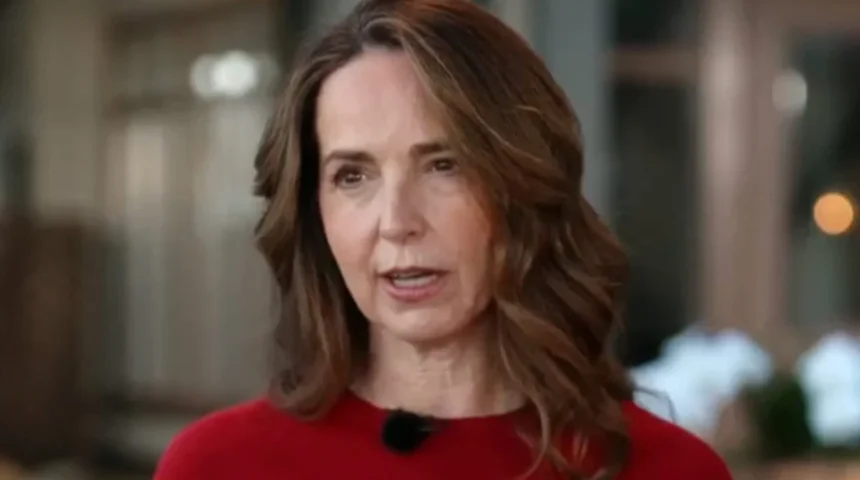
OpenAI Chief Financial Officer Sarah Friar on Friday signaled that the artificial intelligence giant will press forward with aggressive investments in critical AI infrastructure, remaining undeterred even after voters across the United States strongly opposed the expansion of data centers during Tuesday’s midterm elections.
Speaking in an interview with CNBC’s Sara Eisen at the Citi TMT Leadership Summit in Pebble Beach, California, Friar emphasized that the surging demand from enterprise and individual customers for advanced artificial intelligence capabilities requires continuous capital expenditure and expansion.
"When I think about the midterms, I need to keep thinking about how do we keep investing to meet that customer demand," Friar told CNBC during the summit. "It starts early with having built relationships with all of the hyperscalers, and it will continue to mean that we raise capital."
Friar’s remarks come in
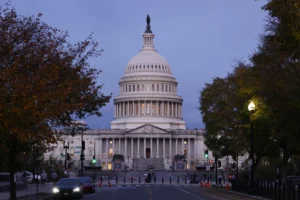
the wake of a striking display of grassroots political resistance against the physical footprint of the artificial intelligence boom. According to a comprehensive analysis by Ballotpedia, alongside additional election results compiled by CNBC, voters faced a total of 41 local ballot measures spread across 10 states during Tuesday’s contests. In a clear signal of local anxiety, voters backed stringent restrictions or explicitly rejected pro-development measures in 40 out of those 41 instances.
Opposition to the massive facilities required to power and cool modern generative AI systems mounted swiftly over the summer months. Communities across the country have grown increasingly vocal about their concerns regarding the potential negative externalities associated with these industrial-scale hubs. Residents have voiced worries over potential environmental degradation, the strain placed on local electrical grids that could lead to soaring utility bills for everyday consumers, and the reality that data centers—while requiring massive upfront construction labor—ultimately contribute relatively few long-term local jobs relative to their immense geographic and resource footprint.
The political friction coincides with a broader wave of skepticism rippling through Wall Street regarding the financial sustainability and timeline of the broader AI trade. Investors have recently grown more cautious, driven by a combination of higher borrowing costs, mounting anxieties over soaring corporate debt loads associated with hardware acquisition, and now, tangible public and regulatory backlash toward the industry’s rapid physical expansion.
This financial unease was vividly illustrated on Thursday, when the Nasdaq suffered its steepest single-day drop in 19 months. The market rout was primarily led by a sharp plunge in the shares of semiconductor chipmakers and neocloud computing companies that are most directly tied to the multi-billion-dollar AI infrastructure buildout. Although those battered technology stocks managed a modest rebound by Friday, the episode underscored the fragility of market sentiment surrounding the sector.
OpenAI relies heavily on expansive networks of data centers both to train its frontier AI models and to serve its massive global customer base in real time. Despite the unfavorable election outcomes and the subsequent market tremors, Friar maintained that the midterm results did not fundamentally alter the strategic trajectory for the company.
In a proactive move to address these mounting community and political concerns, OpenAI published a comprehensive policy blueprint and a series of concrete commitments on Thursday. The company pledged that these responsible development standards will be applied directly to future company-owned and -operated data centers, aiming to establish a framework for better corporate citizenship and local collaboration.
"If the midterm means more focus on data centers and communities, we’re going to keep doing the work to get into those communities and to build trust with them," Friar noted during her appearance in Pebble Beach.
Beyond infrastructure and public relations, OpenAI continues to navigate significant corporate milestones on the financial front. The company confidentially filed its initial public offering prospectus with the Securities and Exchange Commission back in June, and Friar confirmed on Friday that the enterprise is continuing to evaluate a potential public market debut in 2027.
At the same time, OpenAI is watching the movements of its primary industry rival, Anthropic, which is aggressively attempting to beat OpenAI to the public markets. Anthropic is reportedly aiming for a high-profile Nasdaq debut as early as mid-November. According to its own publicly available prospectus, Anthropic’s financial growth has been explosive, with revenue for the first nine months of the year surging roughly 1,200% to hit $33.2 billion. Furthermore, Anthropic disclosed that it has entered into massive purchase commitments and lease agreements representing an aggregate committed spend of approximately $895.4 billion, with the vast majority of that capital dedicated directly to compute power and underlying infrastructure.
To support its own escalating operational needs and maintain its competitive edge, OpenAI is currently in active talks to secure a massive new funding round at a $1.25 trillion pre-money valuation, Friar revealed on Friday. Articulating a timeless corporate finance philosophy, Friar remarked that "a good CFO always raises money when she can," confirming that the funding process remains ongoing.
Demonstrating strong institutional appetite despite the recent political and market headwinds, OpenAI has already successfully closed an initial $11 billion portion of that targeted funding round, a milestone confirmed by CNBC on Friday following initial reporting by Bloomberg. Depending on market conditions and investor interest, the company could secure up to an additional $9 billion in fresh capital over the coming weeks.
Concluding her remarks at the summit, Friar reiterated her unwavering conviction in the fundamental economic drivers underpinning the current technological revolution.
"The demand for AI is real," Friar stated firmly. "I don’t think anyone’s arguing with that, or if they are, I think it’s a losing argument."

Related News