World’s Largest Wildlife Crossing on the 101 Freeway Nears Completion, Offering Safe Passage for Los Angeles Animals
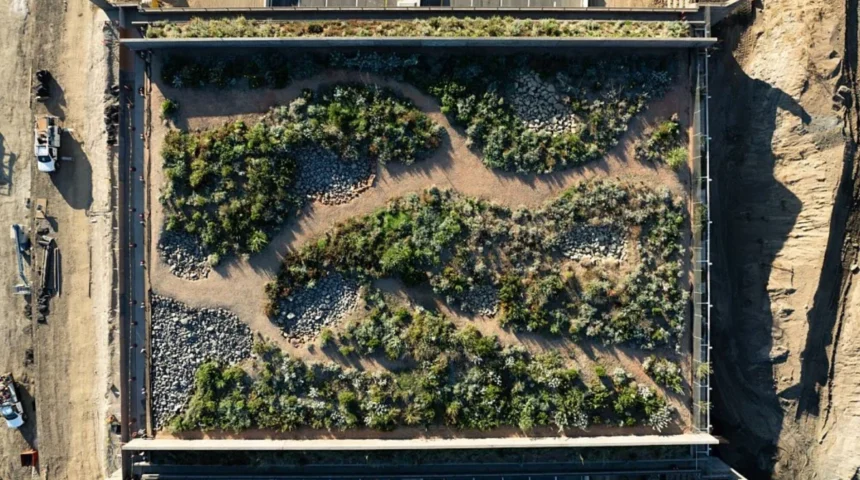
Soon, human motorists speeding down the bustling 101 freeway won’t be the only ones commuting in comfort across the sprawling landscape of Southern California. As hundreds of thousands of vehicles race along the multi-lane highway every single day, their animal counterparts—the diverse and resilient wildlife population that makes up Los Angeles County—will soon find a similar sense of ease and safety during their own travels.
That transformative shift is becoming a reality as officials prepare to officially unveil the completed Wallis Annenberg Wildlife Crossing. Spanning a massive stretch of asphalt, this large, heavily vegetated overpass is designed to help native animals bypass high-speed traffic safely and comfortably navigate the natural lands that were split decades ago by zooming cars and expanding infrastructure. Upon its completion, it stands as the largest wildlife crossing project in the entire world, representing a monumental achievement in conservation engineering and urban ecology.
What is the Wallis Annenberg Wildlife Crossing?
The newly constructed bridge serves as a vital ecological link connecting the rugged wilderness of the Santa Monica Mountains to the expansive open spaces of the Simi Hills. To achieve this crucial connection, the structure successfully spans 10 lanes of roaring traffic, along with an adjacent access road. The ambitious infrastructure project has been more than a decade in the making, serving as a cornerstone of a nationwide scientific monitoring program spearheaded by key environmental organizations and government agencies. Partners in this massive undertaking include the National Wildlife Federation, the Mountains Recreation and Conservation Authority, and the National Park Service, all of whom have worked tirelessly to bring the vision from a conceptual blueprint into physical reality.
Funding for the massive undertaking was secured through a unique public-private partnership, bringing together government allocations and generous philanthropic donations to cover the substantial costs. This collaborative financial model reflects a broad and deep commitment from both the public sector and private donors who recognized the urgent need to address habitat fragmentation in one of the most densely populated metropolitan regions in the United States.
The crossing is widely anticipated to be a transformative boon to local wildlife populations. For years, animals attempting to navigate their historic home ranges have frequently met deadly fates from vehicles speeding along the state highway. Beyond the immediate threat of vehicular collisions, the freeway has long acted as an impenetrable barrier, causing severe geographic and genetic isolation for native species. Mountain lions, coyotes, bobcats, mule deer, and a wide variety of native bird, lizard, and snake species are now expected to safely traverse the verdant path. By doing so, they will be able to cross the formidable freeway barrier, access significantly more land to roam, and find vital opportunities to mate, thereby improving the long-term genetic health of populations that have been hemmed in by urban development.

How to view the Wallis Annenberg crossing trail cams
Over the past week, field biologists and researchers have been busy installing an extensive series of wildlife cameras near the Wallis Annenberg Wildlife Crossing within the Santa Monica Mountains National Recreation Area. These high-tech devices are being deployed to meticulously track animal populations and establish a baseline before the crossing officially opens to the public and wildlife alike on December 2. By the time the ribbon is cut, scientists and nature enthusiasts will be able to monitor the structure’s diverse visitors through a network of 50 specialized cameras and four advanced thermal video cameras designed to capture nocturnal activity without disturbing the animals.
Project leads recently told the Los Angeles Times that the rich photo stream generated by these cameras will be made publicly available, allowing people everywhere to witness the crossing’s impact firsthand. For initial security and operational reasons, live video feeds will remain restricted to researchers, but the curated photo updates promise to offer a fascinating window into the return of local fauna to their historic pathways.
Already, the newly installed cameras are capturing hopeful, early moments that hint at the immediate success of the project. Recently, the pathway recorded its very first visitor: a single coyote trotting cautiously up the side of the currently unfinished path. Shielded by the quiet cover of night and the temporary absence of blinding headlights, the lone canine made its historic journey across the structure.
The unexpected sighting has already sparked wonder and excitement among the scientists and conservationists working tirelessly on the project. Many had initially hypothesized that a much smaller animal, such as a smaller mammal or reptile, would be the first to test out the unfamiliar terrain.
"I wouldn’t have said this even a couple weeks ago, but I now think there’s a chance we’ll have a mountain lion use it before ribbon cutting," said Beth Pratt of the Wildlife Crossing Fund in an interview with the Los Angeles Times. "Word gets out in the animal world, so who knows what’s going to happen?"
As the finishing touches are put on the massive green bridge, the wildlife of Los Angeles County prepares to reclaim a piece of their ancient heritage, proving that even in the heart of a sprawling concrete metropolis, coexistence and ecological restoration remain entirely possible.

Related News