Reclaiming Liberalism: Helen Pluckrose and Pete McCormack on Defending Free Speech from the Authoritarian Left and Right
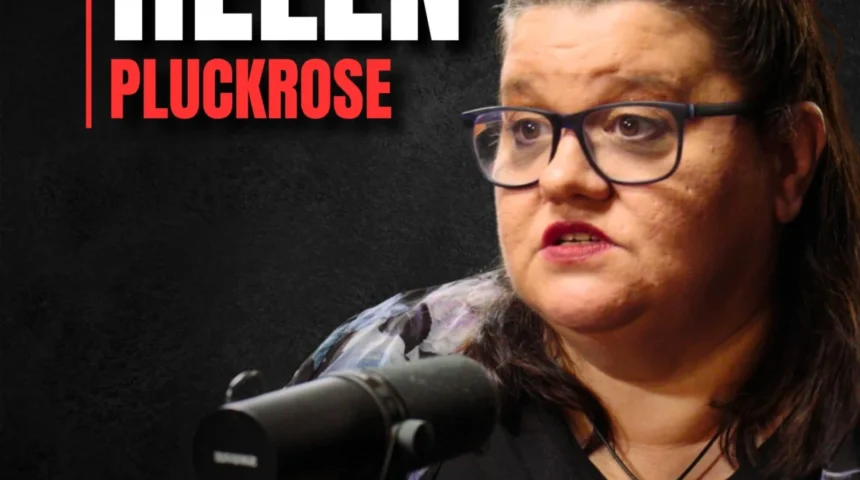
In an extensive and timely discussion, author and cultural critic Helen Pluckrose recently joined host Pete McCormack on his podcast to unpack one of the defining ideological struggles of the modern era: how liberalism was lost, and why core principles such as free speech, individual liberty, and viewpoint diversity are under siege from both the authoritarian left and the authoritarian right.
As public discourse increasingly fractures along polarized political lines, the conversation offers a deep, analytical look at how contemporary social movements have shifted societal norms. Throughout the interview, Pluckrose articulates why liberalism is frequently misunderstood in the modern political lexicon, arguing that it should not be conflated simply with being "left-wing." Instead, she contends, true liberalism is better understood as the direct opposite of authoritarianism—a framework prioritizing individual autonomy, open inquiry, and universal human rights over ideological conformity.
The dialogue covers a wide breadth of cultural and political terrain, examining how critical social justice, identity politics, and language policing have fundamentally altered the way people think, speak, and behave in everyday life. By tracing the evolution of these ideologies from academic theory into mainstream institutional practices, Pluckrose and McCormack explore the real-world implications of woke ideology, Diversity, Equity, and Inclusion (DEI) frameworks, the philosophical divide between equality and equity, and the ongoing debates surrounding trans rights and queer theory.
The Shift in Modern Discourse: From the 1990s to the Algorithmic Age
Opening the discussion by looking back at the cultural landscape of the 1990s, the guests examine how societal attitudes toward speech, tolerance, and disagreement have shifted dramatically over the past three decades. Pluckrose and McCormack discuss the role that smartphones, digital algorithms, and modern social media platforms have played in amplifying outrage, driving anxiety, and accelerating ideological polarization.
According to Pluckrose, the technological architecture of modern communication has transformed public square dynamics, encouraging tribalism and discouraging nuance. This digital shift has coincided with a broader institutional capture, where universities, corporations, and cultural bodies have increasingly adopted ideological conformity under the banner of safety and inclusion. However, the discussion emphasizes that suppressing ideas rarely makes them disappear; rather, censorship and language policing tend to drive unorthodox thoughts underground, often making suppressed ideas more culturally powerful and resilient in the process.
Liberalism Versus Authoritarianism and Institutional Capture
A central theme of the conversation is the erosion of traditional liberal norms within major public and private institutions. Pluckrose breaks down how institutional capture occurs when organizations abandon viewpoint diversity in favor of dogmatic compliance. This transition, she notes, is frequently driven by well-intentioned desires to champion civil rights, which have gradually transformed into rigid systems of language policing and behavioral monitoring.
The interview critically examines the implementation of DEI frameworks across corporate and academic sectors. Rather than fostering genuine fairness, Pluckrose argues that many contemporary DEI initiatives institutionalize discrimination by prioritizing group identity over individual merit. This leads to a fundamental philosophical conflict between equality—treating individuals impartially regardless of background—and equity, which seeks to engineer equal outcomes through preferential treatment or targeted restrictions.
Expanding on these ideological shifts, the conversation tackles the implications of queer theory and modern gender ideology. Pluckrose discusses the tension between biological reality and emerging theoretical frameworks, addressing whether certain pro-trans advocacy positions inadvertently intersect with misogyny or undermine sex-based rights. Throughout this analysis, the discussion underscores the necessity of anchoring public policy and cultural norms in objective reality and safety, rather than ideological compliance.
The Dangers of the Anti-Woke Movement and the Path Forward
While much of the discussion focuses on the excesses of the authoritarian left, Pluckrose and McCormack also cast a critical eye toward the political right, specifically examining whether the anti-woke movement risks becoming authoritarian itself. They caution that reactionary movements which seek to ban books, restrict speech, or punish ideological opponents merely replicate the authoritarian tactics they claim to oppose.
Addressing the geopolitical and cultural outlook, the conversation considers whether nations like Britain are in need of a liberal revolution to restore foundational democratic norms. Pluckrose suggests that the future of a free society may depend heavily on liberals located on both the left and the right of the political spectrum having the courage to defend freedom of speech and individual liberty within their own respective political tribes.
By addressing contentious policy areas—including the liberal case on immigration, the economic realities of "woke corporatism," and the counterproductive nature of suppressing speech—the episode concludes with a pragmatic look at whether societal sanity can return. Ultimately, Pluckrose and McCormack argue that liberalism must be re-established as the higher, overarching value that holds pluralistic societies together, transcending partisan tribalism to ensure that free inquiry and individual liberty survive for future generations.

Related News