‘Pink Blooms from the Rubble’: Breast Cancer Patients in Gaza Face Collapsed Health System and Delayed Evacuations
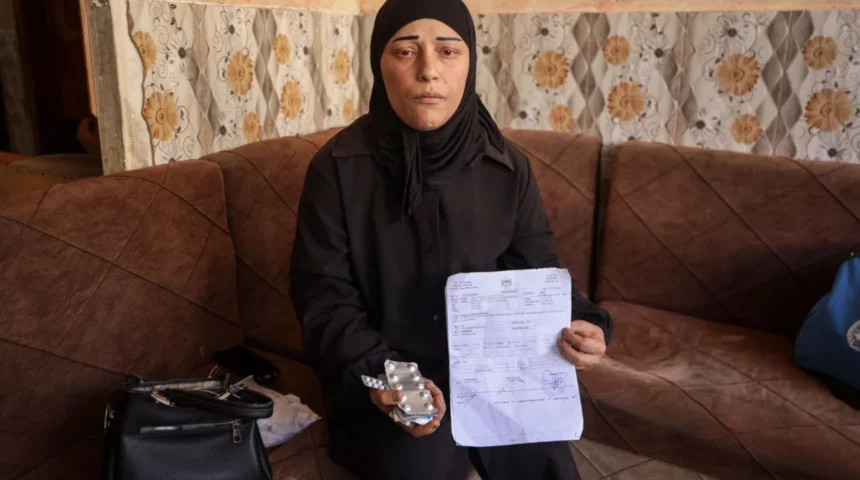
DEIR EL-BALAH, Gaza Strip — Hiba Musbah has already endured seven grueling rounds of chemotherapy for the breast cancer ravaging her body, with her eighth treatment scheduled for next week.
Yet the 36-year-old mother of three from eastern Deir el-Balah says her physical condition continues to deteriorate daily as she languishes on a waiting list, desperate to travel outside the Gaza Strip for specialized medical care that is completely unavailable locally.
"I can no longer take care of my children as I used to. My son is the one who helps me," Musbah told Al Jazeera. Her husband, Motaz, who suffers from a chronic heart condition, has been forced to shoulder heavier responsibilities at home as his wife’s health deteriorates, caring for their three young sons: 13-year-old Mohammed, 10-year-old Jaber, and eight-year-old Ahmad.
Musbah first discovered alarming lumps around her right breast in January 2024, merely months after the eruption of Israel’s war on Gaza. Displaced and overwhelmed by the intensifying bombardment and chaos around her, she initially ignored the symptoms. It was only when her mother urgently insisted that she seek medical intervention that she visited a doctor.
Medical professionals quickly confirmed it was cancer. Despite requiring immediate surgical intervention, Musbah was forced to wait two harrowing months for an operation. The extensive delay was directly caused by heavy Israeli military attacks surrounding Nasser Hospital in Khan Younis, where she was receiving her care.
"The situation was difficult, with the bombardment and the tanks," she recalled, recounting how close she came to losing her life. "I delayed the operation because of the war. The last time, I nearly died from tank fire, so I postponed the operation."
Her ordeal did not end in the operating room. Musbah’s prescribed chemotherapy regimen was initially delayed by seven months due to severe shortages and the complete unavailability of essential medicines at Nasser Hospital.
Her heartbreaking experience mirrors the grim reality confronting hundreds of breast cancer patients across the Gaza Strip. Years of conflict and a suffocating blockade have systematically weakened the health system’s capacity to properly diagnose, monitor, and treat oncological diseases.
Critical shortages of medicines, essential medical consumables, broken diagnostic machines, the absolute absence of radiotherapy equipment, and insurmountable barriers to leaving the territory for specialized care have transformed the battle against cancer into a desperate survival struggle amid Gaza’s deepening health and humanitarian catastrophe.

Surgery, Chemotherapy, and the Cost of Waiting
The lack of access to basic diagnostic equipment has become an ongoing source of profound psychological and physical anxiety for Musbah. She explains that her treating physicians urgently require a new computerised tomography (CT) scan to accurately assess how her condition has progressed throughout her treatments, but she has been entirely unable to obtain one because the necessary machinery is broken or unavailable at public hospitals.
While a private facility in the area possesses an operational scanner, the examination costs approximately 150 shekels, roughly $48—a sum that Musbah and her family cannot afford amid the broader economic collapse. Furthermore, the waiting time for an appointment at the private clinic can easily stretch beyond three months.
"I am now suffering from pain in my back and leg, and I have not had a scan for three months because the equipment is unavailable," she said, her voice heavy with fatigue. "My doctor told me he was concerned that the disease might have spread through my body, but I still do not know."
Today, Musbah struggles significantly to walk and can barely move one of her arms. She experiences persistent, sharp pains in her shoulder, legs, and eyes, while her hair and nails have suffered extensive damage as a direct consequence of her ongoing chemotherapy.
"If I had received treatment early, things would not have reached this point. My condition has become much more difficult because my treatment was delayed," she reflected. "Cancer patients also need good food, fruit, meat, fresh produce, but we cannot afford everything we need."
Compounding her medical nightmare, Musbah states that she has been waiting for approximately two years to leave Gaza for life-saving treatment abroad after receiving an official medical referral. However, Israel, which maintains absolute military control over all entry and exit points into and out of the Gaza Strip, has yet to grant her the necessary security clearance to travel.
"I want to travel, receive treatment and get better," Musbah said. "I want to regain my health and return to the way I was before."
Growing Crisis in Gaza’s Health Sector
According to official figures from Gaza’s Ministry of Health, the territory recorded roughly 360 new breast cancer cases annually prior to the war. In contrast, health authorities logged 250 cases in 2024 and approximately 260 cases in 2025.
However, the ministry has repeatedly warned that these statistics likely fail to reflect the true magnitude of the crisis. Screening and early-diagnosis services have largely collapsed throughout the enclave, leaving potentially hundreds of patients undiagnosed and unaware of their condition until it reaches advanced stages.

In an official statement released on October 1, the ministry reported that the repeated breakdowns of mammography machines and critical shortages of laboratory testing supplies have severely restricted early detection efforts across Gaza. Essential therapeutic drugs, including chemotherapy, hormonal treatments, and targeted therapies, are either entirely unavailable or critically scarce, while radiotherapy remains completely nonexistent within the territory.
Additionally, the ministry noted that complex surgeries for advanced tumours have been frequently suspended due to a severe lack of specialized surgical equipment, supplies, and medical personnel.
These systemic shortages create formidable barriers for women who suspect they may have developed the disease.
Dr. Iman al-Haj Ahmad, an obstetrician and gynaecologist at the Hikmat al-Jamei Health Centre in Deir el-Balah, understands these harrowing obstacles from a dual perspective: as a medical professional assisting women in seeking timely diagnoses, and as a breast cancer patient herself, having been diagnosed in May 2025.
"I had to search until I found a place where I could get a mammogram," al-Haj Ahmad recalled. "I kept thinking about ordinary women who don’t have the medical knowledge or connections that I have. If it was this difficult for me, how much harder must it be for them?"
Before the war, women could easily undergo an initial physical examination at a local primary healthcare centre before receiving formal referrals to major hospitals for comprehensive mammography, ultrasound scans, and advanced diagnostic testing.
Now, al-Haj Ahmad explained, imaging services are severely restricted, several specialized oncologists have fled or left Gaza, and the laboratory tests required to confirm a diagnosis are frequently inaccessible through public health channels, forcing desperate patients to seek costly private care.
Al-Haj Ahmad herself waited roughly a month for surgery, eventually undergoing the procedure at Nasser Hospital alongside a visiting international medical team while the facility continued to operate under exceptionally dangerous conditions.
Subsequent rounds of chemotherapy and severe, widespread food shortages later took a devastating toll on her body. She reported losing approximately 20 kilograms, leaving her immune system dangerously compromised and forcing doctors to temporarily pause her chemotherapy regimen.

Al-Haj Ahmad is currently undergoing hormonal treatment while anxiously waiting for permission to travel abroad for essential radiotherapy. Her formal referral for treatment outside Gaza has been pending since September 2025.
Despite her personal battle with cancer, she continues to examine local women daily and refers suspected cases directly to the surgery department at Al-Aqsa Hospital. She also actively encourages women, particularly those with a documented family history of breast cancer, to remain vigilant and attentive to any physical changes in their bodies.
"Early detection is especially important in Gaza because treatment options are so limited," she emphasized.
Pink October Under the Rubble
A full year has passed since the formal start of the fragile ceasefire in Gaza, yet ongoing Israeli military attacks persist, pushing the cumulative death toll from the conflict past 74,400 Palestinians.
Amid this lingering devastation, October—internationally recognized as Breast Cancer Awareness Month, or Pink October—has prompted health workers across Gaza to participate in global awareness initiatives. Staff members at the Hekr al-Jameh Health Centre in Deir el-Balah are striving to reach vulnerable women through community healthcare visits and targeted educational sessions.
The effort is part of a local Pink October campaign aptly named "pink blooms from among the rubble." The campaign aims to educate women about breast cancer risks, demonstrate proper techniques for breast self-examinations, and provide much-needed psychological support to those already battling the disease.
Sabreen al-Buhaisi, who supervises primary healthcare services at Hekr al-Jameh, reported that the centre successfully screened between 700 and 800 women during the campaign. Out of those screenings, seven or eight urgent cases were referred directly to hospital surgical departments for comprehensive evaluations.
However, al-Buhaisi noted that identifying women who may have cancer represents only the first hurdle. Free mammography services remain restricted to a very limited number of hospitals, where patients face extraordinarily long waiting lists for appointments, while private screening remains financially out of reach for the vast majority of families.
"The financial cost is very high for women. Our people cannot afford these expenses," she said.

Despite the profound economic and logistical hardships, al-Buhaisi strongly urged women not to neglect their health.
"Even displacement and living in the camps should not stop you from examining yourself," she said. "Take five minutes of your time. It can make a big difference in your treatment journey."
Amid these compounding hardships, Hiba Musbah continues her daily fight against time and illness.
She notes that she has repeatedly followed up on her travel arrangements through official channels, yet remains trapped inside the enclave with no clear explanation or justification for the persistent administrative delays.
Medical evacuation procedures in Gaza are formally coordinated between the World Health Organization and the local Ministry of Health. However, these agencies are required to submit individual patient files to Israeli authorities for security screening and final approval before any travel can take place.
"I have been waiting for two years," Musbah said. "And I still haven’t travelled."

Related News