Bipartisan Lawmakers Call for Investigation After Report Reveals Elon Musk Ordered Starlink Slowdown in Ukraine
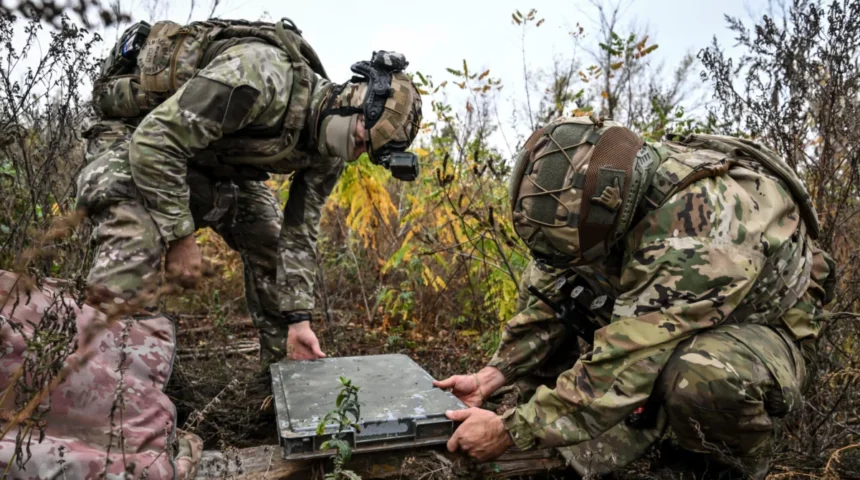
The latest clash between Elon Musk and Ukrainian leadership has underscored the critical yet precarious role that his company’s Starlink satellite internet service has played in Kyiv’s defense against Russia, which launched its unprovoked invasion in 2022. While the technology has served as an indispensable lifeline for Ukrainian forces on the front lines, the recent controversy has laid bare the distinct vulnerabilities and downsides of depending on a single, private provider for vital satellite internet communications. At present, alternative options on the market do not yet compare to SpaceX’s expansive Starlink constellation and its specialized, military-grade Starshield offering.
The tensions boiled over when Ukrainian officials accused SpaceX of actively undermining the country’s ability to defend itself. According to reports from the region, SpaceX and U.S. operations suddenly and without prior warning imposed strict speed limits on Starshield—a secured satellite network designed for government entities that leverages core Starlink technology. These sudden network alterations effectively cut off wireless internet connectivity in drones and other fast-moving aircraft traveling at speeds exceeding 100 mph, assets that Ukrainian forces had been heavily relying on in their military campaign against Russian positions.
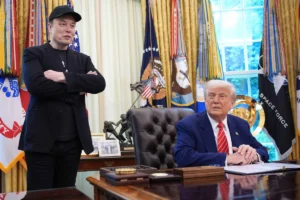
The operational fallout was immediate and severe. A senior Ukrainian commander revealed that the arbitrary Starlink restrictions cost his specific military unit more than $1 million in disrupted operations and delayed critical combat missions by three days. As international scrutiny mounted, both Musk and U.S. President Donald Trump—both known as vocal critics of Ukrainian President Volodymyr Zelenskyy—shirked direct accountability for the communications disruptions in the war-torn nation.
However, investigative reporting from The Wall Street Journal brought new clarity to the situation, revealing that Musk had individually ordered the service changes and had discussed them with Trump before putting them into place. When questioned by reporters, Trump insisted that he was not involved in the decision-making process.
The revelation sparked immediate alarm among watchdogs and national security experts. Robert Weissman, co-president of the advocacy watchdog group Public Citizen, characterized the situation as an "extreme danger" that raises profound antitrust and security concerns regarding an individual’s immense capacity to control a critical means of global communication.
"People worry about the political, as well as economic, impacts of oligarchy, and this is it," Weissman said in an interview. "It’s not just that Musk can drown out other speakers, he can close down communications in a national security context for a country. No person should have that ability or power."
The disruptions have since prompted a bipartisan group of lawmakers in the United States to formally call for an investigation into Musk’s actions, with some suggesting he could potentially be called to testify under oath regarding the incident. Sen. John Cornyn, R-Texas, told CNBC that he finds it difficult to believe Musk would have acted without at least the tacit acquiescence of the White House, branding the attempts to throttle Starlink service in Ukraine as "frankly shameful."
"There’s a reason why we’ve had relative peace in Europe since World War II," Cornyn said during a morning news appearance. "And that’s because of the alliance between the United States and our European allies. And I think anything we do to undermine that or degrade that is a big mistake."
On the other side of the aisle, Rep. Pramila Jayapal, D-Wash., forcefully echoed those sentiments, calling for a thorough congressional investigation. In a social media post addressing the controversy, Jayapal wrote that no billionaire—particularly one whose enterprises benefit from massive contracts with the U.S. government—should possess the unilateral power to decide to shut down communications and weapons during a war of critical importance to both the United States and international allies.

Despite the intense scrutiny, executives during SpaceX’s quarterly earnings call did not address the issue, and financial analysts on the call did not press the company on the matter. Representatives for SpaceX, including Senior Vice President of Global Business and Government Affairs Tim Hughes, did not respond to requests for comment prior to publication.
Starlink Dominance
For governments, international defense agencies, and commercial enterprises actively looking for an alternative to Musk, SpaceX, and its ubiquitous satellite internet services, viable options remain remarkably scarce.
Amazon’s Leo network, which also aims to deliver high-speed internet connectivity via a low Earth orbit satellite constellation, is roughly seven years in the making and has yet to fully come online. The company currently has roughly 390 satellites deployed in orbit. By stark contrast, SpaceX boasts a staggering Starlink constellation comprising more than 11,000 active satellites, according to data meticulously tracked by astronomer Jonathan C. McDowell. Furthermore, Starlink connectivity is already live and operational in 174 countries, as highlighted by SpaceX Chief Operating Officer Gwynne Shotwell.
Other competitors are similarly working to close the gap. Jeff Bezos’ private space enterprise, Blue Origin, unveiled a specialized enterprise and government service called TeraWave in January, with initial deployment of its first batch of satellites targeted for the fourth quarter of 2027. Meanwhile, France-based Eutelsat operates a competing network with more than 600 satellites in orbit. Eutelsat’s stock notably surged 23% in a single day as early reports emerged that Musk had restricted Starlink service in Ukraine.
At the same time, several nations are exploring sovereign satellite communications systems to ensure national security independence. The European Union is currently developing IRIS², an initiative expected to span hundreds of satellites, though its inaugural launches are not anticipated until 2029.
Most of these planned systems are unlikely to come anywhere close to matching the capacity, global coverage, resilience, or cost efficiency offered by Starlink, according to Christian Freiherr von der Ropp, an independent satellite consultant. He noted that the physical cost, size, weight, and power draw of Eutelsat’s current generation of user terminals make them particularly unsuitable for dynamic battlefield conditions.
Compounding the industry imbalance, while SpaceX’s connectivity business has raced far ahead of rivals, the company simultaneously maintains a massive competitive advantage by overseeing a hugely successful rocket launch business. SpaceX rockets have frequently carried payloads and satellites to orbit for many of its direct competitors. With SpaceX currently phasing out commercial rides on its workhorse Falcon 9 rocket while concurrently testing and developing its massive, next-generation Starship vehicle, von der Ropp warned that many new satellite constellations could face substantial delays and materially higher launch costs.
In response to the recent controversies, Ukraine and various European lawmakers have actively accelerated efforts to explore independent alternatives to Starlink, framing the issue strictly as an urgent matter of national security. Their primary anxiety stems from the realization that access to an indispensable communication infrastructure can be abruptly disrupted simply as a consequence of one man’s political agenda or shifting personal priorities.
"The degree of soft power SpaceX has accumulated over companies, governments and militaries is substantial, and that has now become very visible," von der Ropp said. "Inevitably, this is creating mistrust and accelerating demand for alternatives."
Demonstrating this diplomatic shift, President Zelenskyy shared on social media that he met with Norwegian officials and Kongsberg, a prominent Norwegian defense company, to discuss cooperative air defense systems and the initiation of work on novel satellite communication capabilities explicitly tailored for Ukrainian warriors.

While Musk initially enjoyed widespread international acclaim for rushing thousands of Starlink terminals and satellite internet dishes to Ukraine during the harrowing early days of the 2022 invasion, relations between the world’s wealthiest individual and Ukrainian authorities have steadily soured over the course of the conflict.
The friction was previously highlighted in Walter Isaacson’s 2023 biography of Musk, which detailed an instance where Musk allegedly ordered SpaceX engineers to shut down Starlink’s satellite network over Crimea to intentionally thwart a planned Ukrainian drone attack on Russian warships. Although Musk publicly disputed aspects of the report, the revelation drew furious rebukes from Ukrainian officials, including top Zelenskyy aide Mykhailo Podolyak, who asserted that the disruption resulted in the deaths of Ukrainian civilians.
"This is the price of a cocktail of ignorance and big ego," Podolyak wrote at the time.
Musk has also repeatedly advocated for a negotiated settlement, arguing publicly that Ukraine should agree to a formal truce with Russia and cede permanent ownership of Crimea—a strategically vital sovereign territory—to Russian President Vladimir Putin.
The friction surrounding Musk’s management of Starlink has begun to reverberate globally, influencing strategic decisions far beyond the immediate theater in Eastern Europe. Canada’s recent decision to cut ties with Starlink was partly attributed to Musk’s unpredictable handling of the platform in geopolitical crises. Government officials in countries like India and Taiwan have similarly expressed deep wariness toward relying on Starlink, citing uncompromised national security priorities and favoring mass communication systems free from SpaceX’s singular corporate control. Musk notably lashed out at Indian business leaders, blaming local "oligarchs" for stalling Starlink’s commercial rollout in the country.
Beyond military and governmental applications, Musk’s assertive posture has occasionally bled into the commercial sector. Starlink has rapidly emerged as a dominant provider of in-flight satellite Wi-Fi for commercial aviation, securing supply agreements with dozens of major global carriers, including United Airlines, Alaska Airlines, American Airlines, and Southwest Airlines.
However, Delta Air Lines stands as a notable exception, having chosen Amazon’s Leo service for its fleet connectivity. Earlier in the month, Musk took to social media to claim that Delta CEO Ed Bastian would "lose his job" over the decision to bypass Starlink, reacting to unconfirmed rumors that Bastian had told employees they wished to avoid doing business with Musk.
Bastian promptly denied making any such disparaging remarks, telling CNBC that he remains a "big fan" of Starlink technology and even drives a Tesla vehicle.
"All this nonsense about it being personal is not true at all," Bastian said.

Related News