Jobless Claims Drop to Near Six-Decade Lows as Employers Hold Tight to Workers Despite Weak Hiring
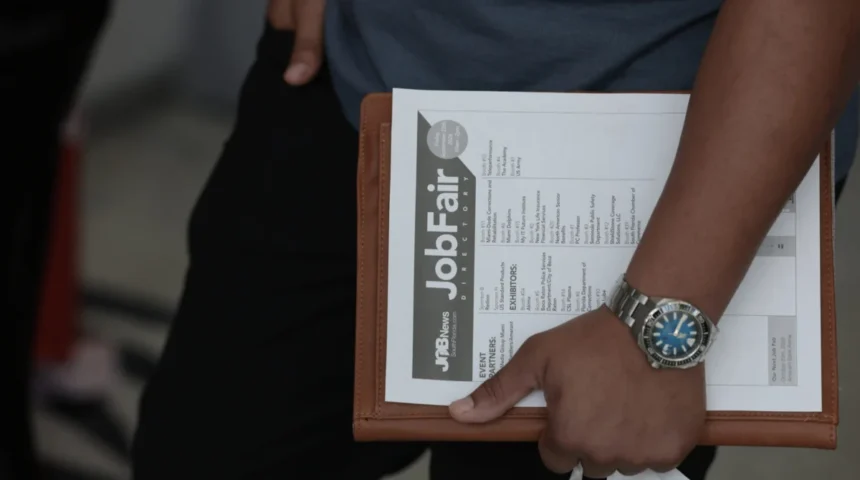
Employers across the United States are continuing to hold tightly onto their existing workforces even as broader hiring remains remarkably weak, pushing weekly jobless claims down to levels not seen in nearly six decades. The persistent reluctance of businesses to let go of staff provides a stark counter-narrative to prevailing anxieties about the economy, highlighting a labor market that is defined by low firing rates rather than aggressive job creation.
Initial filings for state unemployment insurance slipped to a seasonally adjusted 194,000 for the week ended October 17, the Labor Department reported Thursday. That reading marks another leg lower in a sustained low-fire trend that has characterized the American economy for much of the year. The total sits just a hair above the 189,000 initial claims reported for the week of July 18, which marked the lowest level recorded since September 1969.
Looking at the broader trend, initial claims have averaged a modest 212,000 over the past year, while the four-week moving average has edged down further to 197,750. These consistently subdued figures paint a picture of an extraordinarily sticky workforce, where employers who struggled for years to attract and retain talent during the post-pandemic labor shortages are now intensely motivated to hoard labor, preferring to absorb higher overhead rather than risk being caught short-handed if economic conditions fluctuate.
These historically low layoff numbers are unfolding against a deeply uncertain backdrop for the wider labor market. The broader economic indicators present a complex puzzle for economists, policymakers, and business leaders alike. Nonfarm payrolls rose by just 29,000 in September, continuing a sluggish trend that has seen job growth average a meager 69,000 a month throughout 2026.
Simultaneously, the national unemployment rate ticked up to 4.2%. However, government data shows that this increase was driven largely by a sharp and welcome spike in labor force participation, as more workers stepped off the sidelines to look for work, rather than a wave of job losses. Actual layoffs have remained remarkably modest, declining by 61,000 in August, according to Bureau of Labor Statistics data released on September 29.
Over the prior 12 months, the layoff rate—measured as a share of the total active workforce—drifted down to 1%, shedding 0.2 percentage points over the period. Meanwhile, job openings remained relatively flat during the same timeframe, signaling a labor market that has settled into a quiet equilibrium of low hiring and equally low firing.
The dichotomy between gloomy consumer sentiment and resilient employment metrics has forced analysts to reevaluate traditional economic warning signs.
"Despite extremely pessimistic views expressed in consumer confidence surveys regarding the economy overall, countless headlines describing job cuts from a variety of businesses, and the phantom job-stealing power of AI, the claims data suggests that labor market conditions are stable," said Thomas Simons, chief U.S. economist at Jefferies, in a client note following the Labor Department’s release.
The latest jobless claims data arrived during the specific reference week that the Bureau of Labor Statistics utilizes to calculate its crucial monthly payrolls growth figures. The closely watched October jobs report is scheduled to be released to the public on November 6.
Against this economic backdrop, officials at the Federal Reserve are gathering next week to issue their latest decision on interest rates. Policymakers in recent days have increasingly characterized the labor market as a source of general underlying strength, allowing them to shift a greater portion of their attention toward the nettlesome inflation problem that has stubbornly kept the pace of price increases well above the central bank’s official 2% target.
Financial markets have largely priced in the expectation that the Federal Reserve will hold off on a benchmark interest rate hike during its upcoming October meeting, before potentially instituting another quarter percentage point increase in December if inflation indicators fail to moderate.

Related News