Google Expands AI Chip Strategy Beyond Its Own Walls as Oracle Agrees to Offer Custom TPUs
For years, Google Cloud pursued a tightly controlled strategy, pitching corporate customers on the distinct advantages of purchasing its proprietary chips, advanced AI models, and cloud infrastructure as a unified package. This full-stack approach was designed to directly rival the dominating cloud ecosystems built by competitors Amazon Web Services and Microsoft Azure. Now, however, the internet giant is significantly shifting its playbook by pushing its specialized equipment outside of its own data centers. The strategic pivot aims to capture a larger share of the booming market for artificial intelligence hardware—a lucrative space that has long been dominated by Nvidia.
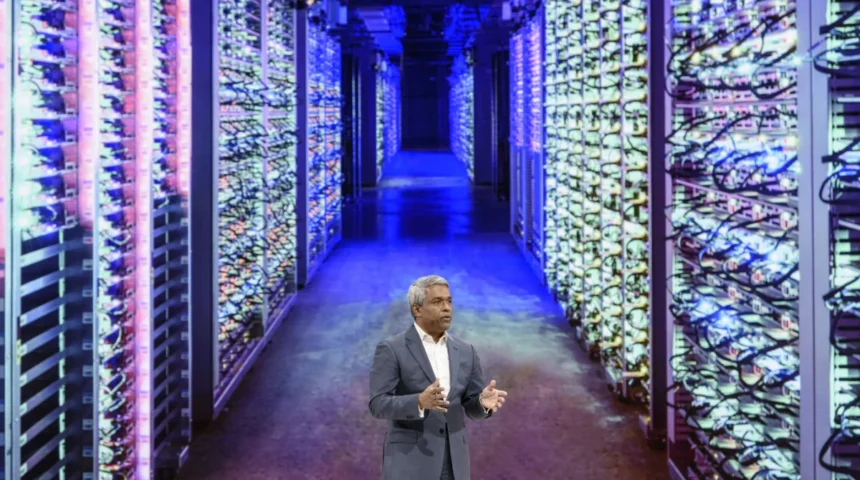
In a move announced ahead of its third-quarter earnings report, Alphabet revealed that Oracle will begin offering Google’s tensor processing units (TPUs), the custom AI chips the company has been developing since 2013. This development marks the first time that enterprise customers will be able to access Google’s TPUs outside of Google’s proprietary cloud infrastructure. It also signals that Google Cloud CEO Thomas Kurian—who spent more than two decades at Oracle prior to joining Google in late 2018—is aggressively looking beyond traditional boundaries to fuel the division’s next wave of growth.
Financial analysts are taking note of the strategic expansion. Chris Ballard, managing director of Check Capital Management, highlighted the competitive threat Google now poses to current market leaders. "They’re a very strong competitor, and it’s very possible that they could eventually take market share from Nvidia," Ballard said, assessing Google’s rising stature in the silicon market.

Kurian is currently operating from a position of profound financial and operational strength. Wall Street analysts expect Google Cloud revenue to surge by approximately 90% compared to the same period a year earlier, following an impressive 82% growth rate in the second quarter. The accelerating adoption of TPUs has become a major driver of this sustained momentum.
"Google was great at doing its own thing, but it was never able to serve customers," noted Uday Cheruvu, a portfolio manager at Harding Loevner, an investment firm that holds Alphabet shares. "That mindset has changed."
Google initially began opening its TPU architecture to outside data centers during the second quarter, paving the way for the broader distribution agreement struck with Oracle. While industry estimates for the financial trajectory of Google’s TPU business vary widely, projections consistently point toward explosive growth. Financial firm TD Cowen models $9.4 billion in TPU sales for the second half of this year, scaling dramatically to $62.5 billion by 2027. Meanwhile, projections from Wells Fargo anticipate roughly $9 billion in third-quarter sales alone, followed by $99 billion next year.
During Alphabet’s earnings call in July, Chief Financial Officer Anat Ashkenazi noted that only a small portion of TPU revenue stemming from existing agreements would be formally recognized within the current calendar year, with the vast majority anticipated to hit the books in 2027. Ashkenazi also pointed out that Google planned to utilize additional outside capacity in the third quarter while the company continues to build out its own physical infrastructure.

Despite its rapid expansion, Google Cloud remains the third-largest player in the broader cloud computing market. Registering $25 billion in second-quarter cloud revenue, Google continues to trail Amazon Web Services, which posted $42 billion, and Microsoft Azure, which brought in $29 billion. Even so, Google is expanding at the fastest pace among the top-tier providers.
"It’s almost like the bigger the pie is getting, the faster they’re accelerating into it," observed Ballard, whose investment firm owned approximately $236 million in Alphabet stock as of June 30.
Optimizing the Whole Stack
Even as Kurian pursues a broader distribution strategy to get more TPUs into the hands of external partners, management must carefully balance the commercial benefits of scaling its customer base against the company’s internal technology requirements.

Speaking at a Goldman Sachs conference in September, Kurian emphasized the efficiency of Google’s vertically integrated approach, noting that the company’s AI servers typically pay for themselves in under two years. Servers running Google’s proprietary silicon, he added, achieve payback in roughly half that timeframe. "It’s because we can optimize that whole stack," Kurian explained.
Industry research firm SemiAnalysis estimates that Google’s latest seventh-generation Ironwood TPU costs about 44% less to own and operate than a competing Nvidia GB200 server. However, external sales of the hardware introduce certain financial trade-offs, including an inevitable margin hit. TD Cowen estimates an operating margin of roughly 20% on standalone TPU sales, which contrasts with Google Cloud’s overall operating margin of about 35% recorded last quarter. Cheruvu expressed skepticism that Google’s cloud operating margin would be able to expand much beyond the mid-30s given these dynamics. Google itself has declined to comment on the margin estimates.
Intriguingly, one of Google’s largest TPU customers is also among its fiercest competitors in the artificial intelligence landscape. Anthropic, whose Claude foundational models directly challenge Google’s Gemini lineup, entered into a massive agreement last October to utilize up to 1 million TPUs in a deal valued in the tens of billions of dollars. Analysts at Mizuho estimate that the agreement brings nearly a gigawatt of computing capacity online this year, describing the unusual partnership as an instance of Google "arming its closest model competitor." Furthermore, CNBC confirmed that OpenAI also plans to purchase TPUs from Google, following initial reporting on the ChatGPT maker’s hardware intentions by The Information.
To help finance its heavy consumption of Google silicon, Anthropic has turned to outside capital structures. Broadcom, which collaborates with Google on TPU development, recently detailed a $63 billion financing vehicle backed by Blackstone and three major financial institutions. The vehicle will purchase TPUs and networking equipment from Broadcom and lease the hardware to Anthropic over a five-year period. Analysts from William Blair note that the financing plan covers approximately half of Anthropic’s projected needs for 2027, indicating that additional funding rounds are likely on the horizon.

In its IPO filing submitted on Monday, Anthropic outlined its multi-vendor hardware strategy, confirming that it relies on silicon from Google, Amazon, Nvidia, and Advanced Micro Devices. The startup stated that this diversified approach allows the company to select chips based on the best price-performance and efficiency characteristics for each specific workload. Regarding its foundational hardware suppliers, Anthropic noted that its partnerships with Google and Broadcom provide reliable access to compute capacity powered by Google TPUs spanning multiple generations of the platform.

Related News