A Mixed Picture for MENA Exam Season as Governments Balance Anti-Cheating Measures Against Connectivity Rights
Every year, as the academic exam season rolls around for students across the Middle East and North Africa, a familiar and disruptive ritual plays out. Citing the persistent risk of examination cheating and paper leaks, numerous governments across the region resort to a drastic measure: shutting down the internet entirely or blocking major social media platforms. Across entire countries, millions of people find themselves suddenly disconnected, businesses grind to a halt, and daily life is thrown into disarray. While these deliberate connectivity restrictions have become an annual fixture for many populations, they represent only one layer of the severe pressures facing education in the region. Students in Gaza have begun a grueling third academic year confined to tents and makeshift educational spaces, while in Lebanon, nearly 100,000 children have been unable to return to school at all following devastating conflict and infrastructure destruction.
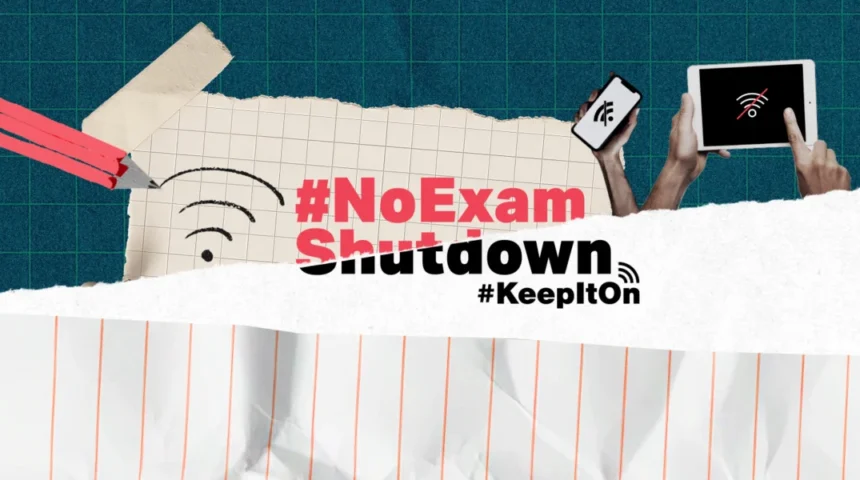
Yet, across the wider MENA region, the most recent exam season yielded a surprisingly mixed set of outcomes regarding state-mandated internet disruptions. For the first time since digital rights organizations Access Now, SMEX, and the Internet Society began tracking this phenomenon under the banner of the #NoExamShutdown campaign, the regional trend diverged in multiple directions.
For instance, Algeria—a country that remained a persistent offender of nationwide communication blackouts for the past decade—notably limited its shutdown measures. Authorities restricted disruptions strictly to the inside of designated exam centers, leaving the rest of the country fully connected. Meanwhile, Syria, a nation that imposed 11 nationwide exam-related connectivity blocks just last year, appeared to have conducted its examinations without any documented network interruptions. On the flip side, however, Tunisia—historically celebrated as having the highest internet freedom environment in the Middle East and North Africa—joined the list of offenders for the first time, quietly imposing covert connectivity restrictions during both of its Baccalaureate examination periods.
In Iraq, the Numbers Tell a Complicated Story
Iraq’s reliance on exam-related internet shutdowns has now stretched into its 11th consecutive year. Monitoring data from Cloudflare Radar and the Internet Society’s ISOC Pulse indicate that the 2026 academic calendar added at least 34 documented disruptions to the nation’s digital history.
The initial wave of connectivity blocks rolled out across June, coinciding precisely with the country’s middle and high school examination schedules. Prior to the disruptions, the Iraqi Ministry of Communications publicly announced that the shutdowns were planned to last approximately 90 minutes each morning on active exam days. Minister of Communications Mustafa Sanad later confirmed the implementation of the blocks, expressing an intention to develop a modern digital system that would eliminate centralized exam distribution and eradicate the perceived necessity to sever internet access for the general public. However, digital rights advocates note that similar pledges have been made—and subsequently broken—by authorities in past years.
A second wave of exam-related shutdowns hit the country in August, striking on five consecutive mornings between August 26 and 31. The disruptions then persisted daily until September 10, before briefly resuming from September 26 onward during a schedule of postponed exams. While technical metrics indicate that this year’s disruptions were somewhat shorter in duration and fewer in total number compared to 2025, civil society observers emphasize that only time will tell whether these shifts signal a genuine, permanent change in government policy.
Sudan’s Shutdowns Continue Amid War
For a sixth consecutive year, the government in Sudan turned to internet blackouts as an enforcement tool during national examinations. Telecommunications authorities ordered a series of 10 internet suspensions between April 13 and 23. While telecom providers such as MTN Sudan issued advance notifications to subscribers warning of the impending disruptions, the decision to cut connectivity drew sharp criticism. Imposing digital blackouts in the midst of an ongoing and devastating civil war severely compounds the humanitarian toll, making it profoundly difficult for citizens to secure basic safety, access vital information, maintain dwindling income streams, and navigate emergency healthcare needs.
Syria: Breaking with the Past?
Following the dramatic fall of Bashar al-Assad’s regime in 2024, international observers and digital rights defenders closely watched to see whether the incoming administration would break with the country’s entrenched pattern of enforcing nationwide communications blackouts during national tests. Although authorities maintained the status quo by sticking to tradition during the 2025 academic cycle, a tangible shift materialized. Neither Cloudflare nor the Internet Society recorded any exam-related shutdowns throughout the examination period. This absence of state-ordered blackouts marks the first time in at least a decade that Syria has refrained from interrupting connectivity during national exams, offering a notable indication that long-standing administrative habits can indeed change.
Algeria Turns a Page
When Baccalaureate exams commenced in Algeria, citizens across the country experienced a welcome relief when their internet access remained fully operational—marking the first time in ten years that a total blackout was avoided. As Minister of Education Mohamed Seghir Saâdaoui explained, future security measures would henceforth be confined strictly inside examination centers, leaving the broader national telecommunications infrastructure untouched.
This policy change represents a significant departure from previous approaches, which alternated between total nationwide shutdowns and targeted application blocks enforced exclusively during testing hours. Even though the government has stopped short of explicitly acknowledging public critique, digital rights advocates view the scaling back of these measures as a testament to sustained pressure from citizens, local businesses, and civil society organizations striving for institutional accountability.
Tunisia: A New Offender
Historically viewed as a regional leader in digital liberty, Tunisia earned a spot on the #NoExamShutdown campaign’s radar for the very first time. Anomaly data collected by the Open Observatory of Network Interference (OONI) revealed widespread mobile internet disruptions that specifically crippled popular messaging applications such as WhatsApp and Messenger across the country.
These restrictions coincided with both the primary Baccalaureate session held in early June and the subsequent reset period at the end of the month. Imposed without prior public notice, the sudden connectivity blockages severely disrupted commercial operations, small businesses, and ordinary communications nationwide. Digital rights groups have characterized this development as an alarming regression for a nation previously praised for robust internet freedom, signaling a trend that monitoring organizations intend to watch closely in upcoming academic cycles.
Jordan: Announced, Localized, and Still Unacceptable
Jordan carries a long-established history of exam-related network disruptions. While 2023 served as a rare, isolated exception where the government opted against pulling the digital kill switch, 2026 marked a return to familiar practices. On July 23, the Telecommunications Regulatory Commission (TRC) formally announced that IP-based messaging applications would be blocked in the geographical vicinity of schools hosting the Tawjihi (General Secondary Certificate) examinations during testing hours.
Despite prior public announcements, digital rights advocates maintain that advance notice does not legitimize the practice. Civil society organizations argue that the TRC’s framing of these measures as localized and temporary requires rigorous scrutiny. Targeted restrictions do not automatically equate to proportionate responses, and administrative measures implemented year after year without meaningful legal pushback risk normalizing digital censorship as an accepted administrative tool.
A Spreading Problem
While the aforementioned nations are the primary focus of regional tracking efforts, the practice of leveraging network blackouts to police academic integrity extends far beyond the Middle East and North Africa.
In June, the Indian government invoked Section 69A of the Information Technology Act to temporarily block access to the messaging platform Telegram. The restriction remained in place for the week leading up to the nation’s postponed NEET-UG medical school entrance examinations. The original examinations, which had been taken by over 2.2 million candidates earlier in May, were voided by authorities after investigative reports confirmed that examination questions had been leaked prior to testing.
Organizations monitoring digital rights continue to collect testimonies and network data from individuals who experience connectivity interruptions during academic testing periods. Researchers emphasize that comprehensive documentation remains vital for holding governments accountable and countering attempts by authorities to obscure the true economic and social costs of digital blackouts.

Related News