Nvidia Backs Indian Startup Simplismart in $14 Million Funding Round to Optimize AI Inference
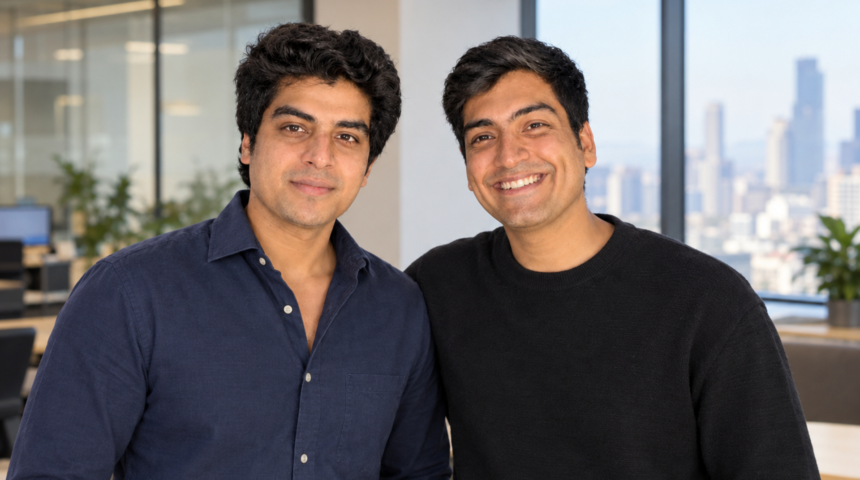
As the global artificial intelligence boom places unprecedented strain on computing capacity and hardware supply chains, chip giant Nvidia has thrown its weight behind Simplismart, an Indian startup specializing in AI infrastructure software. Nvidia has participated in a $14 million funding round for the Bengaluru-based company, betting on software designed to help corporations run large-scale AI models more efficiently and, in certain configurations, with fewer graphics processing units.
The all-primary Series B financing round was led by Dallas Venture Capital, with participation from Nvidia alongside prominent institutional backers Accel, Shastra VC, and Micromax. This latest injection of capital values the four-year-old enterprise at approximately $100 million, inclusive of the fresh funding.
In the current technological landscape, corporations across nearly every industry are spending heavily on specialized hardware like GPUs to power demanding generative AI and machine learning applications. However, deploying those complex models reliably, economically, and at scale remains a persistent operational challenge. Different enterprise workloads demand distinct trade-offs between processing speed, operational cost, and overall performance. Operating and configuring AI models to satisfy stringent business requirements typically involves complex, resource-intensive adjustments. Simplismart asserts that its software platform automates a significant portion of that heavy lifting, intelligently tailoring how models run on existing computing infrastructure rather than forcing customers to manually manage those intricate configurations.
"Nobody actually needs the fastest or the cheapest inference," explained Amritanshu Jain, co-founder and chief executive officer of Simplismart, during an interview discussing the core philosophy behind the company’s technology. He elaborated that modern enterprises instead require platforms capable of running AI models at speeds and cost points that align practically with their specific commercial applications.
Simplismart’s proprietary software layer positions itself directly between underlying AI models and the computing infrastructure that powers them. By dynamically adjusting how models are deployed and managed, the platform meets exact customer requirements without wasting computational overhead. The startup states that its technology optimizes critical operational factors, including how quickly a model responds to prompts, the volume of concurrent requests it can successfully handle, and the precise amount of computing power it consumes. This operational efficiency allows organizations to extract significantly more utility out of their existing GPU stack.
Headquartered in Bengaluru, Simplismart offers enterprise customers multiple deployment pathways. Companies can run and manage AI models either through Simplismart’s dedicated platform or directly within their own existing cloud environments and on-premises infrastructure. Furthermore, the platform equips development teams with integrated tools to fine-tune models, automatically scale computing resources up or down as real-time user demand fluctuates, and continuously monitor performance metrics. In addition to serving enterprise clients, Simplismart enables independent cloud providers to build and operate their own bespoke AI inference services directly on top of raw GPU infrastructure utilizing the startup’s underlying software.
The practical value of this approach is already attracting notable clients within the media and tech sectors. Simplismart reports that its software successfully helped AI video-generation platform InVideo slash its GPU serving costs by 56 percent. The startup’s client roster also includes prominent generative AI video companies like HeyGen and Higgsfield, alongside enterprise AI startup Ema. Additionally, Indian cloud provider Yotta leverages Simplismart’s core technology to power the serverless AI inference service running inside its Shakti Studio platform.
Commercial traction has translated into substantial top-line growth. Jain revealed that Simplismart’s annualized revenue run rate has surged an impressive 14-fold over the preceding six-month period, lifting the metric to an eight-figure sum. This financial milestone is calculated based on actual, recent customer usage rather than contracted recurring revenue, and it specifically excludes revenue that is merely passed through to underlying infrastructure providers, according to the company. Jain declined to disclose the exact financial figure publicly. Interestingly, despite maintaining a larger volume of individual customers in its home market of India, over half of Simplismart’s overall revenue originates from the United States.
Beyond the financial investment, the partnership with Nvidia extends into deep technical collaboration. Jain noted that Nvidia and Simplismart have been actively working together on technical integrations, notably concerning Nvidia’s Dynamo inference software. This collaborative effort involves close coordination between Simplismart’s engineering team and Nvidia’s solutions architects. Furthermore, Nvidia has leveraged its market position to introduce the Indian startup to a variety of prospective enterprise customers and strategic industry partners.
This strategic investment highlights an apparent paradox in the current semiconductor ecosystem: Nvidia, the undisputed dominant supplier of AI hardware chips, is actively backing software innovations that can help companies optimize workloads and potentially utilize fewer GPUs. Addressing this dynamic, Jain argued that making AI inference significantly more efficient could ultimately serve Nvidia’s long-term interests. By lowering the total cost of ownership and easing operational friction, the software makes AI infrastructure more attractive to a broader base of customers, thereby encouraging wider, more sustainable adoption of AI applications globally.
Simplismart operates within an increasingly crowded and competitive market for AI inference software. The startup finds itself competing against proprietary offerings from hardware providers like Nvidia itself, as well as major cloud computing hyperscalers including Amazon Web Services, Google Cloud, and Microsoft Azure. At the same time, a growing wave of early-stage startups is rushing to develop tools aimed at making AI models faster and cheaper to run, fueled by explosive market demand and the urgent corporate imperative to maximize expensive GPU resources.
"Where we tend to win is where people have to be more stringent on their SLAs and TCO," Jain remarked, referencing strict service-level agreements and tight total cost of ownership constraints that define high-stakes enterprise deployments. Unlike competing software options that typically provide rigid, preset choices favoring either raw speed or lower cost, Simplismart positions its offering around finding an operational balance uniquely tailored to each individual customer’s exact parameters.
Simplismart was founded in 2022 by Jain, a former Oracle engineer, and Devansh Ghatak, a former Google engineer. The co-founders first crossed paths while studying at BITS Pilani, drawing upon their collective professional experience in building and deploying complex machine-learning systems to launch the enterprise. Today, the startup’s workforce has grown to 58 employees.
Looking ahead, Simplismart intends to deploy its newly secured capital to accelerate its expansion strategy across the United States, scale its internal engineering and sales teams, and invest heavily in continued research and development for its core inference software. Jain emphasized that the United States remains a critical core market as the firm looks to build upon its established customer base in North America.
The formal funding announcement follows a prior media report by Indian business daily The Economic Times, which suggested that Simplismart had been exploring talks to raise between $40 million and $50 million at a vastly elevated valuation of $300 million to $400 million. When asked about those published reports, Jain declined to comment directly, stating only that the startup was not actively fundraising at the moment and that its Series B round was fully closed and would not be extended.

Related News