International Law Enforcement Seizes Domain and Servers of Notorious Bulletproof Host Virtualine Tied to Global Cybercrime and Ransomware
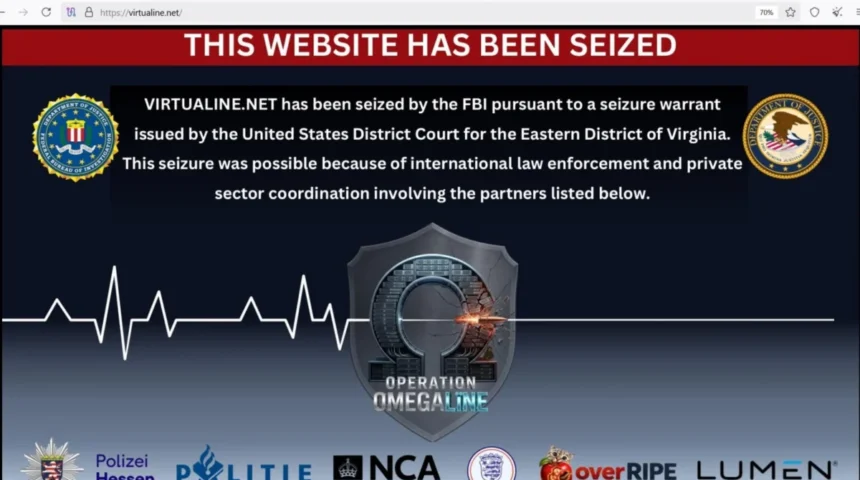
In a massive, coordinated international law enforcement sweep, authorities have taken down the primary domain and extensive server infrastructure of Virtualine, a prominent "bulletproof" hosting service heavily relied upon by global cybercrime syndicates, ransomware operators, and financial fraudsters.
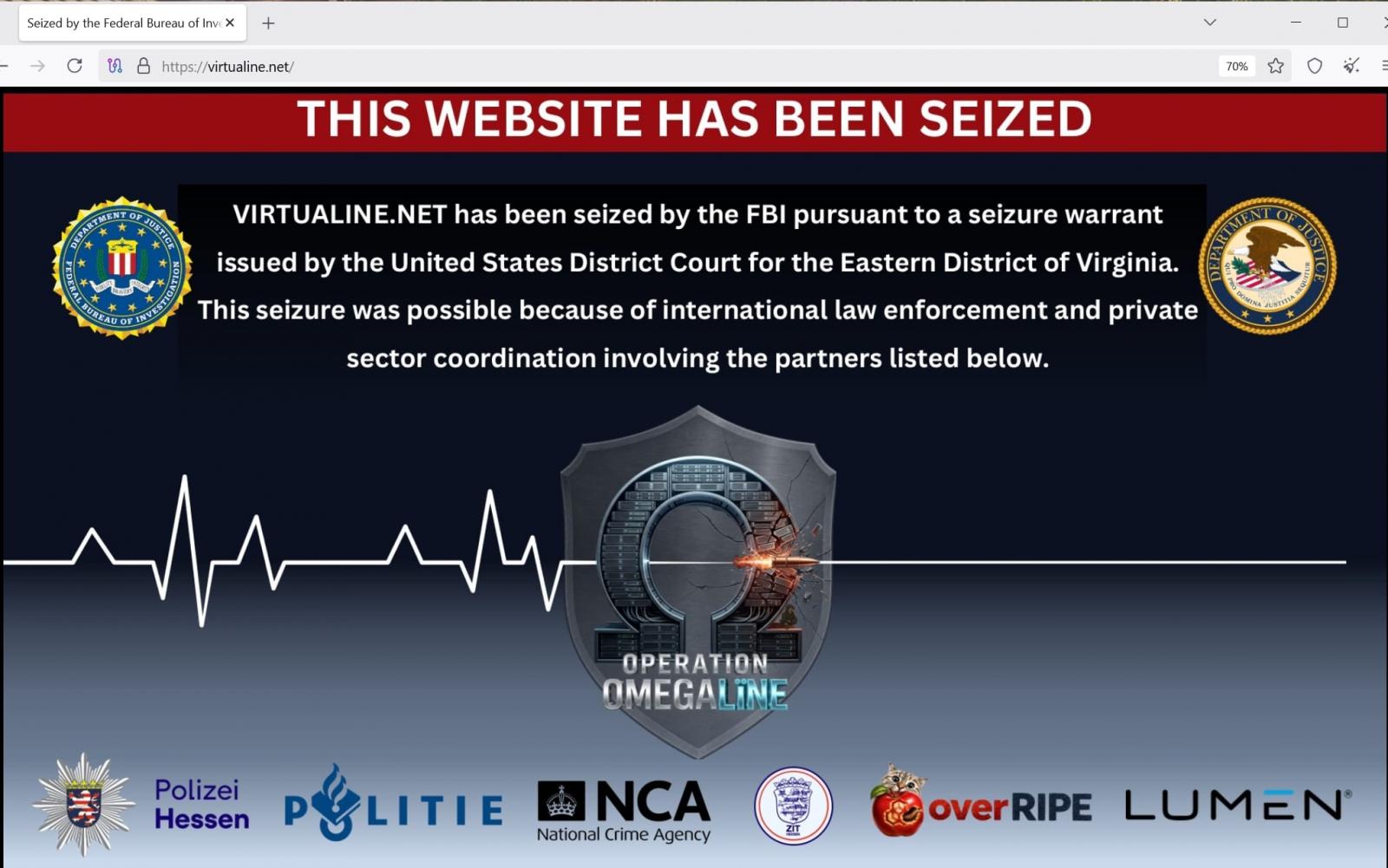
The U.S. Department of Justice (DOJ) confirmed that the FBI successfully seized the primary domain, virtualine[.net], following a complex cross-border investigation. The operation was executed in close collaboration with international partners, including Germany’s Polizei Hessen, the Netherlands’ Politie Midden-Nederland, and the United Kingdom’s National Crime Agency (NCA), alongside vital technical and intelligence contributions from private-sector cybersecurity entities OverRIPE, Lumen, Chainalysis, and TRM Labs.
Operating under a rotating portfolio of pseudonyms—including Secury, Massgod, Spamhouse, Lanedo, and Omegatech—Virtualine marketed itself aggressively on underground cybercrime forums as an unyielding sanctuary for digital outlaws. The platform explicitly promised its malicious clientele total immunity from legal complaints, DMCA takedowns, and subpoenas issued by law enforcement or regulatory authorities. According to federal prosecutors, the service actively courted and facilitated "illegal and black hat activities," ranging from large-scale phishing campaigns, spam dissemination, and credit card fraud to intrusive network reconnaissance like port scanning.
While bulletproof hosting services are a well-documented backbone of the modern cybercrime economy, Virtualine’s operations scaled to encompass a vast ecosystem of illicit financial transactions and severe digital harms. Operating since at least 2022, according to Dutch authorities, the platform provided the underlying digital real estate for botnets, infostealers, ransomware deployments, and illicit marketplaces.
Despite Virtualine maintaining an ostensible policy prohibiting child sexual abuse material (CSAM), investigators revealed a darker, contradictory reality. Authorities stated that the platform’s operators knowingly hosted an online forum dedicated to promoting child abuse material. They allegedly ignored repeated, formal notices from law enforcement agencies, the National Center for Missing and Exploited Children (NCMEC), and a victim’s legal counsel.
Furthermore, when legal and public pressure surrounding the abusive forum escalated, Virtualine’s operators reportedly assisted the forum administrators in migrating and setting up a brand-new website to keep the illicit content online. The DOJ noted that Virtualine continued hosting this successor website, which subsequently received fresh abuse complaints regarding sexually explicit images of children.
In response to the federal takedown and these severe allegations, Virtualine’s administrator published an open letter on a hastily established alternative domain, virtualine[.]org, which was subsequently flagged and analyzed by cybersecurity firm Silent Push. While the operator conceded that accusations regarding the platform’s broader illegal activities and clientele warranted a fair and thorough investigation, they pushed back against specific allegations, asserting that they viewed the "sexual exploitation of children as a crime against humanity."
Cybercrime Ecosystem and Financial Laundering
Beyond providing resilient servers designed to withstand takedown requests, Virtualine played a critical role in the financial architecture of the underground economy. The hosting provider accepted direct Bitcoin payments from its criminal customers, sidestepping traditional financial institutions and effectively functioning as an informal money laundering engine. By utilizing unhosted wallet addresses, cybercriminals could pay for infrastructure without triggering standard compliance protocols enforced by regulated cryptocurrency exchanges.
Blockchain intelligence firm Chainalysis, which provided crucial tracing support to law enforcement during the multi-agency operation, directly linked Virtualine’s payment wallets to prominent ransomware strains, infostealer infrastructures, Russian-language cybercrime forums, illicit online black markets, investment scams, and phishing platforms. Chainalysis researchers noted that after accepting these untracked funds, Virtualine actively worked to launder the proceeds, masking their true origins and integrating them back into usable financial channels.
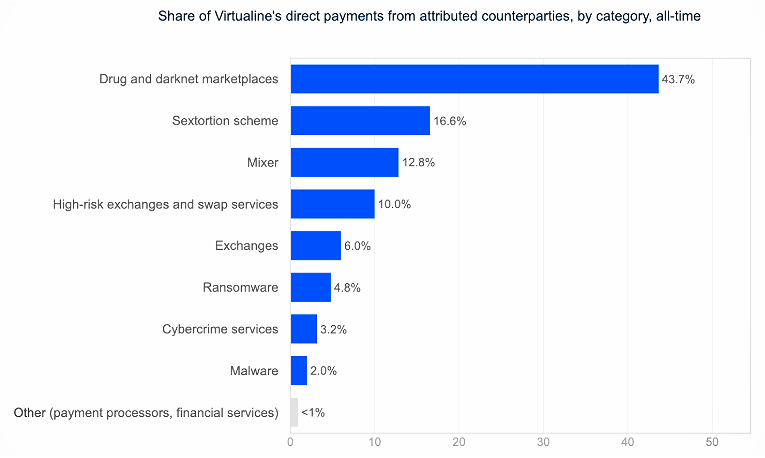
Detailed reports published by blockchain analytics firm TRM Labs further illuminated the massive scale of illicit capital flowing through Virtualine’s coffers. According to TRM’s findings, ransomware groups accounted for roughly 5% of the platform’s total financial inflows. Meanwhile, a massive Russian-language drug marketplace alone made up approximately 44% of the incoming funds. Additional significant financial streams originated from extensive sextortion schemes and cryptocurrency mixing services. TRM Labs also documented consistent financial transactions tied to the StealC infostealer throughout the year, illustrating a sustained, symbiotic relationship between the hosting provider and credential-harvesting malware operations.
The operational blow dealt to Virtualine extended far beyond digital domains. In the Netherlands, the national police force (Politie) announced the physical seizure of dozens of servers located in the province of Limburg. This physical intervention forced hundreds of virtual servers offline simultaneously. More importantly for ongoing international investigations, Dutch law enforcement investigators successfully recovered expansive data sets containing the details of more than 3,000 Virtualine customers. Authorities indicated that follow-up legal actions, arrests, and targeted disruptions against these individual clients are already underway.
While the sprawling infrastructure of the bulletproof host has been severely fractured, researchers analyzing global network telemetry observed that Virtualine’s network prefixes currently exhibit exceptionally low routing visibility. This indicates that the vast majority of its distributed infrastructure has been rendered unreachable, effectively blinding the illicit networks that relied on its resilience. As global law enforcement agencies continue to sift through terabytes of seized server logs and blockchain data, the takedown of Virtualine marks a significant disruption in the operational readiness of the international cybercrime underground.

Related News