Bluesky Blocks Links to DDoSecrets Following Massive Data Breach Targeting U.S. Department of Homeland Security
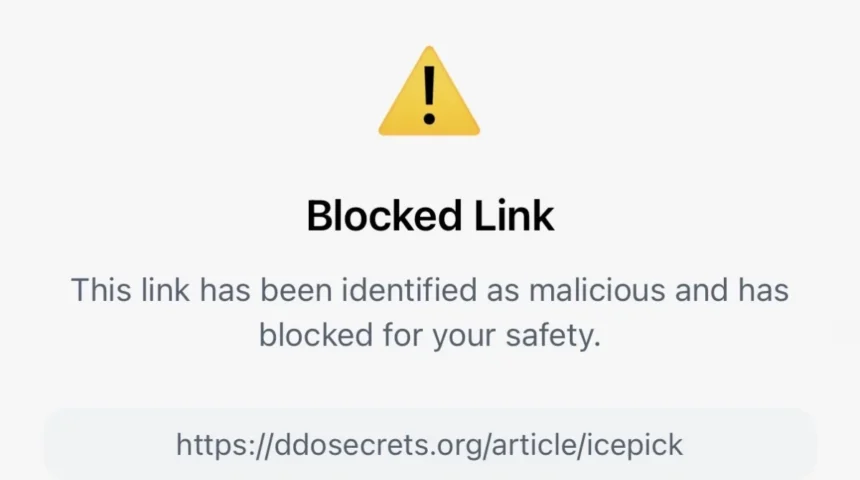
The decentralized social media platform Bluesky has begun blocking its users from sharing links to the website of DDoSecrets, a prominent transparency collective that recently published a massive leaked dataset containing personnel records from the U.S. Department of Homeland Security (DHS).
Users across the platform reported that hyperlinks pointing directly to the DDoSecrets article hosting the leaked information were abruptly flagged and labeled as "malicious." The platform’s intervention followed closely on the heels of breaking news reports from TechCrunch and other major media organizations detailing a significant cybersecurity breach affecting the federal agency.
The breach, which came to light earlier in the week, involved a hacker successfully compromising Homeland Security’s login system and exfiltrating over 40,000 user account records. The compromised information encompasses names and professional contact details—such as official work-issued telephone numbers and corporate email addresses—pertaining to personnel, staff, and enforcement agents working across various critical sub-agencies. Among the impacted departments are Immigration and Customs Enforcement (ICE) and Customs and Border Protection (CBP).
According to security analysts reviewing the material, the nature of the leaked data is broadly comparable to the kind of professional details typically found on standard corporate business cards. Rather than treating the data as strictly confidential or burying the incident, DDoSecrets—an organization dedicated to publishing leaked datasets when deemed to be in the public interest—made the trove publicly accessible. Researchers and accountability advocates investigating alleged abuses by the outgoing or current administrations have argued that the data holds immense value. They contend that having direct professional contact points for government employees is vital for filing proper public records inquiries and tracking down bureaucratic documentation under transparency laws like the Freedom of Information Act (FOIA).
In the immediate wake of the disclosures, a spokesperson for the Department of Homeland Security acknowledged the incident to reporters, stating that the agency was fully aware of a potential security breach and was actively working to address the evolving situation swiftly and effectively.
While public interest groups and investigative researchers debated the utility of the leak, platform governance at Bluesky moved swiftly to restrict the spread of the data. Bluesky officials did not immediately respond to standard media inquiries regarding the blocks outside of regular West Coast business hours. However, a company spokesperson later confirmed to technology publication Wired that the exposed data was determined to violate Bluesky’s established community guidelines. Rather than adopting a heavier-handed moderation approach that would involve systematically hunting down and deleting individual user posts, the platform opted for a broad infrastructure-level block targeting the specific hyperlink destination.
This moderation decision drew immediate pushback from transparency advocates and journalism circles. Emma Best, a co-founder of DDoSecrets and an investigative journalist, strongly contested Bluesky’s rationale in an interview. Best pointed out that while Bluesky’s formal terms of service expressly prohibit the sharing of private residential home addresses and sensitive personal contact information, neither category of data actually exists within the leaked dataset in question.
"The data contains professional contact information for government employees at a time when the public interest in that exact information has never been higher," Best said. "By requiring the public to provide it for [Freedom of Information Act] requests, the government has made that exact information a crucial piece of the transparency channels they want the public to engage in."

Homeland Security Sends Takedown Notices
The controversy surrounding the hosting and sharing of the DHS personnel records extended far beyond social media moderation debates, resulting in direct domain-level censorship of the leaked database.
Best informed reporters that a separate external website specifically established to host a searchable, user-friendly copy of the stolen data was abruptly taken down by its domain registrar, effectively knocking the portal offline for the general public. The search interface, which had been put together by independent software developer and journalist maia arson crimew, ceased loading properly. Internet registration records associated with the domain revealed that it had been placed on "serverHold"—a specialized status code indicating that the domain registrar had locked, suspended, or entirely closed the domain registration pending further administrative action or external legal pressure.
The swift disappearance of the search engine was catalyzed by official legal maneuvers orchestrated by the federal government. The Department of Homeland Security formally filed a series of aggressive takedown notices utilizing the services of ZeroFox, a specialized external security vendor. Under its contractual agreement, ZeroFox holds the official authority to act directly on behalf of the department through at least 2028, actively seeking out and demanding the removal of sensitive or compromised government data from the broader internet ecosystem.
Media outlets reviewed copies of the official takedown notices dispatched regarding the search site. The documentation explicitly demanded that the domain registrar immediately "stop serving the personal contact and location data of individuals who did not consent to its publication."
Despite the formal administrative push, critical questions regarding corporate compliance and government overreach remained unanswered. CentralNic, the corporate entity that acts as the underlying host for the targeted domain name, failed to respond to repeated requests for comment regarding the exact mechanics of the takedown or whether they had received explicit, mandatory directives from federal authorities. Similarly, representatives for ZeroFox declined to provide statements clarifying their enforcement actions.
A spokesperson for the Department of Homeland Security also declined to provide additional commentary when pressed on the specific legal mechanisms and takedown notices affecting the search engine’s web presence.
In response to the mounting pressure from domain registrars, corporate security vendors, and social media platforms, the creator of the search tool has taken alternative steps to ensure the information remains preserved. Crimew successfully compiled and distributed a locally hosted version of the stolen dataset, allowing independent researchers, archivists, and interested members of the public to download and access the complete records directly on their own personal computers, entirely bypassing traditional web hosting infrastructure and centralized platform filters.

Related News