Beyond the Tech Bubble: How AI and Data Centers Became the Defining Issue of the Midterms
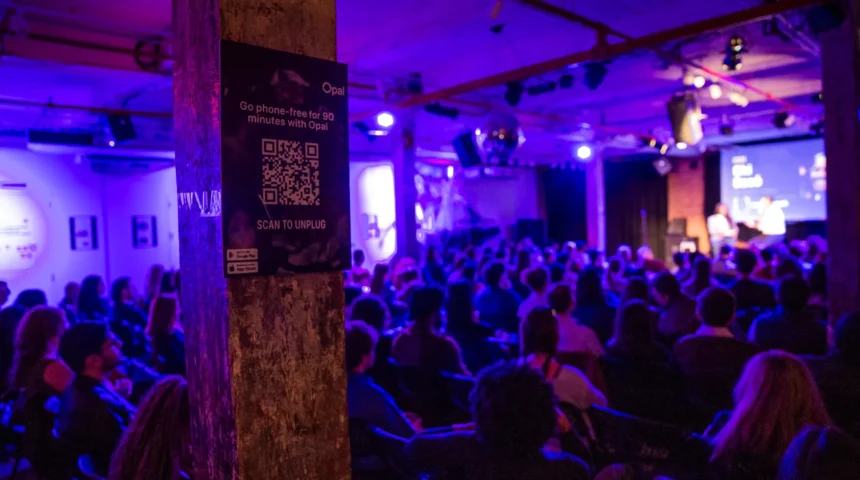
On a crisp Thursday evening in Brooklyn, the dim blue lighting of a spacious warehouse illuminated a gathering of media professionals, tech founders, policy advocates, and political strategists. Stepping inside in a floral mini dress and neon yellow heels, the author found a room already buzzing with anticipation just five days ahead of a high-stakes midterm election. Hosted by Newsreel—a media company founded by former Forbes and Newsweek reporter Jack Brewster—the event was designed to be a space where attendees could temporarily step away from their screens and discuss the political landscape.
The evening’s lineup featured prominent voices tackling various aspects of contemporary culture and politics. Kenneth Schlenker, co-founder of the focus application Opal, participated in a fireside chat examining "the state of attention," while Aryan Banjan, creator of campaign management software Barza, delivered a comprehensive midterm forecast. Panel discussions throughout the night were curated to spark cross-disciplinary dialogue. Yet, despite the diverse agenda covering attention spans, campaign strategies, and democratic institutions, a single, heavy undercurrent consumed nearly every conversation: artificial intelligence, the rapid expansion of data centers, and a growing public backlash against the burgeoning technocracy.
For a technology reporter immersed daily in Silicon Valley’s optimism, the evening served as a sharp reminder of the widening chasm separating the tech industry from the broader public. While insiders spend their days weighing the immense potential of artificial intelligence and racing toward deployment, everyday citizens view the rapid, often opaque expansion of the physical infrastructure required to power these models with deep skepticism and alarm. Far from being a niche policy concern confined to trade publications, AI and its physical footprint have evolved into a potent ballot-box issue, carrying enough weight to potentially sway several crucial midterm races.

The scale of this friction is reflected in industry data. A recent report from Data Center Watch revealed that nearly $200 billion worth of data center projects were delayed, stalled, or entirely blocked during the first half of the year due to intense political resistance and community opposition. Across states like Pennsylvania, Georgia, Texas, New York, and Virginia, lawmakers are facing mounting pressure to introduce stricter regulatory guardrails, environmental checks, and transparency mandates. Virginia alone, already widely known as the "data center capital of the world," is grappling with hundreds of new facilities proposed for development, sparking fierce local resistance.
The evening’s programming directly confronted these tensions, beginning with a fireside chat featuring New York City Council member Chi Ossé. When the conversation turned toward artificial intelligence near the end of his session, Ossé noted that he rarely uses the technology himself. Rather than positioning himself strictly for or against AI, he emphasized the urgent need to hold tech executives accountable and called for higher taxation on billionaires like Elon Musk. Describing his political stance as a "law and order" democratic socialist, Ossé pointedly remarked that when tech leaders develop systems capable of consuming vast resources or destabilizing society, they should be summoned to testify before Congress.
Following Ossé’s appearance, the author moderated a panel dedicated entirely to the politics and impacts of data centers, featuring Maia Woluchem, a technology and human rights researcher, and Hilary Flint, an environmental and public health advocate. Stepping onto the stage, the moderator posed a direct question to the crowd: "Who here is pro-AI data center?" The inquiry was met with immediate, unmistakable boos from the audience.

The ensuing discussion explored a complex mix of anger and frustration. Communities across the country are growing increasingly resentful of major technology corporations that allegedly strike secret deals with local officials to fast-track billion-dollar infrastructure projects. In many municipalities, outdated zoning regulations mean residents remain entirely unaware of what is being constructed in their neighborhoods until heavy machinery arrives and it is too late to mount an effective protest.
These physical developments intersect uncomfortably with broader economic anxieties. As everyday Americans struggle with the rising cost of living and fight to maintain financial stability, tech executives openly discuss AI’s potential to displace human labor—and in some philosophical circles, even humanity itself. For many citizens, data centers have become the tangible, physical embodiment of a broader loss of community control and a deep-seated resentment toward an insular tech class moving at a dizzying pace. When the conversation touched on the financial incentives and short-term economic benefits sometimes promised to local municipalities, Flint offered a sobering perspective. "What is a life worth?" she asked, noting that residents continue to organize and protest because they "value their lives a little bit more than a temporary check."
Later in the evening, another panel originally scheduled to discuss the future of the Democratic Party quickly gravitated back toward the same omnipresent theme. Featuring NewsNation host Batya Ungar-Sargon, political strategist Morris Katz, and Vox’s Astead Herndon, the discussion quickly pivoted as panelists analyzed the uneasy relationship between labor and technological expansion. Ungar-Sargon pointed out that certain labor unions initially support data center developments because of the short-term construction jobs they generate, even though studies consistently show that permanent employment figures drop sharply once construction concludes.

Drawing a parallel to historical industry shifts, Ungar-Sargon reflected on the Rust Belt, where communities once took immense pride in massive industrial buildings because they represented shared prosperity, family stability, and a reliable path to the American dream. Today, however, that sense of shared benefit is largely missing from the digital infrastructure boom. Herndon highlighted similar dynamics observed elsewhere in the country, noting that prominent political figures like Vivek Ramaswamy had faced harsh receptions in industrial states when addressing the same topic. "I just want to reinforce the lack of consent happening," Herndon said, emphasizing that this loss of local agency resonates deeply across partisan lines.
Katz echoed these sentiments with sharp skepticism toward institutional powers. "It’s the same people who have taken so many union jobs away," Katz argued, suggesting that the corporate forces now promising economic renewal are the same ones that previously dismantled working-class employment, returning merely to capitalize on what remains.
Along the warehouse walls, interactive elements captured the ambient political anxiety of the attendees. Handwritten sticky notes addressed questions posted for public response, including a query asking whether big money could ever be successfully removed from politics. One nearby note captured the prevailing mood with a simple, weary reply: "God, I hope so."

As the formal panels concluded, the warehouse atmosphere shifted. Attendees rushed the bar as techno music filled the space, breaking into smaller clusters where conversations about AI and data centers continued unabated. Reflecting on the evening, Jack Brewster noted his surprise at how thoroughly the topic dominated every corner of the event. Despite taking place in New York City, where heavy industrial data centers are largely hidden from daily view, the subject proved to be a primary concern for attendees. Brewster observed that artificial intelligence has fundamentally transformed into a mainstream election issue, noting that while rural communities push back out of a fear of economic replacement, urban residents in places like Brooklyn focus more critically on questions of equity and who ultimately profits from the technological shift.
Before exiting into the New York night, attendees shared their perspectives on the most eccentric developments in the tech sector over the preceding year, ranging from ambitious artificial intelligence startups to the broader cultural saturation of synthetic media. One non-tech attendee remarked on the shifting perception of generative art, noting that automated imagery is increasingly associated with cheapness—a trend seemingly mirrored by luxury houses like Prada, which launched a holiday campaign featuring hand-drawn illustrations, and Hermès, which continues to spotlight traditional handmade artisan work across its digital platforms.
Outside the venue, a software engineer recounted a recent conversation where a Halloween manicure was humorously mistaken for an homage to an artificial intelligence firm’s public offering, underscoring how deeply tech culture permeates everyday pop culture. But the conversation quickly returned to the physical realities of the industry. The engineer noted that data centers are now proliferating in her Southern California hometown, emerging within a close-knit Chinese immigrant community where residents have begun posting yard signs featuring imagery of dragons choking digital infrastructure—signs that have since required translation into multiple languages to keep pace with community organizing. Hearing of these localized protests thousands of miles away, the stark reality of the technological expansion settled in, highlighting how a debate born in Silicon Valley boardrooms has firmly planted its roots in the backyards of communities nationwide.

Related News