Y Combinator CEO Garry Tan Drops Up to $200,000 a Year on AI Tokens to Fuel His "Cyber Psychosis" Workflow
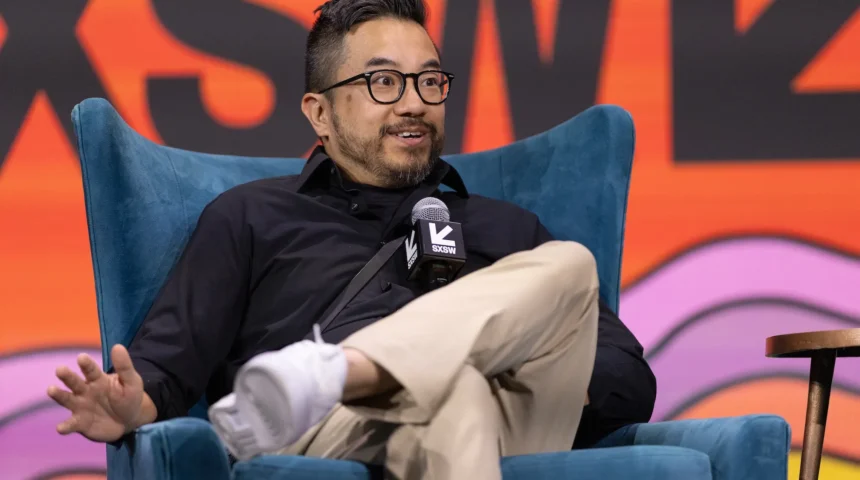
Y Combinator CEO Garry Tan has never hidden his intense fascination with cutting-edge artificial intelligence, occasionally joking that he suffers from "cyber psychosis" and frequently sacrificing sleep simply because he is so exhilarated by the capabilities of his AI agents. Now, the head of Silicon Valley’s most famous startup accelerator has put a precise financial figure on his technological passion.
During an upcoming episode of Walter Isaacson’s podcast, The Builders, set to publish on Tuesday, Tan revealed the staggering amount of money he funnels into computing power to keep his digital assistants running around the clock.
"I spend about maybe $100,000 to $200,000 a year on tokens," Tan told Isaacson during the podcast recording.
Tan utilizes these advanced AI agents for a seemingly endless array of work projects, complex coding tasks, and day-to-day administrative burdens. His engagement with the technology goes far beyond passive consumption; he has even actively contributed to the open-source community by sharing his personal set of 23 Claude Code skills, collectively known as "gstack," on GitHub. According to Tan, publishing these tools was an intentional effort to help educate others on what autonomous agents are truly capable of achieving in a modern professional workflow.
The dual nature of Tan’s AI usage mirrors the broader evolution of how power users interact with large language models. On one hand, he relies on his digital assistant for specific, task-oriented research—such as analyzing Walter Isaacson’s background and prepping for the types of nuanced questions he might face during the podcast interview itself. On the other hand, the agent acts as an omnipresent manager that helps him navigate and organize his entire personal and professional life.
The scope of data accessible to Tan’s agent highlights the deep level of integration modern power users are experimenting with.
"It’s read all of my email and all of my Dropbox," Tan told Isaacson. "It’s read, like, all of my Apple Notes, even my therapy notes going back 20 years."
To describe the sensation of working alongside such deeply integrated autonomous software, Tan invokes a literary metaphor, comparing the experience to having a classic conscience-keeper by one’s side throughout the day. He views the technology as getting assistance with almost anything one might encounter in daily life, handled with a surprising degree of autonomy.
"Think of it as a Jiminy Cricket on your shoulder at all times," Tan explained. "Like, almost anything you want to do, it knows you, and it’s there to help. And it will actually sort of run ahead and say, ‘What about this?’ Or, it’ll help you see around corners."
As an early adopter of OpenClaw who has since transitioned into a dedicated power user, Tan has developed distinct philosophies regarding how humans should interact with intelligent software. One of the most important lessons he has learned through extensive experimentation is that users must avoid treating advanced AI agents like traditional legacy software. He argues that traditional software paradigms rely heavily on rigid constraints, whereas modern AI thrives on flexibility and a more organic working relationship.
According to Tan, many individuals and organizations remain so fixated on traditional metrics of software deployment, such as absolute repeatability and strict safety guardrails, that they inadvertently handicap themselves. In doing so, he believes they trade away all of the beautiful, creative parts of working with an AI agent—capabilities that can occasionally feel remarkably similar to collaborating with a human colleague.
This philosophy is already bleeding into the organizational structure at Y Combinator itself. Tan noted that the prestigious startup accelerator is actively utilizing custom AI agents to fundamentally transform its internal operations.
"We now have an internal AI agent, for instance, named Stray Light that kind of has a personality, and then it has a company brain," Tan said. "Like it actually has the total context of every founder we’ve ever backed, anyone who’s ever emailed us, like all the applications."
Naturally, as the leader sitting at the apex of Silicon Valley’s elite startup ecosystem, Tan is an avid evangelist for technological progress. He firmly believes that personalized AI agents will eventually transition out of the niche tech circles and become entirely mainstream. However, he acknowledges that this mass adoption cannot happen until one monumental barrier is successfully dismantled: the underlying costs of the infrastructure must come down significantly.
"It’s too expensive right now," he stated candidly during the podcast, acknowledging that the six-figure sum he personally allocates toward AI tokens is "a crazy privilege that not everyone can do."
At the same time, Tan remains skeptical that relying entirely on "freebie" AI agents controlled and subsidized by major technology conglomerates is the ideal alternative for society. When discussing the broader trajectory of the technology sector and reflecting on how social media giants like Meta have historically shaped modern human behavior and communication, Tan raised concerns about centralized algorithmic control.
"This is a huge company that controls the algorithm, and we all wish that they didn’t at some level," Tan said, pointing toward a different vision for the digital landscape. "So you could imagine a personal AI that you control, that you program."

Related News