When Governments Hit the Kill Switch: The 2026 MENA Exam Season Reveals a Fractured Digital Landscape
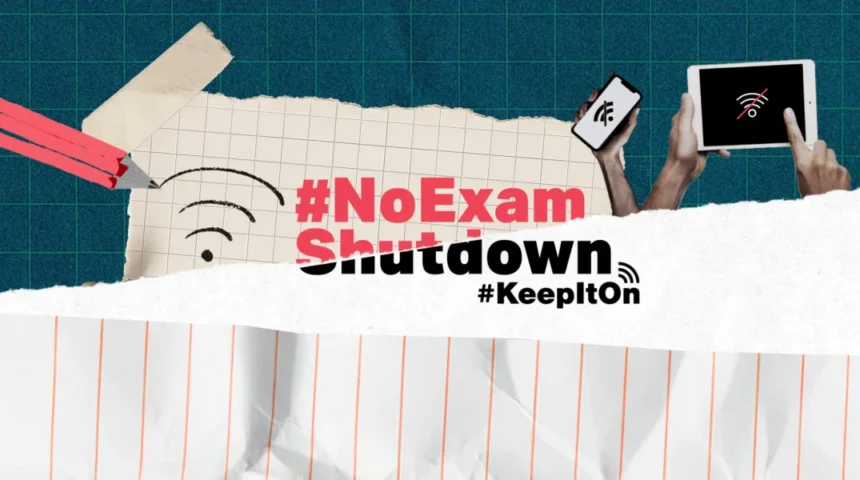
Every year, as the academic calendar reaches its climax and examination season rolls across the Middle East and North Africa, a familiar and disruptive ritual plays out. Governments seeking to prevent exam fraud resort to sweeping, blunt-force tactics: shutting down national internet infrastructure or deliberately blocking widely used social media platforms. The rationale offered by authorities is invariably the preservation of academic integrity, but the collateral damage is immense. Millions of citizens find their daily connectivity abruptly severed, businesses grind to a halt, digital economies stumble, and the fundamental flow of daily life is thrown into disarray across entire countries.
While exam-related blackouts represent a persistent threat to digital rights and economic stability, they are far from the only crisis facing education in the region. Students in Gaza have courageously pressed forward into a grueling third academic year spent entirely within tents and makeshift learning spaces, while in Lebanon, nearly 100,000 children and young adults were left unable to return to school at all following localized conflicts and infrastructure destruction. Yet, across the broader MENA region, the 2026 exam season revealed a sharply fractured landscape. For the first time since digital rights organizations Access Now, SMEX, and the Internet Society began rigorously tracking this phenomenon under the banner of the #NoExamShutdown campaign, the trend pulled in starkly opposing directions.
There were encouraging signs of retreat in some long-standing strongholds. Algeria, a persistent offender in cutting connectivity over the past decade, broke with tradition by limiting its shutdown measures strictly to the physical interiors of exam centers, leaving the rest of the nation fully connected. Syria, which implemented a staggering 11 nationwide, exam-related shutdowns during the previous academic year, appeared to pass through the 2026 exam cycle without a single documented disruption following the fall of Bashar al-Assad’s regime. Conversely, however, the map also darkened in unexpected places. Tunisia—historically celebrated as having the highest internet freedom environment in the entire MENA region—crossed a troubling threshold by joining the ranks of offenders for the first time, deploying covert connectivity restrictions during both of its major Baccalaureate exam sessions.
In Iraq, the Numbers Tell a Complicated Story
Iraq’s reliance on exam-related internet shutdowns has officially entered its eleventh consecutive year. Data compiled by Cloudflare Radar and the Internet Society’s ISOC Pulse indicate that 2026 brought at least 34 documented disruptions to the country’s digital network. The first wave of blackouts materialized throughout June, closely mirroring the national middle and high school examination timetables. Prior to the disruptions, the Iraqi Ministry of Communications had publicly announced that access would be severed for approximately 90 minutes every morning on designated exam days.
Minister of Communications Mustafa Sanad later confirmed these operational blackouts, pairing the announcement with a pledge to develop a secure digital system designed to decentralize exam distribution and eliminate the systemic "need" to cut off internet access entirely. However, digital rights advocates note that similar promises have been made—and subsequently broken—by successive administrations in the past. A second wave of disruptions struck in late August, hitting connections on five consecutive mornings from August 26 to August 31. These outages then persisted on a daily basis through September 10, before temporarily resuming later in the month during a scheduled period of postponed exams.
While metrics from Cloudflare indicate that this year’s disruptions were somewhat shorter in duration and fewer in total volume compared to 2025, civil society observers remain cautious. Whether these marginal improvements signal a genuine, permanent policy shift toward digital proportionality or merely a temporary fluctuation remains to be seen.
Sudan’s Shutdowns Continue Amid Devastating War
For the sixth consecutive year, the government in Sudan enforced internet blackouts during national examinations, ordering a series of 10 connectivity suspensions between April 13 and April 23. Telecommunications providers such as MTN Sudan duly notified subscribers in advance of the planned outages. However, executing government-mandated digital blackouts against the backdrop of an ongoing and devastating civil war compounds an already catastrophic humanitarian crisis. Cutting off internet access during an armed conflict severely impedes access to vital survival information, disrupts healthcare logistics, halts financial transactions, and inflicts compounding economic damage on a population already pushed to the brink.
Syria: Breaking with the Past?
Following the collapse of Bashar al-Assad’s regime in late 2024, international observers and digital rights defenders watched closely to see whether the incoming administration would break from the country’s entrenched pattern of enforcing nationwide communications blackouts during national testing periods. While the new authorities initially adhered to old habits during the 2025 academic cycle, a significant departure materialized in 2026. Neither Cloudflare nor ISOC recorded any exam-related shutdowns during the entire Syrian examination period. This absence of state-enforced blackouts marks the first time in at least a decade that Syria has refrained from shutting down connectivity during national exams, offering a tangible indication that deeply rooted institutional habits can indeed be changed.
Algeria Turns a Page
When the Baccalaureate exams commenced in Algeria on June 7, citizens across the country experienced a welcome surprise: for the first time in ten years, their internet access remained fully operational. As Minister of Education Mohamed Seghir Saâdaoui formally explained prior to the testing period, restrictive measures would henceforth be confined strictly to the physical perimeters of examination centers, leaving the rest of the nation connected.
This policy pivot represents a profound departure from previous years, when authorities routinely imposed total nationwide blackouts or targeted application-level throttling during exam hours. Although the government has not explicitly framed the policy change as a concession, civil society groups emphasize that the shift toward targeted, localized measures reflects the compounding impact of sustained public pressure from citizens, local businesses, and advocacy organizations demanding an end to collective digital punishment.
Tunisia: A New Offender on the Map
Historically lauded as a beacon of internet freedom within the MENA region, Tunisia surprised digital watchdogs in 2026 by appearing on the radar of the #NoExamShutdown campaign for the first time. Anomaly data collected by the Open Observatory of Network Interference (OONI) revealed widespread mobile internet disruptions across the country, heavily impacting essential messaging applications such as WhatsApp and Messenger.
These restrictions were deployed covertly and without prior public notice during both the primary Baccalaureate session from June 3 to June 10 and the subsequent reset period from late June to early July. The sudden throttling directly disrupted everyday communications, impacted commercial activities, and frustrated ordinary citizens. Human rights defenders have characterized Tunisia’s entry into the pool of shutdown-enforcing states as an alarming step backward that warrants continuous monitoring in the years ahead.
Jordan: Announced, Localized, and Still Unacceptable
Jordan maintains a long and documented history of exam-related digital restrictions, with 2023 standing as a rare exception to an otherwise unbroken annual tradition of throwing the digital kill switch. The 2026 examination season maintained this familiar trajectory. On July 23, the Telecommunications Regulatory Commission (TRC) announced that IP-based messaging applications would be systematically blocked in the immediate geographic vicinity of schools hosting the Tawjihi (General Secondary Certificate) examinations during testing hours.
While state regulators continue to frame these interventions as localized and temporary measures, digital rights advocates argue that advance notice does not legitimize the practice. Targeted restrictions applied annually without legislative oversight or meaningful public challenge risk normalizing state interference in digital communications under the guise of administrative convenience.
Beyond the Middle East and North Africa, the impulse to police academic integrity through digital disruption continues to find purchase in other parts of the world. In June 2026, the Indian government utilized Section 69A of the Information Technology Act to temporarily block access to the messaging platform Telegram for an entire week leading up to the postponed NEET-UG medical school entrance examinations. The high-stakes national test, originally taken by more than 2.2 million candidates on May 3, was entirely voided after investigators uncovered widespread leaks of matching examination materials online.
As advocacy networks continue to document the human and economic toll of these practices, organizations tracking state-sponsored censorship are calling on affected individuals to share their experiences of connectivity loss during academic testing periods. First-hand testimonies remain critical in exposing the invisible disruptions that governments frequently attempt to conceal from public scrutiny.

Related News