Iran Exempts Ships From India, China, Iraq, and Qatar From Strait of Hormuz Restrictions
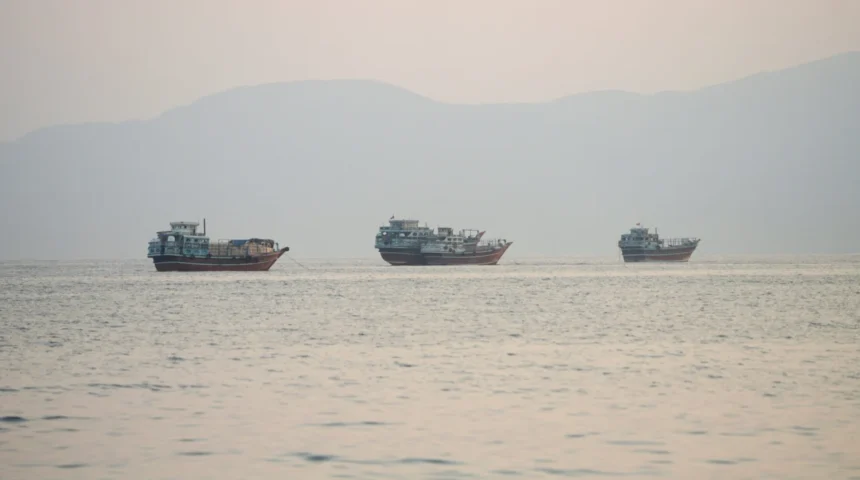
Iran has officially exempted commercial and transit ships originating from India, China, Iraq, and Qatar from the strict naval restrictions it maintains across the vital Strait of Hormuz, according to a senior Iranian lawmaker. The policy shift, announced on Tuesday, marks a calculated maneuver by Tehran to poke holes in a crippling international embargo while shoring up critical economic and diplomatic channels amid an ongoing regional conflict.
Amir Hayat Moqaddam, deputy chairman of the Iranian parliament’s National Security and Foreign Policy Committee, told the Iranian Students’ News Agency (ISNA) that vessels bearing connections to these four nations are now permitted to traverse the crucial waterway without hindrance. "Ships from these countries pass freely, and the Americans do not intercept them either," Hayat Moqaddam stated.
The announcement comes against the backdrop of a broader geopolitical crisis. Iran effectively closed the Strait of Hormuz in the early weeks of the US-Israel war on Iran, which commenced on February 28. In response to Tehran’s aggressive posture and the closure of the chokepoint, the United States reimposed a stringent naval blockade on Iran’s southern ports in July, cutting off major trade arteries and isolating the country’s energy sector.
The implementation of these new exemptions raises immediate questions regarding the mechanics of regional trade, the enforceability of the American naval embargo, and the strategic calculus driving Tehran’s interactions with Asian and Middle Eastern partners.
What Does Iran Get in Return for Letting Ships Pass?
According to Hayat Moqaddam, the exemptions are far from altruistic, functioning instead as a series of targeted barters and strategic quid pro quos. In exchange for safe passage, Iran stands to receive essential medical supplies from India and vital political backing from Beijing. Furthermore, Tehran continues to benefit from the active diplomatic support of Qatar, which has spearheaded high-level mediation efforts aimed at bringing an end to the US-Israel war.
Hayat Moqaddam noted that Tehran will collect transit fees from Indian and Chinese vessels utilizing the strait, whereas Qatari ships have been granted passage free of toll charges. The Iranian lawmaker did not clarify whether Iraqi ships will also be subjected to transit fees.
Regional analysts point out that while the official rationale highlights transactional trade, the primary objective is far more strategic. Rouzbeh Parsi, an Iran analyst and affiliated researcher at Lund University’s Department of History and Human Rights Studies, noted that bartering and transactional trade are historical mainstays for an economy that has lived under international sanctions for decades.
"The difference now is that it’s about poking holes in an embargo and getting crucial goods and services in and out," Parsi told Al Jazeera.
Nader Hashemi, an associate professor of Middle East politics at Georgetown University, concurred, suggesting that Tehran is likely imposing a transit fee or demanding a percentage of cargo value to allow those ships to transit the area without harassment from Iranian forces.
Security and defense experts view the move as a sophisticated diplomatic wedge. Wolfgang Pusztai, a security and defense analyst and Austria’s former defense attaché to Libya, described the announcement as a clever maneuver by Tehran.
"If successful, this move will generate significant revenue for Iran, as China is by far the largest purchaser of Iranian crude oil, buying nearly 90 percent of Iran’s total oil exports," Pusztai explained. By incorporating Qatar—a massive exporter of liquefied natural gas (LNG)—and India into the exemption framework while waiving Qatari tolls, Iran is actively attempting to undermine international compliance and acceptance of Washington’s containment strategy in the conflict.
Why Does It Matter to These Four Countries?
All four exempted nations maintain an acute economic dependence on the Strait of Hormuz for their export markets and energy security. According to Muyu Xu, a senior crude oil analyst at the analytics firm Kpler, roughly 10.23 million barrels per day of Gulf crude passed through the strait in October alone. Of that total volume, approximately 42 percent was destined for China, while 13 percent was absorbed by India.
Given this heavy reliance, Asian economies possess a profound interest in keeping the maritime corridor open, providing them with strong incentives to negotiate terms with Tehran.
"China is the country most able to cross US interests. The question is whether Beijing considers it worth the potential political cost," Parsi observed.
For India, the complete shutdown of Gulf crude shipments has dealt a severe economic blow. However, New Delhi holds significant leverage as a major global producer of pharmaceuticals that Iran cannot readily manufacture domestically.
Meanwhile, Qatar’s involvement highlights a delicate balancing act. As a key mediator between Washington and Tehran, Qatar faced severe shipping disruptions earlier in the conflict, shipping zero LNG through the strait in August before recovering to 1.8 million tonnes in October, according to Kpler data. Qatari crude transits dropped from 517,000 barrels per day to 193,000 barrels per day over the same period, while Iraqi flows climbed from 1.69 million to 2.65 million barrels per day. Kpler analysts note that up to two million barrels per day of Middle Eastern crude remain untraceable in origin, suggesting actual flows for both Iraq and Qatar could be even higher.
"India and Qatar have closer relationships with DC they need to maintain—while both of them also feel let down by Trump," Parsi said, adding that maintaining a working relationship with Iran remains an absolute necessity for Doha as an unavoidable neighbor. "So for all of them, there are upsides for these exemptions from Iranian restrictions, but also political dangers."
Is This Announcement Entirely New?
While Tuesday’s formal statement by Hayat Moqaddam provides a clearer picture of Iran’s exemptions, the policy itself has evolved gradually over the course of the conflict. Iran began granting unhindered passage to select vessels from nations it considers friendly within weeks of the war breaking out. In April, Iranian military command officially designated neighboring Iraq as a "brotherly" state exempt from maritime restrictions.
Pusztai noted that by exempting Iraq, a fellow Shia-majority nation, Tehran’s leadership "probably intends to support the economic recovery" of its western neighbor despite the wartime conditions.
Will Ships Be Able to Get Past the US Blockade?
The practical efficacy of Iran’s exemptions ultimately hinges on the response from Washington. United States Central Command (CENTCOM) has maintained that its naval blockade applies broadly to all vessels of any nation entering or leaving coastal areas or ports within Iran. Ships that bypass Iranian ports entirely are technically unaffected by the embargo. Furthermore, CENTCOM has maintained that humanitarian shipments containing food and medical supplies vital for the survival of civilian populations are permitted to pass following rigorous inspections.
However, Hayat Moqaddam’s statements did not explicitly limit the exemptions to ships trading exclusively with other Gulf states, raising complex questions about maritime enforcement.
"If this is really the case, this would also have a significant impact on the other Gulf states, including Saudi Arabia," Pusztai warned. "This could make the continuation of the American naval blockade more difficult and less effective, assuming Washington accepts this Iranian move."
The central ambiguity, Pusztai added, lies in whether the exemptions apply to the flag a vessel flies, its ownership structure, its operator, or other commercial ties, and whether Washington will tolerate Chinese and Indian cargo ships moving directly to and from Iranian ports.
Lifting the naval blockade remains one of Tehran’s core demands before its leadership will commit to wider peace negotiations with the United States, which are slated to cover Iran’s contested nuclear program. Current talks mediated by Qatar center on an Iranian proposal to reopen the strait fully if the US satisfies seven distinct conditions, including lifting broad economic sanctions.
"It seems to be that Iran tries to separate the questions of free passage through the Strait of Hormuz and oil exports from the nuclear question," Pusztai said. "The American reaction will show if this is successful."
Will This Make a Difference to Oil Markets?
For global energy markets, the immediate impact of the announcement is projected to be minimal.
"I think they make only limited difference at present," Chris Beauchamp, chief market analyst at IG Group, told Al Jazeera. "Markets are back to pricing in a peace deal, but if conflict flares up at full tilt, then Iranian commanders may not have time to distinguish their targets. At present, the focus remains squarely on the prospects of a broader deal."
Furthermore, administrative exemptions granted by Tehran have not translated to guaranteed physical safety in a volatile combat zone. On October 30, the Qatari LNG carrier Al Mayeda was struck by unidentified objects in the Persian Gulf, according to its owner, the Qatar Gas Transport Company.
Data compiled by the International Maritime Organization and United Kingdom Maritime Trade Operations indicate that more than 120 commercial ships have been struck or targeted in the region since the war began, with October marking the most dangerous month for maritime transit to date.

Related News