Institutional Strategies for Generating Yield on Bitcoin: Balancing Returns Against Market Risk
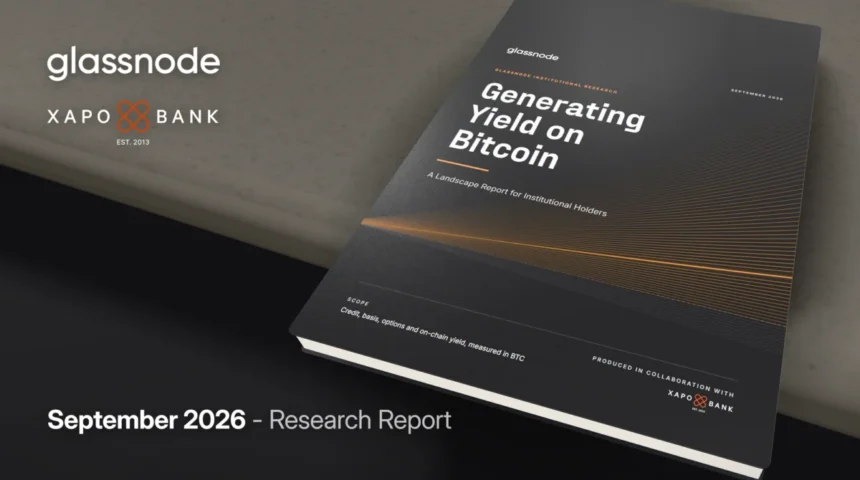
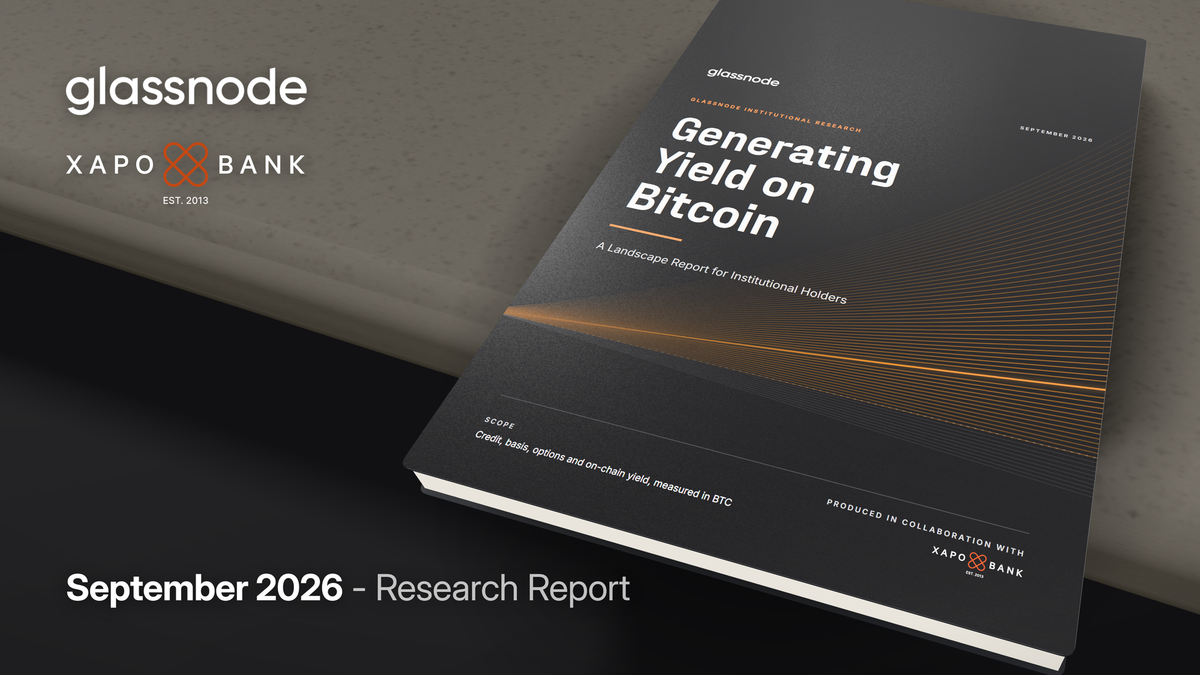
As institutional interest in digital assets matures beyond simple long-term holding, market participants are increasingly exploring avenues to extract yield from their treasury reserves. A comprehensive new joint report by Glassnode and Xapo Bank delves into this evolving landscape, offering a granular examination of how institutional investors can earn returns on Bitcoin through lending, futures, options, and on-chain strategies, while carefully evaluating the risk-reward profiles associated with each approach.
For years, holding Bitcoin meant accepting a non-yielding asset, relying entirely on capital appreciation to generate returns. However, the maturation of crypto derivatives markets, institutional-grade lending desks, and decentralized infrastructure has opened up multiple paths for generating passive income. The new report maps out four primary routes open to professional and institutional holders: credit and lending, basis and derivatives, volatility and options, and on-chain mechanisms. Each route comes with its own structural mechanics, historical performance metrics, and hidden trade-offs across a full market cycle.
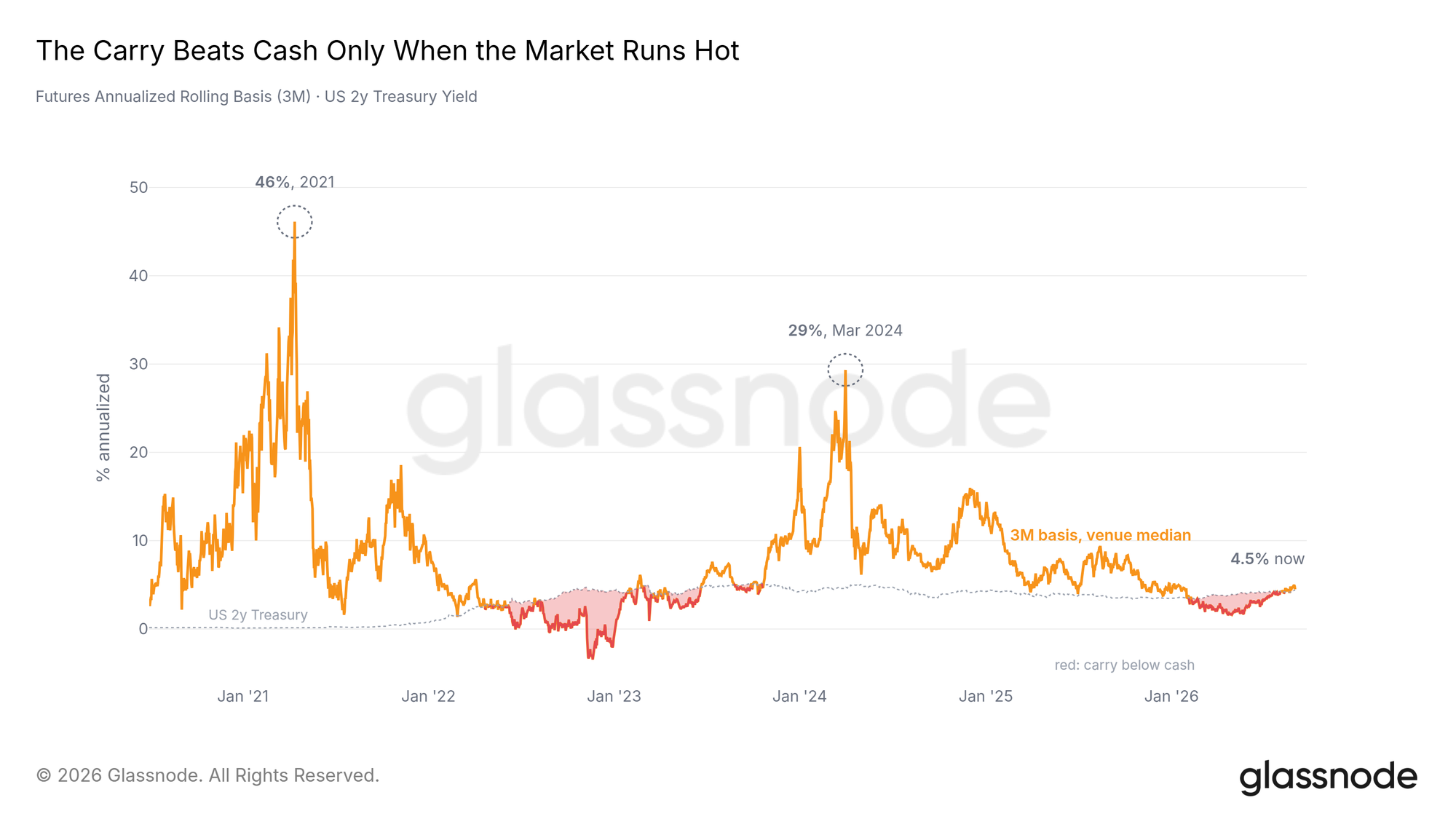
One of the most prominent traditional strategies is the futures carry trade. This mechanism capitalizes on the behavior of leveraged long traders who are willing to pay a continuous premium to keep their speculative positions open. By buying spot Bitcoin and simultaneously selling a futures contract against it, a holder can collect this cash-and-carry premium.

However, a closer look at the historical data reveals that the futures carry trade is far from a consistent bond-like yield. The carry has only reliably beaten the yield on short-dated US Treasuries during periods when the market was running hot and displaying strong upward momentum. Historical data shows that these peaks, reaching annualized yields of 46% and 29%, coincided strictly with major momentum phases. Conversely, for roughly three quarters of trading days, the futures carry actually paid less than a two-year Treasury yield, highlighting its cyclicality and the opportunity cost involved during calmer market environments.
In contrast, the options premium offers a steadier alternative for yield generation, driven by the structural mechanics of implied versus realized volatility. The seller of an options contract is compensated upfront for the volatility that the market expects to see. Historical observations indicate that implied volatility has consistently closed above the actual volatility delivered by Bitcoin on nearly four days out of five. Sellers of these options are able to systematically collect this structural variance premium. While the gap between implied and realized volatility has narrowed compared to its recent historical norms, it has stubbornly persisted rather than disappearing altogether.
Institutions most frequently tap into this volatility premium through the deployment of covered call strategies. By selling a call option against Bitcoin they already hold, institutions bring in the option premium upfront. However, this strategy introduces a distinct structural limitation: the holder’s upside gain is strictly capped at the pre-determined strike price of the option contract. The fundamental cost of capturing this steady stream of options premium is sacrificing the right to participate in sudden, sharp market rallies above the strike price—a trade-off that can prove significant during a strong bull market year where the majority of Bitcoin’s annual gains are concentrated within a few explosive sessions.
Beyond derivatives and volatility plays, institutional yield-seeking extends into credit, lending, and on-chain strategies, each carrying its own distinct risk matrix. Institutional lending desks allow holders to deploy capital to trusted counterparties, earning interest rates that fluctuate based on broader liquidity conditions within the digital asset ecosystem. Meanwhile, on-chain strategies expose participants to smart contract risks and protocol-level mechanics in exchange for native network yields.
The collaborative report by Xapo Bank and Glassnode serves as a detailed analytical framework for professional and institutional investors navigating these choices. By systematically evaluating credit and lending, basis and derivatives, volatility and options, and on-chain deployment, the study provides clarity on what each route realistically nets across a full market cycle and, crucially, what each strategy forces an investor to give up in terms of risk exposure and opportunity cost. The full research report remains available to professional and institutional investors through Glassnode’s institutional portal.

Related News