Tesla Expands Robotaxi Service to San Antonio as Autonomous Vehicle Race Heats Up in Texas
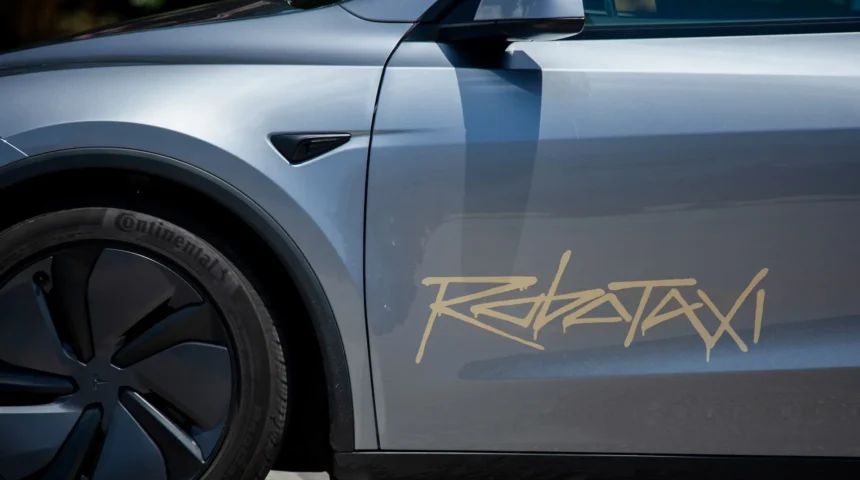
Tesla is continuing to widen the geographic footprint of its autonomous ride-hailing business, announcing that it is expanding its robotaxi service to another major Texas city. As the electric vehicle maker actively seeks to compete with established autonomous driving leaders like Waymo and aggressively position itself as a broader technology and artificial intelligence company rather than solely an automaker, its latest deployment marks another strategic milestone in a rapidly evolving transportation landscape.
The company revealed the expansion through a post on the social media platform X, confirming that it will officially make its robotaxi fleet available to the public in San Antonio beginning at 5 a.m. local time on Monday.
While the announcement signals further momentum for Tesla’s commercial autonomous ambitions, the company has thus far remained tight-lipped regarding specific operational details. Tesla did not provide any additional information about the daily hours of operation for the San Antonio fleet, nor did it clarify whether the initial deployment will feature customers hailing its newly developed, gold-colored, two-seater Cybercab or its previously utilized, heavily modified Model Y vehicles equipped with specialized sensor suites. Furthermore, the company left unanswered whether these newly deployed vehicles will hit the road with human safety monitors sitting behind the steering wheel or operate completely autonomously from day one.
Despite the lack of granular operational specifics, the San Antonio launch appears to follow a familiar playbook established during the company’s previous market entries. If Tesla adheres to its historical strategy for past rollouts, the service will likely kick off with a carefully managed, limited number of vehicles restricted to a tightly confined service area. From there, the company is expected to evaluate performance data, iron out logistical challenges, and expand its operational boundaries and fleet size slowly over time.
This measured approach to commercial scaling has been years in the making. Tesla CEO Elon Musk spent a full decade making ambitious public promises that his company was on the precipice of delivering fully autonomous vehicles to consumers. Those promises finally materialized in a tangible commercial product in June 2025, when Tesla officially launched its long-awaited robotaxi service in Austin, Texas, amid a storm of high-profile promises and lingering industry questions.
That initial Austin launch, while heavily restricted in geographic scope and closely supported by human safety operators stationed on board the vehicles, represented a critical developmental milestone for the corporation. It served as a high-stakes operational test to determine whether self-driving cars could be safely and reliably deployed on public roadways using exclusively camera arrays and end-to-end artificial intelligence, bypassing the expensive lidar and radar hardware preferred by the vast majority of competing autonomous vehicle developers.
In the months following that initial summer launch, Tesla has slowly and deliberately broadened its operational footprint. By January of the following year, the company reached a major regulatory and technological turning point when it officially removed human safety monitors from its robotaxi fleet in Austin, inaugurating a true, unmonitored driverless commercial service. Over the subsequent eleven months, Tesla poured resources into expanding its operations both deeper into Austin’s urban core and outward into new metropolitan areas across Florida and Texas.
Today, the company operates its robotaxi offerings in limited, geo-fenced areas of Miami and Orlando, as well as several major Texan hubs including Dallas, Fort Worth, and Houston. However, the scale of these deployments varies significantly from city to city. According to public vehicle registration data in the state of Texas and independent tracking gathered by the specialized industry monitoring website Robotaxi Tracker, Tesla’s fleet sizes remain heavily skewed. While the company maintains a robust presence in Austin with more than 400 registered autonomous vehicles, its fleets in other operational cities are drastically smaller, typically numbering anywhere from a tiny handful of vehicles to a few dozen. For instance, public tracking data indicates that Tesla currently operates a mere 24 vehicles in Fort Worth and a sparse five vehicles in Miami.
As Tesla steadily builds out its presence across the Lone Star State, it finds itself in direct competition with Alphabet-backed Waymo, the undisputed heavyweight in the commercial robotaxi sector. Waymo operates its own sophisticated autonomous ride-hailing service using a tailored fleet of driverless Jaguar I-Pace and Zeekr RT vehicles, which operate under the brand name Ojai. Waymo’s footprint overlaps significantly with Tesla’s territory, currently ferrying paying passengers in Austin, Dallas, Houston, and San Antonio.
Waymo’s path in San Antonio has experienced its own unique operational hurdles. The company recently restarted its services in San Antonio after enduring a forced five-month pause. That temporary suspension of operations was triggered by a series of incidents in which Waymo’s autonomous vehicles encountered heavy rainfall, became disoriented, and ultimately got stuck after inadvertently entering flooded roadways, prompting safety reviews and temporary pullbacks from local authorities.
Beyond its fully autonomous driverless operations in Texas and Florida, Tesla maintains a separate ride-hailing service in the San Francisco Bay Area that operates under a specialized transportation charter permit. However, industry observers and local regulatory bodies note a distinct operational difference in California. While the vehicles utilized in the Bay Area are frequently discussed and marketed under the broad umbrella of robotaxis, they are legally required to be operated by a human driver sitting actively behind the steering wheel. At present, Tesla lacks the necessary state-level permits and regulatory approvals required to legally operate a commercial, driverless ride-hailing service anywhere in California.
This complex and uneven regulatory landscape underscores the immense technical and administrative hurdles facing the entire autonomous vehicle sector as companies race to capture market share. Adding to these challenges, internal metrics and performance data released by the company earlier this summer revealed a surprising dip in commercial activity. According to reporting by TechCrunch in July, Tesla’s overall robotaxi network actually drove fewer total miles with paying customers during the second quarter of the year compared to the first quarter, highlighting that aggressive geographic expansion does not always correlate with immediate, linear growth in rider demand or utilization rates.

Related News