Tesla Reports 43% Drop in Quarterly Profit as Spending Surges on Humanoid Robots and Robotaxis
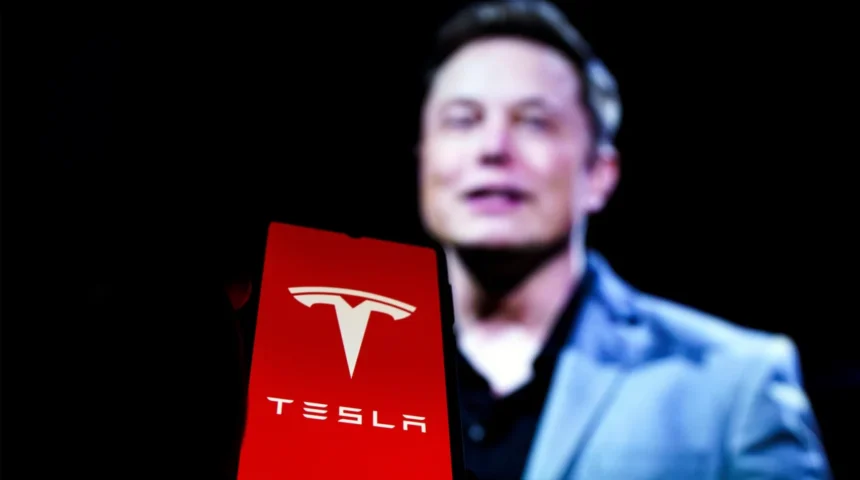
Tesla’s financial results for the most recent quarter underscore a period of intense, high-stakes transition for the electric vehicle pioneer, as soaring investments in futuristic technologies weighed heavily on the company’s bottom line. According to its quarterly filing with the U.S. Securities and Exchange Commission, Tesla’s net profit fell 43% last quarter to $787 million, a significant retreat from the $1.37 billion reported during the same period a year earlier.
The sharp decline in profitability came as the automaker poured massive amounts of capital into long-term bets on humanoid robotics and autonomous transport systems, even as vehicle deliveries dipped slightly by about 2% year-over-year.
While top-line figures remained relatively resilient—with revenue holding essentially flat at $28.05 billion—the costs of scaling new ventures compressed margins across the board. Operating profit, which reflects the capital left over after covering core business operations, dropped 56% to $718 million. Underpinning this contraction were aggressive increases in expenditure: research and development spending climbed 69% to $2.76 billion, while capital expenditures—funds dedicated to upgrading factories, tooling, and equipment—more than doubled to reach $4.73 billion.
That staggering financial outlay is directly targeted at bringing two flagship products from the drawing board to factory floors and city streets. The first is Optimus, a humanoid robot engineered to take over dangerous, mundane, and repetitive jobs from human workers. The second is the Cybercab, a purpose-built, two-seat robotaxi designed to operate entirely without a steering wheel or pedals, allowing passengers to summon it directly via a mobile application.
Tesla provided a significant update on both fronts, announcing that Optimus has officially entered production at the company’s manufacturing facility in Fremont, California. In a shareholder letter accompanying the financial disclosures, the company noted that the bots rolling off the assembly line represent the first production-quality units they have successfully manufactured. Meanwhile, during the subsequent earnings call, a company executive indicated that Tesla is actively striving to get Cybercabs into the hands of customers before the conclusion of the year.
The path to commercializing these ambitious products, however, remains fraught with engineering hurdles and aggressive timelines. Chief Executive Officer Elon Musk outlined the hurdles facing the Optimus program, stating that the company ultimately wants to scale production to 20,000 units per week. However, Musk cautioned that reaching that milestone will take at least a year because the underlying design of the robot is still evolving. He estimated that commercial deliveries to external customers would likely begin around the end of 2027, highlighting the robot’s hand as one of the most challenging hardware components to develop, alongside the imperative of ensuring the machinery can withstand more than a month of continuous operational use.
Tesla has previously encountered difficulties meeting its aggressive timelines for the robotics initiative, including an earlier goal to deploy roughly 10,000 robots by 2025. At the same time, competition in the humanoid robotics sector is intensifying rapidly. Rivals are pushing forward in the race to commercialize autonomous labor, most notably Figure AI, a well-funded startup backed by technology heavyweights Microsoft, OpenAI, and Nvidia, which debuted its advanced Figure 02 humanoid robot.
On the autonomous vehicle front, Lars Moravy, Tesla’s vice president of vehicle engineering, addressed the timeline for the Cybercab during the earnings conference call, reaffirming the company’s near-term aspirations. Moravy noted that the automaker is attempting to make Cybercabs available to customers before the end of 2026.
At present, every Cybercab built by the company is being directed into Tesla’s proprietary robotaxi fleet. Musk elaborated on this strategy, explaining that the majority of these vehicles will remain under Tesla’s direct ownership to support a broader "transport as a service" business model rather than being sold exclusively to individual consumers.
While Tesla has not yet formally announced a retail price for the vehicle or established a definitive list of initial buyers, the company previously cited a target price of under $30,000 for the autonomous taxi. Last month, Tesla briefly posted an online form enabling interested parties to register their interest in purchasing the robotaxis.
Looking ahead at the financial impact of the autonomous fleet, Musk predicted that the robotaxi business should begin making a noticeable contribution to Tesla’s overall financial performance by the second quarter of 2027. He added that the segment will likely become a major financial driver by the third or fourth quarter of next year, though the company has not yet disclosed specific revenue figures for the emerging service.
In addition to its automotive and robotics updates, the company’s leadership addressed broader corporate structural questions. Speaking on a separate earnings call for SpaceX, Musk revealed that the respective boards of directors at both Tesla and SpaceX have established special committees comprised of independent directors to study a potential combination of the two enterprises, though he emphasized that no formal terms have been agreed upon thus far.
Any such corporate merger would face substantial governance and shareholder hurdles, requiring explicit support from holders of 50% of all outstanding Tesla shares—a threshold Musk characterized as quite high. With Tesla’s annual shareholder meeting scheduled for December 3, discussions regarding the corporate structure continue to circulate, even though a formal merger vote is not currently listed on the meeting’s official agenda.

Related News