US Judge Orders Donald Trump to Sit for BBC Deposition in $10bn Defamation Lawsuit by December 11
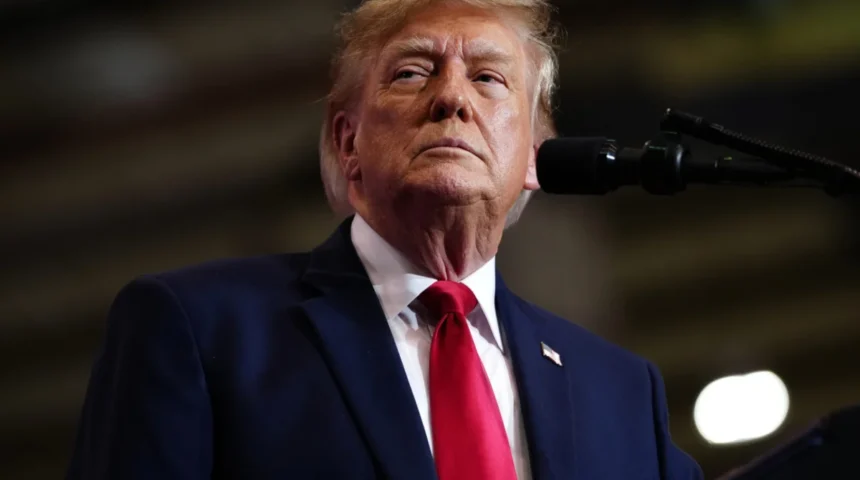
A federal judge in the United States has ordered President Donald Trump to sit for a deposition as part of his high-stakes $10bn defamation lawsuit against the British broadcaster BBC. The ruling, handed down on Thursday by US Magistrate Judge Enjolique Lett, mandates that Trump must answer questions under oath in a session conducted by the BBC’s legal counsel.
According to the court order, the deposition is scheduled to take place no later than December 11. Judge Lett made it clear that failure to comply with the directive could result in severe legal sanctions, including the potential dismissal of the entire $10bn lawsuit.
The latest judicial development marks a critical juncture in a contentious legal battle that has drawn intense scrutiny from both political observers and press freedom advocates. Trump had previously been scheduled to sit for a deposition on October 16, but that session was abruptly cancelled when his legal team cited a "matter of national importance" that required the president’s immediate attention.
However, Charles Tobin, a lawyer representing the BBC, contested that characterization during court proceedings, revealing that the president was actually participating in a political campaign event in the state of Georgia on the day of the scheduled deposition. Tobin argued before the court that Trump had actively chosen to prioritize party politics over fulfilling his legal obligations in the ongoing discovery process.
The defamation lawsuit against the British broadcaster is far from an isolated legal endeavor for the president. It forms part of an aggressive and expansive streak of litigation that Trump has launched against various news outlets over media coverage he dislikes or characterizes as unfair, biased, or malicious.
Trump is currently enmeshed in another massive $10bn defamation lawsuit against The Wall Street Journal, a case he refiled in May following a previous dismissal by the courts. In addition to that challenge, he is pursuing a separate defamation case seeking an astronomical $15bn in damages from The New York Times and the major book publisher Penguin Random House.
This sustained pattern of aggressive legal actions has deeply alarmed press freedom advocates and media organizations globally. Critics argue that the president frequently utilizes the weight of government pressure and costly legal threats to intimidate journalists and shape media coverage in his political favor, creating a chilling effect on independent reporting.
At the center of Trump’s legal challenge against the BBC is a documentary broadcast by the network titled Trump: A Second Chance. The investigative program featured various archival clips, including footage of a speech delivered by Trump on January 6, 2021—the fateful day when a crowd of his supporters violently breached and attacked the United States Capitol.
Trump has maintained that a specific clip from his January 6 speech was misleadingly and maliciously edited by the filmmakers to create the false impression that he directly encouraged attendees to storm the Capitol building. At the time of the riot, federal legislators inside the building were in the process of formally certifying Trump’s defeat in the 2020 presidential election.
For its part, the British broadcaster has previously acknowledged that filmmakers spliced together different segments of Trump’s remarks delivered on that day. The controversy surrounding the documentary fallout led to significant internal upheaval at the network, resulting in the resignations of the head of the BBC and its top news executive, alongside a formal public apology issued by the institution. Despite these internal disciplinary measures and the apology, the network has firmly denied Trump’s legal claims that the broadcast constituted actionable defamation.
Trump has consistently maintained that he never instructed or encouraged his supporters to commit acts of violence in a desperate bid to prevent the peaceful transition of power. Yet, this defense collides with his persistent promotion of the false and thoroughly debunked claim that his loss in the 2020 presidential race was the direct result of massive, systemic election-rigging.
On the morning of January 6, 2021, Trump had gathered thousands of his supporters on the Ellipse just outside the White House to reiterate his unsubstantiated assertions regarding widespread electoral fraud. During the fiery speech that followed, he explicitly encouraged the crowd to "fight like hell" and refused to concede the election to what he repeatedly and falsely portrayed as a stolen victory.
The events of that day were the culmination of a multifaceted and concerted effort by Trump and his close political allies to stay in power despite his decisive electoral defeat. That strategy included the controversial recruitment and deployment of "false electors" intended to cast fraudulent Electoral College votes on his behalf in key swing states.
In the aftermath of the insurrection, Trump faced severe federal criminal charges relating to his active attempts to overturn the 2020 election results. However, those federal charges were ultimately dropped following his successful re-election campaign in 2024, as Department of Justice policy historically shields a sitting president from ongoing federal prosecution.
Separately, a sweeping state-level criminal case in the state of Georgia accused Trump of engaging in a wide-ranging criminal conspiracy to subvert the 2020 election outcome. That prosecution faced numerous hurdles, including the high-profile disqualification of Fulton County District Attorney Fani Willis, who originally brought the charges. Following the installation of a replacement prosecutor, the Georgia election interference case was formally dismissed in November 2025.
Furthermore, a comprehensive congressional probe into the tumultuous events surrounding the January 6 attack concluded that the former president had demonstrated a notable reluctance to urgently call upon his assembled supporters to stand down and disperse after they had successfully breached the Capitol building. With Judge Lett’s new December 11 deadline now firmly in place, Trump must prepare to face direct, sworn questioning from the BBC’s legal team, or risk watching his multi-billion-dollar lawsuit thrown out of court entirely.

Related News