Tragic Killing in Durban Highlights Escalating Anti-Migrant Tensions in South Africa
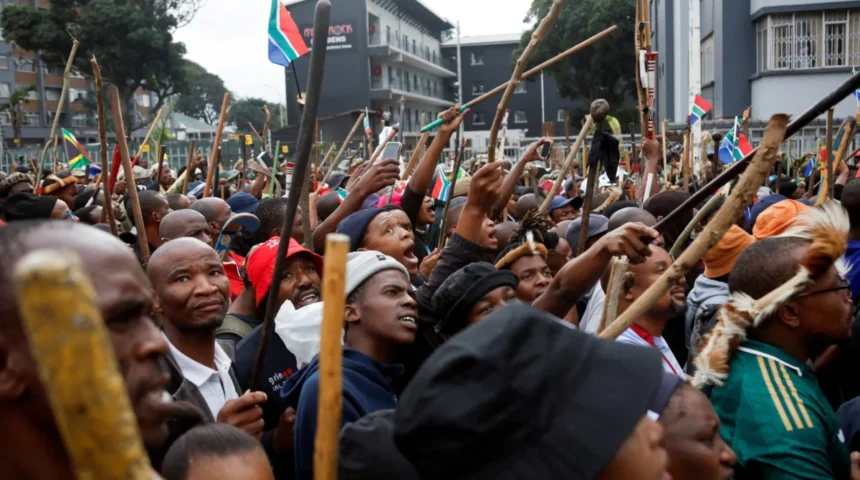
Police in South Africa have launched an investigation after a foreign national was beaten to death by a large mob in the port city of Durban, marking a violent escalation in an ongoing wave of anti-immigrant protests and civil unrest.
According to law enforcement officials, the tragic incident occurred in the central business district of Durban. A group consisting of approximately 50 individuals converged on the victim as he stood near the side of a roadway. The crowd proceeded to brutally assault the man, who suffered critical injuries and was pronounced dead at the scene by emergency responders.
Authorities have not yet released the nationality of the victim, citing ongoing identification efforts and the need to notify next of kin. Police stated that the man was estimated to be in his 30s or early 40s. Investigators are actively working to gather evidence, review potential surveillance footage, and identify the suspects involved in the fatal attack, though no arrests have been announced thus far.
The violent episode unfolded against the backdrop of heightened social and political tension surrounding foreign nationals living in South Africa. Durban has served as the epicentric flashpoint for months of continuous protests directed at immigrants. The situation deteriorated significantly following a large anti-migrant march in the city two weeks prior, which subsequently triggered widespread looting, property destruction, and physical violence.
Demonstrations demanding decisive government intervention against African migrants who entered the country without proper documentation began in earnest in June. While many of these gatherings started as public grievances, a troubling number of them escalated rapidly into violent confrontations, forcing law enforcement agencies to deploy additional resources to volatile neighborhoods.
The regional unrest has also drawn international concern. Governments across the African continent, including Nigeria, Mozambique, and Malawi, have publicly stated that a number of their citizens have been targeted and killed during xenophobic attacks in South Africa. These claims have added diplomatic strain to Pretoria’s foreign relations. However, South African authorities have consistently pushed back against some of these assertions, maintaining that certain fatalities were not xenophobic in nature but were instead directly linked to ordinary criminal activity and localized gang violence.
The persistent climate of hostility has prompted a massive demographic shift. Tens of thousands of foreign nationals have chosen to leave South Africa in recent months, marking one of the largest mass exoduses seen in the country in years. Many migrants elected to pack their belongings and abandon their livelihoods to escape the escalating threats of violence. At the same time, the South African government confirmed that a significant portion of departing individuals were formally deported due to a lack of valid immigration papers and legal status to remain in the country.
Anti-Migrant Marches and Economic Pressures
As Africa’s largest and most industrialized economy, South Africa has long served as a primary destination for migrants from across the continent seeking better economic opportunities, employment, and stability. However, this influx has collided with severe domestic challenges. Local communities and grassroots organizations frequently voice deep-seated frustrations, pointing to a severe scarcity of jobs, high unemployment rates, and overburdened public services—including healthcare, housing, and education—as core drivers of their grievances.
The socio-economic pressures have created fertile ground for populist rhetoric and anti-immigrant sentiment. Government figures indicate that approximately 2.4 million foreign nationals currently reside within South Africa, a nation with a total population of roughly 62 million people. While this constitutes a minority of the population, the visibility of migrant communities in urban centers like Durban has made them focal points for public anger over systemic economic hardships.
South African President Cyril Ramaphosa has repeatedly stepped forward to denounce acts of anti-migrant violence, condemning vigilantism and xenophobia in the strongest terms. At the same time, the president has acknowledged structural vulnerabilities within the nation’s governance systems, openly admitting that weak border control management and porous frontiers have historically allowed undocumented migrants to enter and remain in the country with minimal oversight.
As the police investigation into the Durban killing continues, local authorities remain on high alert across the region to prevent further outbreaks of violence. Community leaders and civil society organizations are calling for calm, urging restraint as law enforcement works to apprehend those responsible for the man’s death and restore order to the embattled port city.

Related News