Why Reality is Radicalising Britain: Frank Wright Speaks Out on the Nation’s Decline
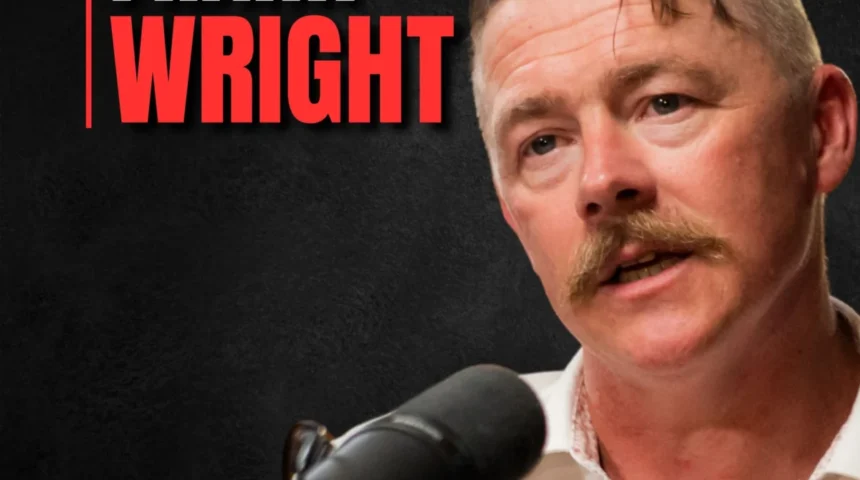
In an explosive and wide-ranging interview, political commentator Frank Wright has sat down with host Pete McCormack to discuss what he describes as the fundamental disillusionment gripping modern Britain. Wright recently went viral for arguing a provocative thesis: that everyday citizens are not being radicalised by fringe ideologies or political extremism, but rather by plain, unvarnished reality.
As the social fabric of the United Kingdom strains under the weight of economic pressures, institutional decay, and cultural shifts, Wright’s perspective has clearly struck a nerve with a public searching for answers. The conversation explores the multifaceted decline of Britain, examining issues ranging from immigration and national identity to the crumbling state of liberal democracy, working-class dignity, national debt, and rampant inflation.
The Viral Awakening and the Clash with Reality
The interview opens by reflecting on Wright’s whirlwind week in the digital spotlight, sparked by his viral commentary on radicalisation. According to Wright, the conventional narrative pushed by establishment figures—that radical views stem from dangerous internet algorithms or extremist fringe groups—gets the dynamic entirely backwards. Instead, he argues that the average person is being radicalised simply by opening their eyes to the state of the country around them.
When citizens witness failing public services, deteriorating infrastructure, soaring living costs, and a perceived loss of community cohesion, the discrepancy between official government optimism and everyday life becomes impossible to ignore. McCormack pushes Wright on this point, exploring why so many people and institutional leaders seemingly refuse to acknowledge these systemic cracks. Wright suggests that maintaining the status quo requires a collective suspension of disbelief, as confronting the full scope of Britain’s decline demands uncomfortable truths that the political establishment is ill-equipped to handle.
The conversation quickly broadens to examine the broader ideological forces shaping Western societies. Wright shares his views on modern propaganda, the evolution of feminism, changing dynamics in childcare, and the shifting structure of the traditional family unit. He argues that many foundational pillars of Western life have been systematically weakened by decades of social engineering and utopian policy experiments, leaving individuals more isolated and dependent on centralized systems.
Liberal Rights, Machine Politics, and the Search for Solutions
A significant portion of the discussion tackles the tension between traditional liberal rights and the harsh economic and social realities of contemporary Britain. Wright critiques how abstract legal frameworks and utopian ideals often fail to address the tangible struggles of ordinary people, creating a disconnect between the governed and those who govern.
When McCormack asks what a political alternative actually looks like, the conversation turns to the concepts of "Reform" and "Restore." Wright analyzes the limitations of traditional machine politics and questions whether populist movements alone possess the depth and institutional power required to reverse decades of decline. Mentioning figures like Rupert Lowe and adopting a blunt, pragmatic approach, Wright emphasizes the heavy personal and political cost of speaking uncomfortable truths in public life—a cost marked by social ostracization, institutional pushback, and continuous controversy.
The debate moves seamlessly into the practicalities of political representation. Wright discusses what it would take to build a political movement with a tent large enough to unite disparate factions of the British public. He reflects on his own political awakening, detailing the specific catalysts that transformed him from an ordinary observer into an outspoken critic of the establishment. The dialogue even touches on local engagement, examining what a restorative political agenda might look like in working-class communities such as Makerfield, and whether Wright himself might ever make the leap into electoral politics by running for Parliament.
The Deepening Crisis of Governance and National Identity
As the interview progresses, Wright and McCormack dissect the mechanics of modern state failure. Wright argues that contemporary governments have largely lost the fundamental capacity to govern effectively, bogged down by bureaucratic inertia, short-term thinking, and a detachment from local communities. This administrative failure, he notes, has direct consequences for the middle and working classes, who bear the brunt of spiraling national debt and persistent inflation.
The discussion also ventures into controversial ethical territory, touching on surrogacy and what Wright describes as the dangerous commodification of human life in the modern market economy. These cultural critiques feed into his broader thesis on the indispensable value of nationhood. Wright passionately defends the idea that national identity and shared cultural bonds are not outdated relics, but essential prerequisites for social trust, mutual obligation, and working-class dignity. Without a cohesive national identity, he warns, society fractures into competing interest groups, ultimately ending in severe civil conflict.
Concluding with a sobering assessment of the nation’s trajectory, Wright issues a final warning regarding the stakes of the current political and social crisis. Whether listeners agree with his diagnosis or find his prescriptions challenging, the conversation captures a vital pulse of contemporary British discontent—offering a stark window into why millions are beginning to question the fundamental direction of the country.

Related News