Global Coalition Condemns Unprecedented Escalation as Mada Masr Editor-in-Chief Lina Attalah Referred to Trial
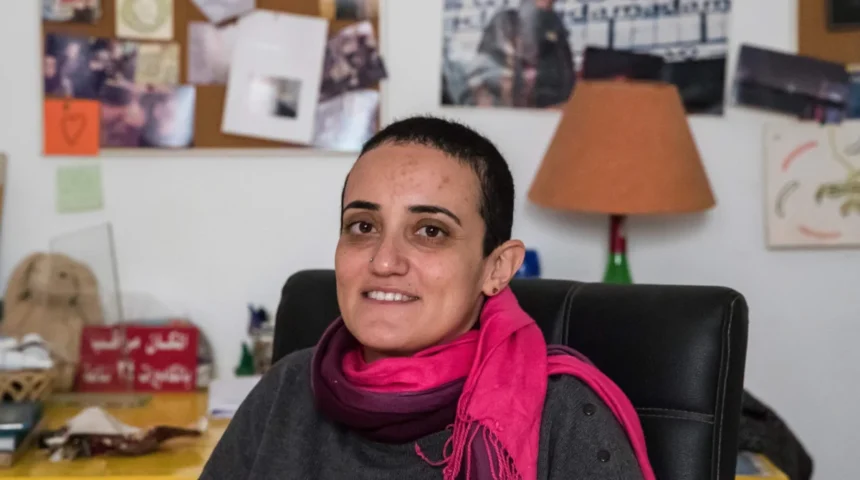
An international coalition of civil society organizations and independent media outlets has united in sharp condemnation of what they describe as an unprecedented assault on press freedom in Egypt. The outrage follows the recent decision by authorities to refer prominent Egyptian journalist and Mada Masr Editor-in-Chief Lina Attalah to criminal trial. The move marks a critical and deeply alarming escalation in a years-long campaign of official pressure against the country’s shrinking independent press corps.
The sequence of events leading to the criminal referral began in late October 2026. Just hours prior to the summons, Mada Masr had joined forces with seven other independent media organizations across the Arab world to establish a solidarity flash newsroom. This collaborative initiative was launched to bridge a critical reporting gap left in the wake of the mass arrest of the entire newsroom of Matsadaash, an independent Egyptian investigative platform.
On October 19, 2026, shortly after stepping into this solidarity effort, Lina Attalah received an official summons to appear before the Supreme State Security Prosecution under Case No. 9072 of 2026. The initial notice provided no specific reasons for the summons, leaving the journalist and her colleagues to navigate the uncertainty surrounding the sudden legal maneuver.
The interrogation session commenced on October 21 and extended across more than six arduous hours. During the questioning, Attalah was pressed extensively regarding Mada Masr’s comprehensive reporting on an unfolding wave of protests across multiple detention facilities and prisons throughout Egypt. Prosecutors also zeroed in on the legal standing of the publication’s official operating license.
At the conclusion of the marathon interrogation, Attalah was formally confronted with grave accusations: operating a website without the requisite state license and publishing false news with the malicious intent of disturbing public peace. While she was initially released pending further proceedings on bail set at LE 100,000, the situation deteriorated rapidly the following day. On October 22, Attalah learned that the case had been escalated and that she was officially being referred to trial. The core charges focus on establishing, managing, and operating a website without a license, with the opening court session scheduled for Tuesday, October 27.
The licensing accusations leveled against Attalah and Mada Masr stand in stark contrast to the outlet’s sustained, good-faith efforts to comply with Egyptian regulatory frameworks over the years. When Law No. 180 of 2018—which regulates the press, media, and the Supreme Council for Media Regulation (SCMR)—was ratified, Mada Masr immediately submitted an application for a formal license in 2018. Despite full compliance with the procedural expectations of the time, the outlet received no formal response from the regulatory body.
Following the issuance of the law’s executive bylaws in 2020, Mada Masr renewed its efforts, submitting a second formal application for a license. Once again, the submission was met with official silence. It was not until 2022, during an unrelated interrogation involving Attalah, that the outlet discovered through incidental questioning that the SCMR had quietly rejected their licensing application without providing proper legal notice, formal communication, or an explicit justification for the refusal.
Faced with this administrative blockade, Mada Masr filed a formal lawsuit in 2022 to challenge the undisclosed denial and contest the authorities’ failure to provide adequate notice and justification. Furthermore, the publication submitted a subsequent licensing application in 2023, which has remained pending without official response from the state apparatus.
Legal experts and civil society leaders note that Attalah’s referral to trial represents an unprecedented escalation that threatens the very survival of independent journalism, knowledge production, and civil society spaces in Egypt. This development arrives on the heels of another historic escalation in late September, which saw the detention of the entire newsroom of the Matsadaash media platform.
The financial and operational consequences of the ongoing legal campaign are severe. The specific charges Attalah faces carry potential fines ranging between LE 1 million and LE 3 million, with provisions to double the financial penalty in the event of a recurrence. Far more alarming, however, is the judicial authority’s power to order the complete closure of Mada Masr upon conviction. Such a ruling would effectively deliver a death knell to one of the very last independent media institutions still striving to operate inside Egypt.
Although Mada Masr has faced institutional harassment through six distinct legal cases over the past six years, this marks the first time that a proceeding of this nature has been escalated to a formal criminal trial. For years, Egyptian authorities have routinely deployed restrictive tactics and administrative hurdles to harass journalists, curtail independent operations, and foster an environment of fear and self-censorship. International observers emphasize that moving beyond mere harassment to a full criminal trial signals a clear, unvarnished intent by authorities to permanently shutter the remaining independent media ecosystem.
In response to these developments, the international coalition of signatories has issued an urgent appeal to the Egyptian government. The groups are calling for the immediate cessation of all prosecutions directed against Lina Attalah. Furthermore, they are urging state authorities to grant Mada Masr a legal operating license in accordance with the country’s own laws and in direct response to the outlet’s numerous pending applications.
The coalition has also demanded an immediate halt to the systematic targeting of Mada Masr and all other independent media outlets struggling to function within Egypt. This includes addressing the ongoing case of Matsadaash, where six journalists remain trapped in pretrial detention amid credible allegations that they were subjected to torture and coerced into recording fabricated statements. Finally, the signatories reiterated their call for the immediate release of all journalists currently detained or imprisoned solely for carrying out their professional duties.
Human rights advocates warn that the unfolding situation in Egypt represents a critical threshold. As the legal pressures mount and the institutional space contracts, the signatories emphasize that remaining silent in the face of such aggressive measures will inevitably result in the permanent eradication of independent media, civil society advocacy, and public discourse in the country.

Related News