Elon Musk Responds with Humour After Record-Breaking US Midterm Campaign Spending Fails to Avert Republican Rout
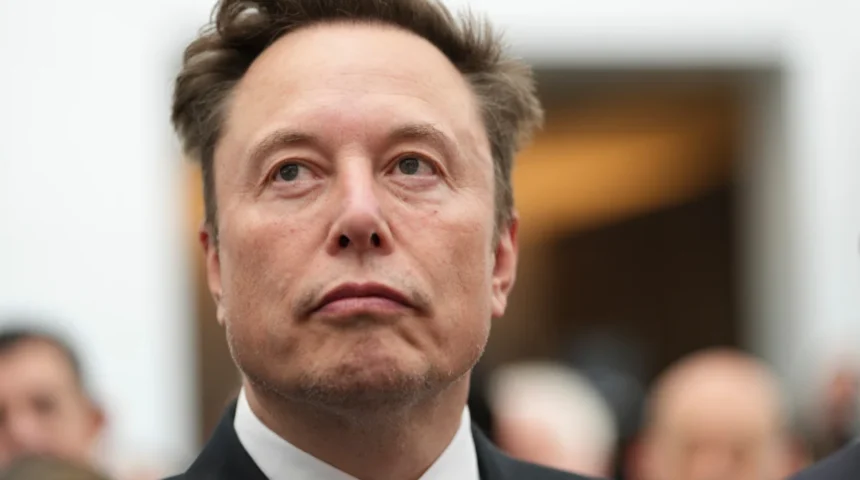
Tesla and SpaceX founder Elon Musk, the world’s richest man and the largest individual donor in the United States midterm elections, has reacted with online levity following a devastating defeat for the Republican Party. Despite a staggering financial investment of nearly half a billion dollars designed to bolster conservative campaigns across the country, Musk watched as the political landscape shifted dramatically away from the candidates he financially backed.
Republicans were decisively routed by Democrats in Tuesday’s national polls, losing control of both the Senate and the House of Representatives. Beyond the major congressional losses, the party suffered stunning defeats in states long regarded as impenetrable Republican strongholds, most notably Texas and Kansas. The scale of the shift caught many political analysts by surprise, turning what was anticipated to be a competitive cycle into a sweeping victory for the Democratic opposition.
Taking to his social media platform X, formerly known as Twitter and which he personally owns, Musk addressed the election results with characteristic sarcasm on Wednesday morning. "Guess my election-interfering space lasers didn’t work this time," the South Africa-born entrepreneur wrote, poking fun at both his massive financial footprint and conspiracy theories that frequently surround his high-profile technological ventures.
Financial disclosures indicate that Musk poured approximately $446 million into supporting Republican candidates during the 2026 midterm cycle, establishing himself comfortably as the single largest individual political donor in the history of the country’s midterms. The bulk of this unprecedented war chest was directed toward his own Republican-leaning political action committee, America PAC, as well as the Republican-aligned Senate Leadership Fund (SLF) super PAC, organizations designed to influence key legislative races nationwide.
The financial strategy deployed by these PACs focused heavily on pivotal battlegrounds where conservative control was threatened or where Republicans sought to expand their influence. Notably, the SLF utilized a substantial $158 million donation provided by Musk in September to heavily support Ken Paxton, the high-profile Republican Senate candidate running in Texas. Despite the massive influx of cash and high-intensity campaigning, Paxton ultimately lost the race to Democratic challenger James Talarico, dealing a major symbolic and strategic blow to the party in the Lone Star State.
At the heart of the Texas Senate contest was a fierce debate over energy, infrastructure, and the future of technology. Voters decisively rejected a controversial plan championed by Paxton and his allies to position Texas as the central hub of the country’s burgeoning artificial intelligence (AI) industry by rapidly constructing vast data centers across the state. Talarico built his successful campaign on a platform calling for significantly tighter regulations on AI development, environmental oversight, and infrastructure expansion, resonating strongly with an electorate wary of unchecked industrial growth.
Musk, maintaining his lighthearted digital persona, responded to the outcome by posting another quip on X. "Data centers in space looking pretty appealing right now," he wrote, nodding to his aerospace company SpaceX and its satellite internet network, Starlink.
The billionaire’s direct involvement in Texas politics carries heightened personal and professional significance. In recent years, Musk has relocated the corporate headquarters of his primary ventures—including Tesla, SpaceX, and X—from California to Texas, cementing the state as the operational center of his commercial empire. His investment in the region’s political future was viewed as a strategic effort to foster a business-friendly regulatory environment for his companies and allied industries.
The reverberations of the election results were felt immediately in victory speeches across the country. James Talarico explicitly referenced Musk during his triumphant address to supporters, framing his campaign as an uphill battle against overwhelming odds. Talarico told the cheering crowd that his grassroots movement had taken on "goliaths," including "the richest man in the world," and successfully emerged victorious.
Musk’s political investments extended beyond the Senate race, touching gubernatorial contests that also yielded disappointing results for the Republican platform. The entrepreneur supported the Republican campaign for governor of Texas, a high-stakes race that Democrats ultimately captured as well. Gina Hinojosa defeated the incumbent Republican Governor Greg Abbott, securing the governorship despite a $5 million campaign donation contributed by Musk to aid Abbott’s defense.
The historic scale of Musk’s spending highlights a broader, entrenched reality of modern American politics. Massive, multi-million-dollar and multi-billion-dollar campaign donations by billionaires, corporations, and super PACs have become a foundational pillar of the electoral process. This financial landscape was fundamentally shaped by a landmark 2010 Supreme Court ruling, which established that the government could not constitutionally limit independent political spending by corporations, labor unions, and other organized groups, provided that expenditures are made independently of official candidate campaigns.

Related News