Airbnb Announces Launch of Custom AI Travel Agent for First Half of 2027 Amid Strong Financial Growth
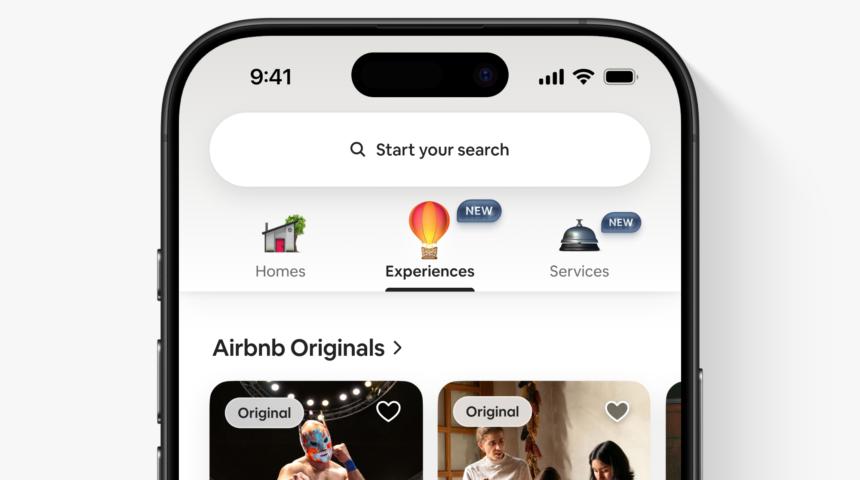
Airbnb has officially firmed up its timeline for entering the artificial intelligence agent space, announcing that its highly anticipated AI travel feature will launch to consumers in the first half of 2027. The disclosure came on Thursday alongside the release of the company’s third-quarter shareholder letter and financial results, which revealed a significant reacceleration in revenue growth that has easily beaten Wall Street estimates.
For months, Airbnb executives, including CEO Brian Chesky, have hinted at plans to develop proprietary AI technology tailored specifically to the nuances of travel planning. In prior interviews and strategic updates, Chesky laid out a vision for an AI tool that diverges sharply from the text-heavy, general-purpose chatbots currently dominating the tech landscape. Thursday’s announcement provided deeper insight into how the upcoming agent will operate, the specific problems it aims to solve, and why the company believes standard conversational chat interfaces are fundamentally unsuited for booking and planning trips.
Speaking to analysts and investors during the Q3 earnings call, Chesky elaborated on the limitations of existing general-purpose AI agents. He pointed out that while software like Muse and Instinct excel at straightforward, routine tasks—such as securing a restaurant reservation or scheduling a calendar appointment—the nature of travel is vastly different.
Travel, Chesky emphasized, is an inherently aspirational pursuit. Discovering where to go and where to stay forms a core part of the consumer experience, noting internal insights showing that roughly 80% of travelers actively enjoy spending time researching upcoming trips. Consumers want to look at high-resolution photography, compare different homes side by side, and collaborate on decisions with family members, friends, or other travel companions. Because general-purpose conversational models cannot properly facilitate this kind of visual, exploratory workflow, Airbnb decided to build its own dedicated travel agent from the ground up.
Unlike conventional chatbots that rely primarily on text prompts and sequential dialogue, Airbnb’s upcoming agent will feature a dynamic, personalized interface built explicitly for the travel sector. According to company leadership, the system will dynamically construct an interface around a user’s specific queries rather than simply replying with blocks of text.
The underlying architecture of the agent draws from an extensive library of hundreds of specialized travel interface components—including interactive maps, photo galleries, side-by-side home comparisons, calendars, and customizable itineraries. The system will synthesize these elements in real time to match what the user is looking for, creating an experience that Chesky described as feeling “a little bit like generative UI.” The core objective is to deliver the right interface at the exact right moment during a user’s trip-planning journey.
In its shareholder letter, the company underscored that its nearly two decades of operational experience in bridging the gap between hosts and guests is heavily informing the development of the new technology. The platform is leveraging deep insights into how people search, book, and host properties worldwide. Furthermore, the capabilities of the agent are designed to extend well beyond the initial booking phase.
Airbnb noted that its agent will be equipped to assist travelers throughout the entirety of their journey. This includes managing complex tasks such as modifying an existing reservation, resolving payment discrepancies, processing refunds, facilitating rebookings, or connecting travelers with around-the-clock safety support. These are functional areas where outside, generic AI agents typically struggle due to a lack of direct platform integration and backend access.
Over the long term, the company expects the scope of the agent to expand even further to cover additional components of the travel ecosystem. Beyond traditional homes and hotels, the technology will eventually assist users with discovering and booking services and experiences. These two categories have emerged as an increasingly vital focus area for Airbnb following a major platform redesign launched the previous year, which aimed to position the company as a comprehensive hub for end-to-end travel experiences rather than just lodging.
While previous communications from leadership suggested that the market could expect an AI agent to materialize within a roughly one-year window, Thursday’s announcement marks the first time the company has firmly committed to a consumer rollout window in the first half of 2027.
The unveiling of the AI roadmap coincided with a remarkably strong set of financial metrics for the third quarter. Airbnb reported revenue growth of 19%, pushing total quarterly revenue to $4.87 billion and outperforming consensus expectations set by Wall Street analysts. Buoyed by the robust performance, the company also raised its full-year revenue growth forecast for 2026, predicting that annual growth will land in the high teens rather than the mid-teens projections offered previously.
Reflecting on the financial turnaround during the earnings call, Chesky told analysts that Airbnb has officially returned to a robust growth trajectory. He noted that it is historically rare for a marketplace of Airbnb’s scale to successfully reaccelerate its growth rate, yet that is precisely what the company has achieved, pointing out that the third quarter marked the fastest revenue growth the platform has experienced in more than three years.

Related News