Echoes of Antiquity: Renowned Historian Barry S. Strauss Warns the West is Entering the Final Stages of Collapse
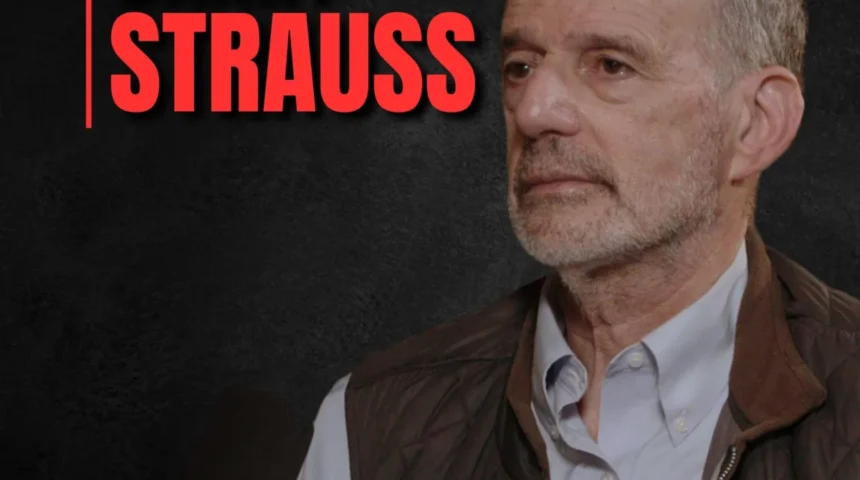
As modern Western societies grapple with economic uncertainty, political polarization, and shifting global power dynamics, historians are increasingly looking backward to understand where the current trajectory leads. Among them is Barry S. Strauss, a senior fellow at the Hoover Institution, a renowned military historian, and the author of acclaimed works including Ten Caesars and Jews vs Rome. With four decades of academic research dedicated to understanding how great empires rise, flourish, and ultimately disintegrate, Strauss brings a sobering perspective to contemporary geopolitical discussions.
In a comprehensive and wide-ranging conversation on Pete McCormack’s podcast, Strauss argued that the contemporary West is currently sleepwalking down a well-worn historical path. According to the historian, modern societies are repeating patterns that citizens of antiquity would recognize instantly: a wealthy, highly comfortable population beginning to devalue its own currency, softening its cultural resilience, and operating under the dangerous assumption that its dominance is permanent and untouchable.

While the warning sounds stark, Strauss emphasizes that history is not purely deterministic. The ancient world offers both cautionary tales of irreversible decline and remarkable examples of renewal through radical reform.
The Parallels Between Modern Financial Pressures and Third-Century Rome
At the core of Strauss’s historical critique is the dangerous illusion of permanence that plagues wealthy civilizations. When a society becomes comfortable, it frequently loses the institutional discipline and personal grit required to maintain its foundational structures. This softness manifests in various ways, ranging from economic policy to cultural expectations and educational standards.

A prime historical parallel discussed by Strauss is the severe inflation crisis that nearly destroyed third-century Rome. Faced with mounting economic pressures and fiscal mismanagement, Roman authorities resorted to "clipping the coinage"—reducing the precious metal content within standard currency to maintain short-term spending. This debasement of money destroyed public trust, triggered hyperinflation, and severely destabilized the Roman economy. Strauss draws a direct line from ancient currency manipulation to modern fiscal policies, warning that unchecked inflation and monetary degradation have historically served as leading indicators of systemic institutional decay.
Beyond finance, Strauss explores the recurring cyclical nature of human societies, citing the foundational economic and sociological theories of fourteenth-century Arab historian Ibn Khaldun. Khaldun’s framework of civilizational cycles posits that hard times forge resilient, united communities capable of building great empires. However, successive generations raised in comfort and abundance inevitably produce softer, more fractured populations. Over time, these complacent societies become vulnerable to external pressures, internal division, and dynamic challengers rising from the margins.

Cultural Cohesion, Education, and the Erosion of the Middle Class
The conversation also delves into the complex dynamics of demographics, culture, and social cohesion. Strauss addresses the modern friction surrounding immigration, arguing that historical empires consistently struggled when they accepted large-scale migration without demanding genuine cultural assimilation. He notes a fundamental sociological truth often overlooked in modern policy debates: not all cultures share the same civic values, and a republic requires a cohesive cultural core to survive.
Central to maintaining this civic health is the preservation of a robust middle class. Strauss asserts that no republic in history has ever survived the collapse or evisceration of its middle tier. When the economic middle hollows out, societies inevitably polarize into hyper-wealthy elites and struggling lower classes, destroying the social contract and democratic stability.

This institutional softening has also permeated modern educational systems. Strauss contends that education has lost its rigor, prioritizing comfort and ideological trends over the traditional pursuit of excellence, critical thinking, and historical literacy. By failing to challenge younger generations, educational institutions contribute directly to the broader cultural softening that leaves societies intellectually and civically disarmed.
Geopolitical Threats and the Blueprint for Fragmentation
While internal decay creates severe vulnerabilities, the external threats facing the West are equally formidable. Strauss issues a stark warning regarding the strategic ambitions of global adversaries, noting that major geopolitical rivals such as Russia and China already possess long-term, calculated plans designed to fracture the United States and its democratic allies into smaller, manageable pieces.

These adversaries are adept at exploiting Western complacency, internal political divisions, and technological blind spots. Strauss points to modern conflicts and asymmetric warfare—such as the sudden, devastating proliferation and tactical deployment of low-cost drones—as evidence that Western military and strategic establishments are occasionally blindsided by rapidly evolving threats. Just as Rome was eventually overwhelmed by external forces it underestimated, modern superpowers risk obsolescence if they fail to adapt to changing geopolitical realities.
Despite these grave warnings, Strauss firmly rejects fatalism. He notes that third-century Rome did not simply fold; it faced plague, foreign invasions, and catastrophic currency collapse, yet managed to pull back from the brink through sweeping, structural reforms. The Roman Empire survived for centuries longer by fundamentally reinventing itself, adopting a new religious framework, and tightening its governance.

For the modern West, the prescription derived from antiquity is demanding. Strauss suggests that if contemporary democratic societies wish to preserve their core values, institutions, and way of life, almost everything else about how they operate must change. Democracy must be treated as a rigorous obligation rather than a passive entitlement, physical and cultural borders must be secured, and societies must accept that enduring comfort is the ultimate enemy of long-term survival.

Related News