El Salvador’s Small Business Optimism Reaches Record Peak Amid Economic Growth and Enhanced Security
Small business optimism in El Salvador has climbed to an unprecedented peak, propelled by a combination of robust economic expansion and a significantly safer operating environment across the country. According to the newly released MYPE 2026 State Report, published jointly by the FUSAI Foundation’s MYPE Observatory and Flacso, entrepreneurial confidence has surged to 47.1 points. This substantial increase has successfully lifted the broader Business Confidence Index to a historic high of 109.1. This landmark result marks the highest level of confidence recorded across 25 consecutive quarters of tracking, a timeline that stretches back to the mid-2020 inception of the survey.
The milestone report offers a comprehensive look into the pulse of the nation’s grassroots economy, highlighting how shifting macroeconomic and social conditions are directly impacting local enterprises. The dramatic improvement in business sentiment is not merely a statistical anomaly, but rather a reflection of tangible changes experienced daily by hundreds of thousands of business owners. Chief among these changes is the transformation of the nation’s security landscape, which has fundamentally altered how commerce is conducted in urban and rural areas alike.
This record-setting confidence aligns directly with a rapidly surging Salvadoran economy. Official figures show that the national economy posted an impressive 4.8 percent GDP growth rate in the first quarter of 2026. This performance more than doubles the 2.2 percent historical average that the country experienced over the preceding 17 years, signaling a distinct acceleration in economic momentum. Economists and analysts attribute this acceleration to a variety of converging factors, with steady increases in private investment playing a crucial role.
Crucially, this economic uptick has been accompanied by a dramatic reduction in crime and extortion rates. For years, criminal activity and extortion stood as the single greatest barrier to entry and survival for small businesses in El Salvador, forcing many entrepreneurs to operate under constant threat or abandon their ventures entirely. The recent containment of these illicit activities has drastically improved commercial mobility, allowing business owners to transport goods freely, keep longer operating hours, and expand their customer bases without the crippling overhead of protection fees. Furthermore, the reduction in daily operational security costs has freed up vital capital for small enterprises, enabling them to reinvest in their operations, hire additional staff, and plan for long-term sustainability.
Micro, small, and medium enterprises serve as the indispensable backbone of the national economy, anchoring communities and driving domestic commerce. According to the MYPE 2026 State Report, these enterprises account for a staggering 99 percent of all businesses in El Salvador. Altogether, they represent approximately 48.8 percent of the nation’s Gross Domestic Product and provide livelihoods for more than two-thirds of the national workforce. The scale of this entrepreneurial ecosystem is vast, encompassing a total of 925,815 registered enterprise units spread across the country.
While optimism remains broadly distributed across various sectors of the economy, the report highlights notable variances in expectations depending on business scale and industry. Specifically, small enterprises expressed the highest level of optimism, registering an imposing 67.7 points in expectations. When broken down by economic sector, commerce and service industries emerged as the primary leaders of this confidence surge, benefiting directly from increased consumer spending power, improved foot traffic, and a safer public sphere that encourages shoppers to frequent local brick-and-mortar stores.
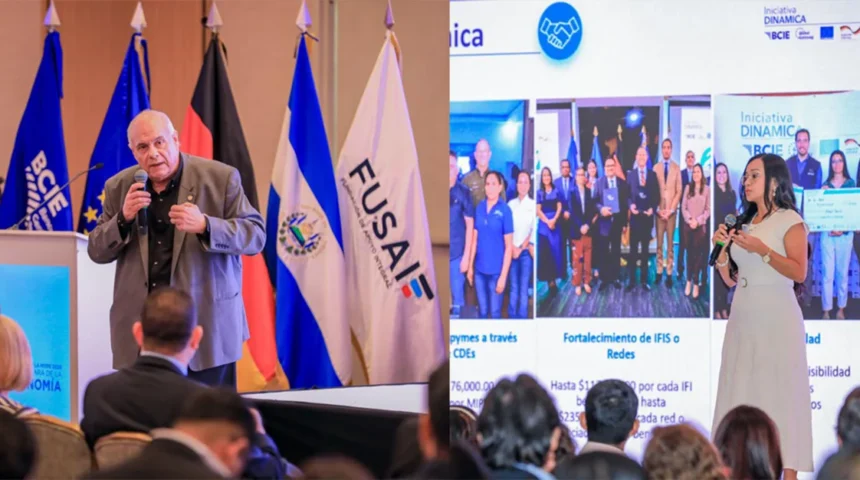
The positive sentiment is also being supported by targeted financial mechanisms designed to inject liquidity into the grassroots economy. During the presentation of the fourth annual report, titled The State of MYPE 2026: The Other Side of the Economy, officials highlighted the impact of specialized credit programs. Through the DINAMICA II Initiative, a program implemented in partnership with the Central American Bank for Economic Integration (BCIE), more than $14 million in credits has been successfully placed. This capital infusion has directly benefited 308 microenterprises, providing them with the necessary financial leverage to upgrade their equipment, scale their production, and navigate the challenges of market expansion.
Addressing the broader implications of the survey findings, Rafael Pleitez, coordinator of the MYPE Observatory, emphasized the historical significance of the data. He noted that micro and small enterprises have officially reached their highest level of confidence since measurements first began in 2020. Pleitez added that these entrepreneurs are overwhelmingly eager to grow, innovate, and expand their market footprint. However, he also cautioned that the broader economic and institutional ecosystem must be intentionally strengthened to convert this current wave of optimism into sustained, long-term increases in sales, employment generation, and private investment.
As El Salvador continues to navigate this period of heightened economic performance and structural transformation, the trajectory of its nearly one million micro and small businesses will remain a critical indicator of the nation’s broader developmental health. With security improvements lowering the barrier to entry and financial support mechanisms beginning to take root, the entrepreneurial sector stands positioned at a crucial juncture, aiming to translate record-breaking confidence into lasting economic prosperity.

Related News