The Market’s Biggest Buyer Steps Back: S&P 500 Faces a Shift as Buybacks Slow and IPO Supply Rises
By RIA Team | October 26, 2026 | 6 min read
For an entire decade, S&P 500 companies have acted as the marginal and most reliable buyer of United States equities, providing a relentless cushion of support for the broader market. That dynamic, however, is undergoing a profound structural shift. Stock buybacks reached a remarkable milestone in the twelve months leading up to September 2025, hitting a record $1.020 trillion and accounting for roughly 60% of all cash returned to shareholders. This massive corporate tailwind has played a critical role in driving sustained equity returns over recent years.

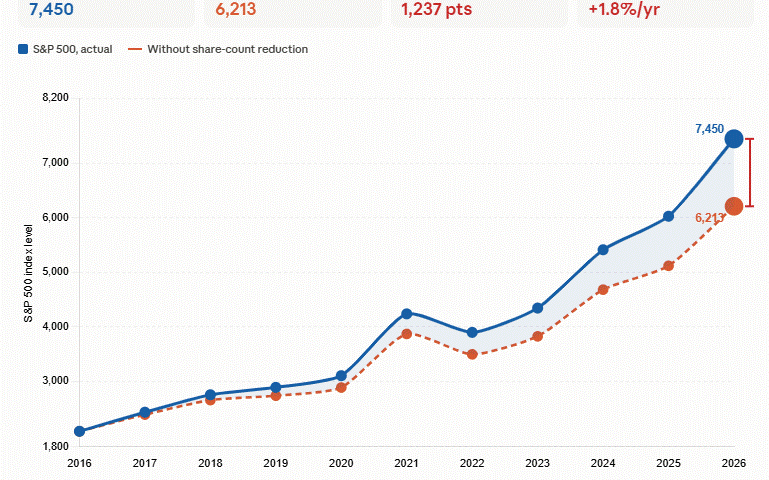
A closer decomposition of the S&P 500’s performance from June 2021 to June 2026 highlights the mechanics of this growth. During this period, earnings per share expanded at an annual rate of 13.2%, while the price-to-earnings multiple slightly contracted by 1.1%. In essence, the entire market advance was propelled by underlying earnings growth rather than valuation expansion. Within that profit expansion, approximately 1.8% per year came directly from share count reduction rather than organic business growth. This translates to roughly 14% of the total return and accounts for 1,240 index points since 2016.
However, this vital tailwind is beginning to fade as corporate repurchase programs decelerate and a wave of major initial public offerings prepares to hit the market. Mega-cap tech titans like Alphabet and Meta notably paused their share repurchases in the first half of 2026 to redirect substantial capital toward artificial intelligence investments. Meta took this evolution a step further by introducing a novel class of nonvoting stock designed specifically as a capital-raising mechanism, effectively issuing new shares rather than retiring existing ones. Simultaneously, fresh equity supply is entering the ecosystem. SpaceX completed a massive public offering raising approximately $85.7 billion in June, with additional shares set to hit the market as lockup periods expire. Furthermore, Anthropic is widely anticipated to launch a public offering approaching $1 trillion in November, while OpenAI is projected to execute a similarly scaled offering over the next two quarters.
As a result, the financial markets are being asked to absorb a massive wave of new equity precisely when some of the historical largest buyers of existing shares are scaling back their purchases or transforming into net issuers. While this transition does not inherently signal an imminent market downturn, it serves as a distinct warning that one of the most powerful institutional buyers of US equities is losing its dominant influence.
What To Watch Today
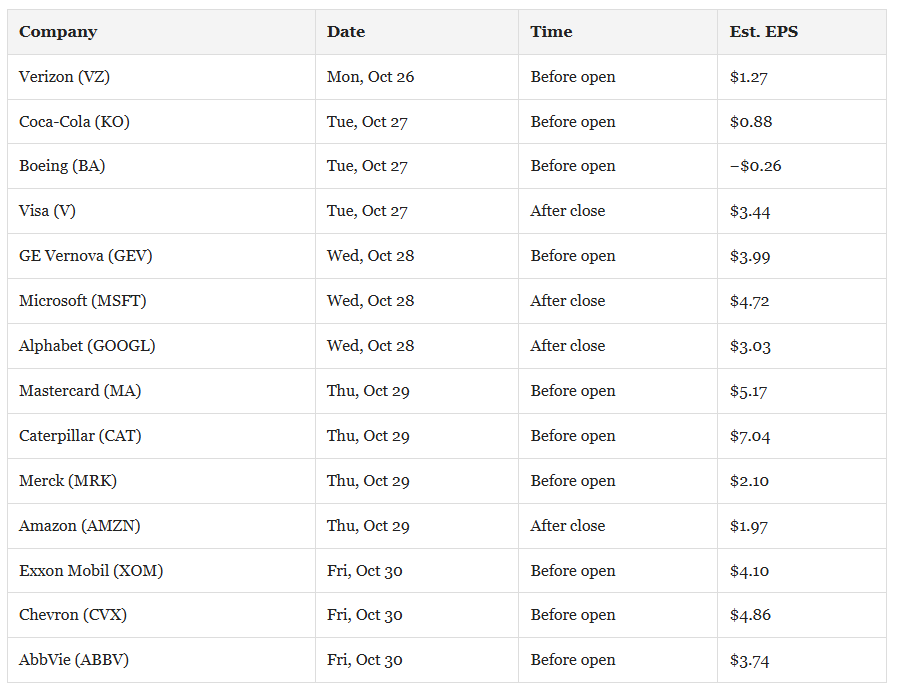
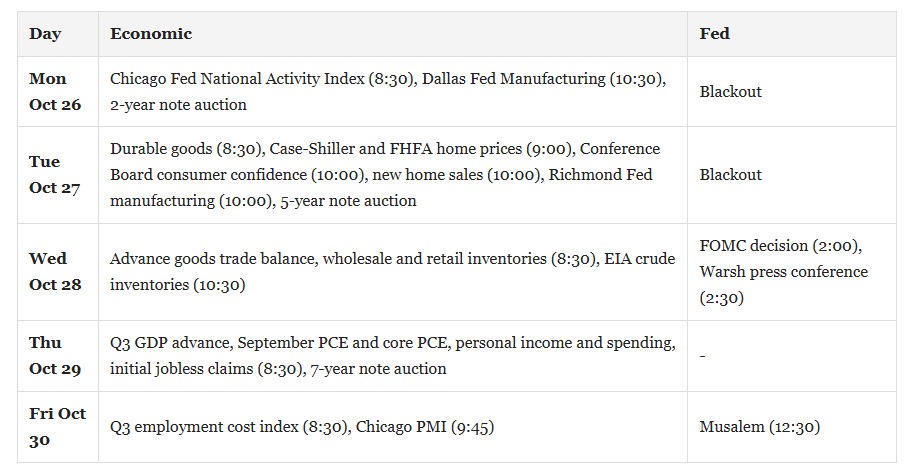
The financial landscape is entering a critical window defined by high-stakes corporate earnings reports and key economic releases that will heavily influence monetary policy expectations.
Market Trading Update
The S&P 500 closed out the week on a softer note, finishing Friday at 7,623.68, which marked a 0.4% decline for the week. This positioning leaves the benchmark index approximately 2.4% below its record close of 7,815 reached earlier in October on the 6th. The index currently rests 1.0% below its 50-day moving average of 7,702 and sits directly on top of its 100-day moving average of 7,605. Despite this short-term consolidation, the broader uptrend remains secure, with the index holding roughly 4.5% above its 200-day moving average of 7,293.
Friday’s closing level also hovered just above the lower two-standard-deviation Bollinger Band, situated at 7,604. Historically, closes below this specific threshold have coincided with short-term cyclical lows observed in March, June, late July, and mid-September of this year. Earlier warnings of a short-term momentum sell signal and an approaching test of the 100-day moving average have now materialized.

Market momentum metrics continue to reflect underlying selling pressure. The 14-day Relative Strength Index has drifted down to 42, reflecting a neutral yet declining stance. Meanwhile, the Moving Average Convergence Divergence indicator has crossed below its signal line, generating a technical sell signal that typically caps near-term market rallies. Unlike the technology sector, which has experienced a deeper correction, the broader index has not yet reached oversold extremes.
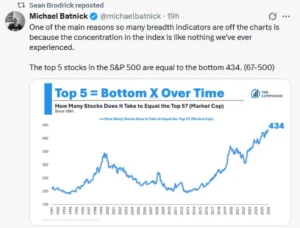
Market internals reveal a notable divergence beneath the surface. The equal-weight S&P 500 rose 1.1% over the week, while the Dow Jones Industrial Average gained 1.4%. This demonstrates that the average stock is holding its ground resiliently while mega-cap stalwarts pull the market-cap-weighted index lower.

Sector breadth underscores this internal rotation. Eight out of eleven sectors are currently outperforming the headline index when measured by their distance from their respective 50-day moving averages. Only technology, industrials, and communications are lagging behind. Energy remains the most extended sector, followed closely by health care and consumer staples. Market leaders have transformed into crowded trades, whereas laggards represent potential areas for a cyclical bounce. This environment counsels patience, encouraging portfolio managers to look for opportunities to rebalance back toward growth segments rather than chasing defensive trades that dominated the previous three weeks.
The upcoming week serves as a major technical and fundamental test. Approximately 44% of the S&P 500 by market capitalization is scheduled to report earnings, featuring heavyweights like Microsoft and Alphabet on Wednesday, followed by Amazon on Thursday. These reports arrive alongside a Federal Reserve policy decision and the release of the September Personal Consumption Expenditures price index.

Should the 100-day moving average hold and mega-cap companies successfully demonstrate that massive artificial intelligence investments are yielding tangible returns, oversold technology shares possess ample room for recovery. Initial upside targets point toward the 50-day moving average near 7,700, followed by the October 21 close at 7,757. Conversely, a decisive break below the 100-day average would expose the September 16 low at 7,564, with subsequent support levels resting near the July 31 low of 7,494 and the crucial 200-day moving average at 7,293, where the integrity of the broader bull market would face serious scrutiny.
For active traders, the strategic playbook remains straightforward. Investors should avoid chasing defensive sectors at current elevated valuations and instead consider taking tactical profits on stretched energy and staples positions. Allowing technology shares to reach genuine oversold extremes before rebalancing toward growth provides a more disciplined risk-reward profile. Using market strength into the 50-day moving average to rebalance rather than add fresh risk is paramount as the market navigates the remainder of the week.

The Week Ahead
The upcoming week concentrates the quarter’s most pivotal fundamental questions into a condensed forty-eight-hour window. The Federal Open Market Committee will convene to deliver its monetary policy decision on October 28 at 2:00 PM Eastern Time. Federal Funds futures currently price the probability of an immediate rate hike at roughly 10%, down noticeably from 28% the prior week. Market participants continue to view December as a live meeting, pricing the probability of a subsequent hike at 85%. The accompanying policy statement and Chairman press conference will provide crucial clarity regarding the central bank’s forward-looking stance.
On Thursday, the economic calendar features updated Gross Domestic Product figures alongside the September Personal Consumption Expenditures report. The PCE inflation metrics will heavily guide Federal Reserve officials in determining whether monetary conditions warrant further tightening or if policymakers can afford to pause until the December meeting. Corporate earnings reports will flood the market, with major institutions and technology leaders reporting through mid-week, setting the operational tone as autumn transitions toward November.
Fed Over-Tightening: How Much Runway Is Left Before It Bites?
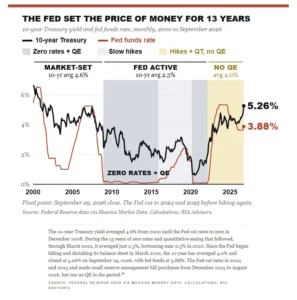
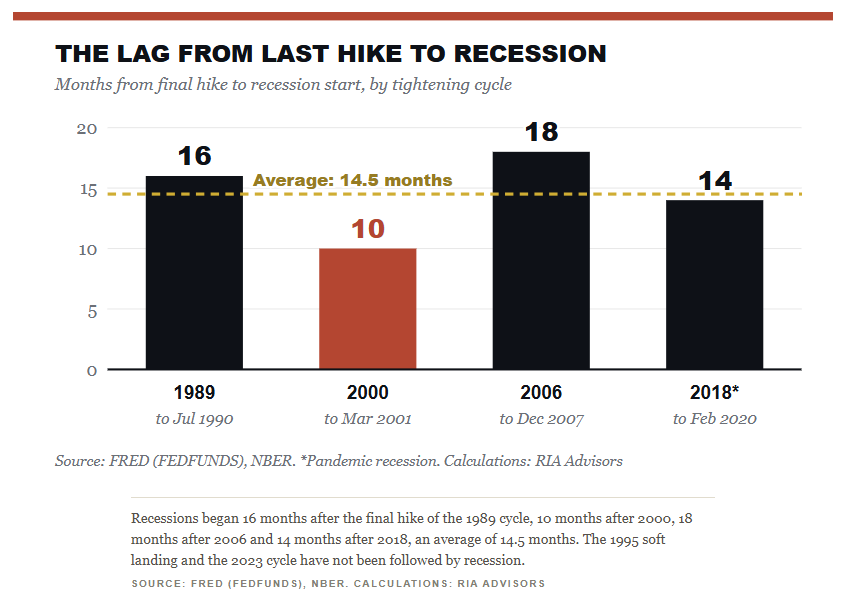
The Federal Reserve implemented a rate hike in September, pushing the benchmark 10-year Treasury yield above 5.3%—its highest level since 2007. This powerful combination of tighter monetary policy and elevated long-term borrowing costs raises a critical question that financial markets have arguably understated: if long-term bond yields are already aggressively tightening financial conditions, does every subsequent incremental hike by the central bank exponentially increase the risk of over-tightening?
Market data increasingly suggests the answer is affirmative, and the economic runway remaining before monetary tightening inflicts visible damage may be significantly shorter than conventional assumptions suggest. During the September FOMC meeting, officials voted unanimously to elevate the target federal funds rate range to 3.75% to 4.00%, marking the first rate increase since 2023. The updated Summary of Economic Projections placed the anticipated year-end rate between 4.1% and 4.4%. While markets currently expect a pause at the upcoming policy meeting, pricing still reflects high odds of a subsequent move before year-end. Because monetary policy tools primarily operate by influencing aggregate demand, the central economic vulnerability lies in determining where consumer and corporate demand remains most exposed to elevated borrowing costs.

As market participants prepare for the daily opening bell, monitoring macroeconomic data releases and corporate earnings execution remains essential for navigating these shifting financial tides.

Related News