El Salvador Expands Haiti Security Deployment with Regional Support Following Gang Ambush
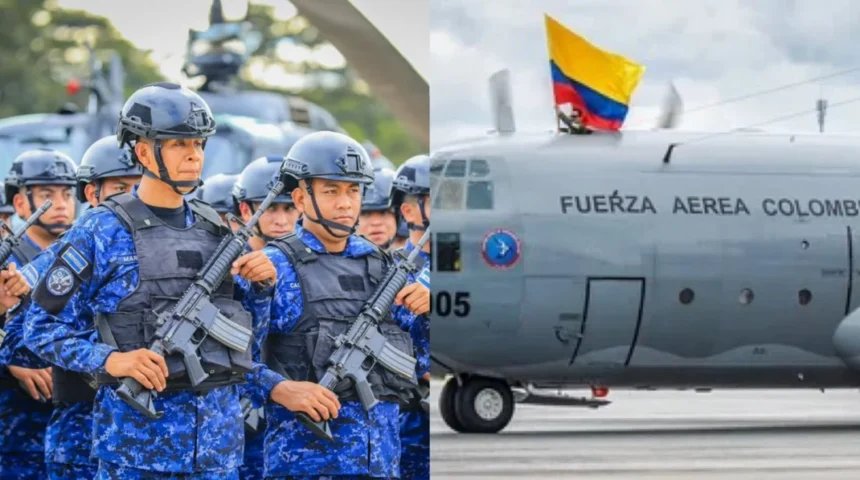
Salvadoran President Nayib Bukele has shared a high-profile post highlighting a crucial Colombian Air Force flight that successfully transported Salvadoran military personnel and specialized equipment from San Salvador to Port-au-Prince, Haiti. This development marks a significant escalation in El Salvador’s participation in the ongoing international security efforts aimed at dismantling and neutralizing powerful armed gangs that have long terrorized the Caribbean nation.
The flight, officially identified in aviation tracking logs and official statements as FAC1005, represents a vital component of the broader logistical network supporting El Salvador’s substantial military deployment to Haiti. According to reports following the recent escalation, approximately 1,000 Salvadoran soldiers have now been dispatched to the island nation. This reinforcement effort was urgently accelerated in the wake of a deeply troubling incident on October 18, 2026, when four Salvadoran personnel went missing during a violent gang ambush in the vicinity of the Haitian capital.
The logistical scope of this mission has required extensive international cooperation. Alongside the critical transport provided by the Colombian Air Force, United States military C-130 aircraft have also been heavily utilized to airlift additional troops, tactical gear, and essential supplies into the volatile region, demonstrating a coordinated regional approach to the deepening crisis in Haiti.
The four missing Salvadorans whose fate triggered this massive deployment were specialized aviation technicians serving honorably under the banner of the United Nations-backed Gang Suppression Force. Their disappearance sent shockwaves through military and governmental circles in San Salvador after their heavily armored vehicle came under a fierce, coordinated attack by heavily armed gang members near Port-au-Prince. The sudden ambush and subsequent disappearance of the technicians prompted President Bukele to take swift and decisive action, publicly announcing a dedicated, high-priority rescue operation aimed at locating the missing personnel and bringing them home safely.
El Salvador’s expanded military footprint in Haiti arrives at a critical juncture, as Haitian national authorities and their international partners continue to face profound and persistent challenges in confronting entrenched armed groups. These criminal syndicates currently maintain effective control over significant portions of Port-au-Prince and its surrounding territories, severely restricting humanitarian aid, economic activity, and the restoration of public order. The multinational Gang Suppression Force, which now includes the substantial Salvadoran contingent, is working shoulder-to-shoulder with vetted Haitian security personnel to aggressively counter gang activities, secure vital infrastructure, and reclaim territory lost to lawless factions.
The recent deployment of the Colombian Air Force transport flight starkly underscores the growing web of regional logistical cooperation that underpins El Salvador’s ongoing mission in the Caribbean. Neighboring and allied nations have recognized the necessity of pooling resources to ensure that peacekeeping and security personnel are adequately supplied, reinforced, and supported as they operate in hostile urban environments.
Despite the broader strategic objectives of restoring long-term stability and security to Haiti, officials in San Salvador have emphasized that the immediate, overriding priority remains unchanged. All operational focus, intelligence gathering, and tactical maneuvers are currently concentrated on locating the four missing Salvadoran aviation technicians and determining their exact fate. As international forces intensify their sweeps and coordinate closely with local intelligence networks, the mission in Haiti remains a tense and rapidly evolving test of regional solidarity and resolve against armed criminality.

Related News